

Discovering Antibiotics from Soil
Location
CoLab, COM 245
Start Date
30-4-2026 12:00 PM
Document Type
Poster
Description
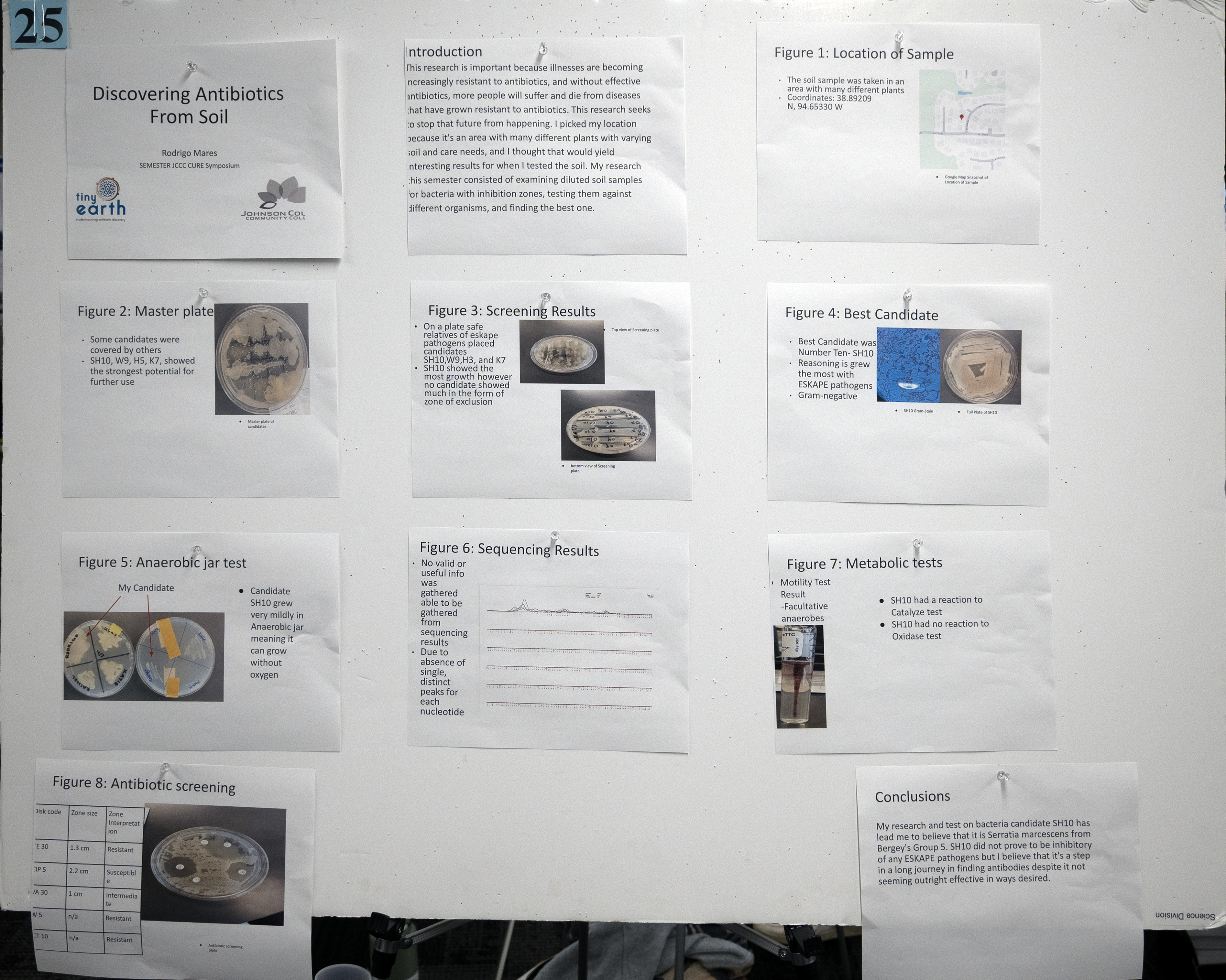
This research is important because illnesses are becoming increasingly resistant to antibiotics, and without effective antibiotics, more people will suffer and die from diseases that have grown resistant to antibiotics. This research seeks to stop that future from happening. I chose my location because it's an area with many different plants with varying soil and care needs, and I thought that would yield interesting results when I tested the soil because the garden has been given soil treatments and is regularly cared for to ensure the best environment for the plants. My research this semester consisted of examining diluted soil samples for bacteria with inhibition zones, testing them against different organisms, and finding the best. my 1st round of screening was about 10 of my strongest candidates, and that number was cut in half with each different screen as I tried to find the best one. The best of my candidates was one I named "Shadowheart". While it did not have a inhibitions zone when tested against the ESKAPE relatives, it grew the most compared to my other candidates. My candidate was identified using a genetic and metabolic approach
Image
Discovering Antibiotics from Soil
CoLab, COM 245
This research is important because illnesses are becoming increasingly resistant to antibiotics, and without effective antibiotics, more people will suffer and die from diseases that have grown resistant to antibiotics. This research seeks to stop that future from happening. I chose my location because it's an area with many different plants with varying soil and care needs, and I thought that would yield interesting results when I tested the soil because the garden has been given soil treatments and is regularly cared for to ensure the best environment for the plants. My research this semester consisted of examining diluted soil samples for bacteria with inhibition zones, testing them against different organisms, and finding the best. my 1st round of screening was about 10 of my strongest candidates, and that number was cut in half with each different screen as I tried to find the best one. The best of my candidates was one I named "Shadowheart". While it did not have a inhibitions zone when tested against the ESKAPE relatives, it grew the most compared to my other candidates. My candidate was identified using a genetic and metabolic approach
Comments
The faculty mentor for this project was Heather Seitz.