

Effectiveness of Base Isolation Systems in Reducing Earthquake Damage in Mid-Rise Buildings
Location
CoLab, COM 226
Start Date
30-4-2026 12:00 PM
Document Type
Poster
Description
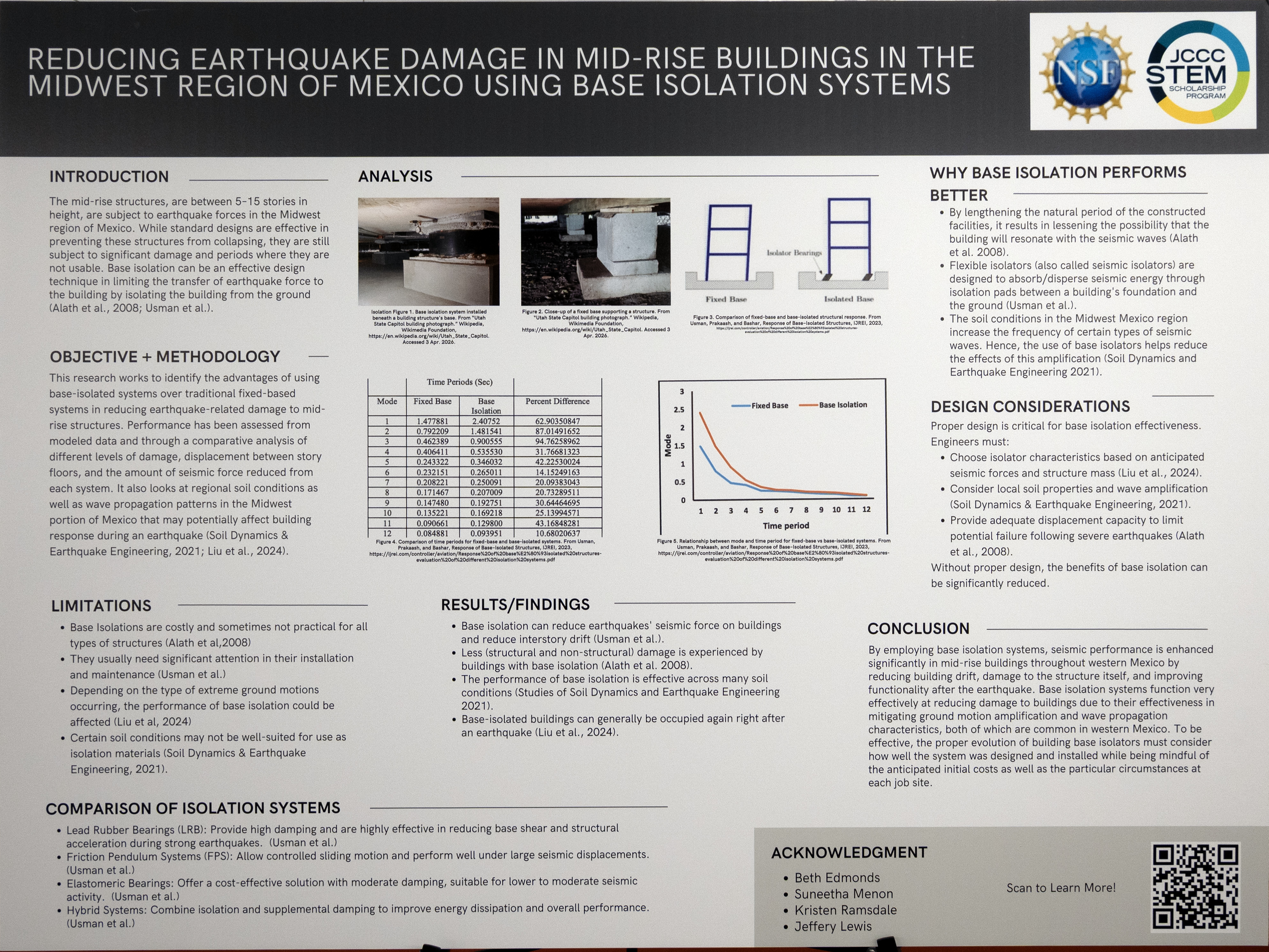
Using an analytical approach, this research project will quantify and assess the effects of base isolators on reducing seismic force and performance of mid-rise buildings by evaluating the performance of mid-rise buildings designed using base isolators in comparison to the performance of mid-rise buildings designed using conventional fixed-base seismic design methods, and reviewing existing design guidance. Existing studies have demonstrated that mid-rise buildings designed using base isolators will provide improved behavior during periods of strong ground motion compared to mid-rise buildings designed using fixed-base seismic design methods due to a significant reduction in base shear, floor acceleration, and interstory drift. Furthermore, mid-rise buildings designed with base isolators will perform better than conventional mid-rise buildings designed with fixed-base seismic design methods across a range of soil conditions when appropriate design methodologies are used. The success of base isolation systems relies on the proper selection of isolators, sufficient displacement capacity, and compliance with the design guidelines. Overall, this project has shown that base isolation systems are an effective way to provide seismic protection to mid-rise buildings. This can result in significant reductions in earthquake-induced damage and allow for a quicker restoration of function following an earthquake when compared to traditional fixed-base systems.
Image
Effectiveness of Base Isolation Systems in Reducing Earthquake Damage in Mid-Rise Buildings
CoLab, COM 226
Using an analytical approach, this research project will quantify and assess the effects of base isolators on reducing seismic force and performance of mid-rise buildings by evaluating the performance of mid-rise buildings designed using base isolators in comparison to the performance of mid-rise buildings designed using conventional fixed-base seismic design methods, and reviewing existing design guidance. Existing studies have demonstrated that mid-rise buildings designed using base isolators will provide improved behavior during periods of strong ground motion compared to mid-rise buildings designed using fixed-base seismic design methods due to a significant reduction in base shear, floor acceleration, and interstory drift. Furthermore, mid-rise buildings designed with base isolators will perform better than conventional mid-rise buildings designed with fixed-base seismic design methods across a range of soil conditions when appropriate design methodologies are used. The success of base isolation systems relies on the proper selection of isolators, sufficient displacement capacity, and compliance with the design guidelines. Overall, this project has shown that base isolation systems are an effective way to provide seismic protection to mid-rise buildings. This can result in significant reductions in earthquake-induced damage and allow for a quicker restoration of function following an earthquake when compared to traditional fixed-base systems.
Comments
The faculty mentor for this project was Beth Edmonds.