

Soils Solution
Location
CoLab, COM 236
Start Date
30-4-2026 12:00 PM
Document Type
Poster
Description
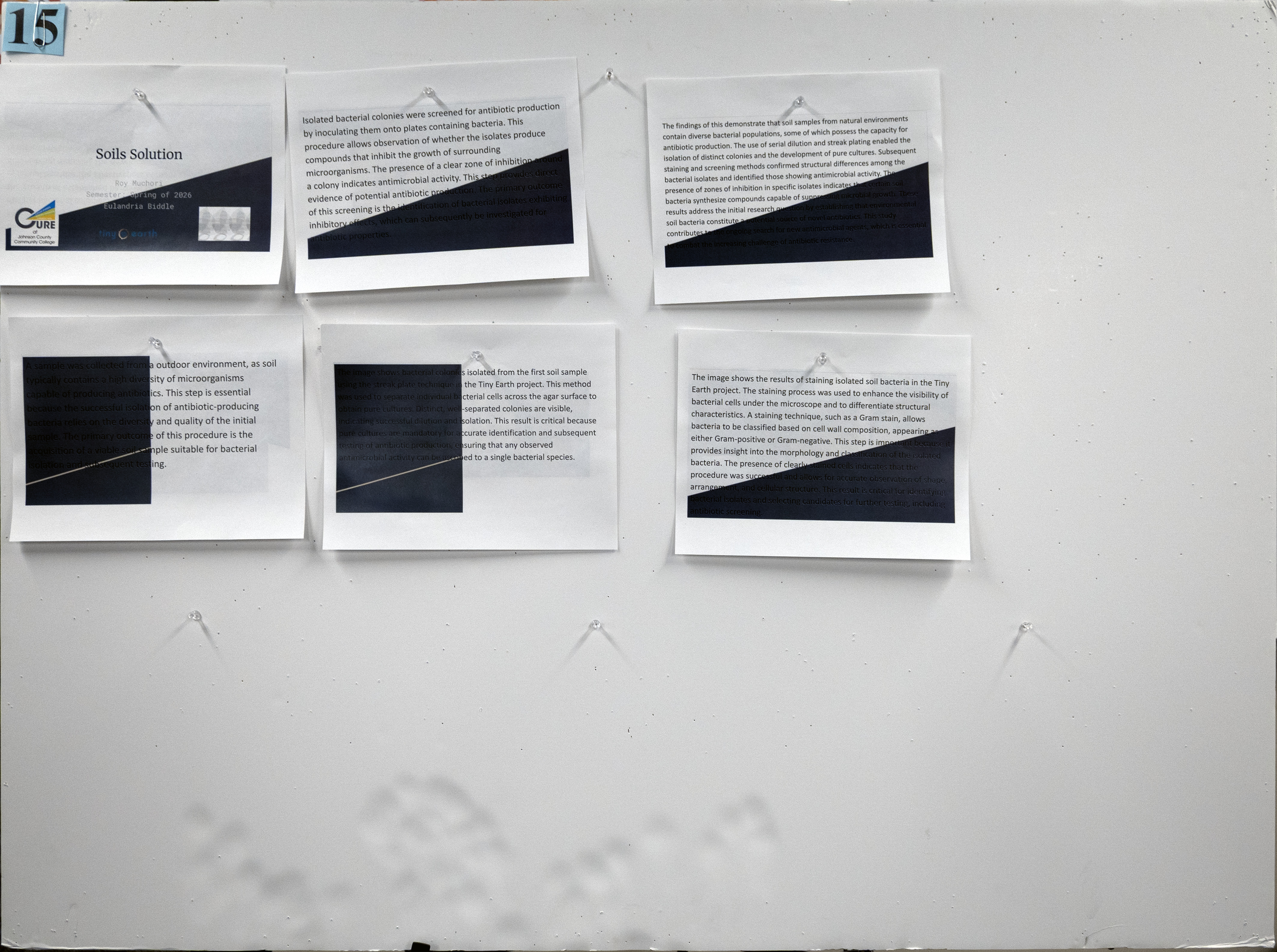
This research is important because the rise of antibiotic-resistant infections has created a need for new antimicrobial compounds, soil bacteria have historically been one of the most important sources of antibiotics. In this project, soil samples were collected and diluted to isolate individual bacterial colonies, allowing for the observation of different types of bacteria based on their appearance and growth patterns. The results showed microbial diversity, with multiple distinct colony types present across the dilution plates. As the samples were diluted, the number of colonies decreased, making it easier to estimate the number of bacteria in the original soil sample. Several isolated bacteria were then tested for their ability to inhibit the growth of other safe bacterial strains. Some of these isolates produced clear zones where other bacteria could not grow, indicating potential antimicrobial properties. These findings suggest that the soil microorganisms are not only highly diverse but also capable of producing compounds that may help limit bacterial growth. This study highlights the importance of exploring natural environments like soil as a potential source for discovering new antimicrobial agents.
Image
Soils Solution
CoLab, COM 236
This research is important because the rise of antibiotic-resistant infections has created a need for new antimicrobial compounds, soil bacteria have historically been one of the most important sources of antibiotics. In this project, soil samples were collected and diluted to isolate individual bacterial colonies, allowing for the observation of different types of bacteria based on their appearance and growth patterns. The results showed microbial diversity, with multiple distinct colony types present across the dilution plates. As the samples were diluted, the number of colonies decreased, making it easier to estimate the number of bacteria in the original soil sample. Several isolated bacteria were then tested for their ability to inhibit the growth of other safe bacterial strains. Some of these isolates produced clear zones where other bacteria could not grow, indicating potential antimicrobial properties. These findings suggest that the soil microorganisms are not only highly diverse but also capable of producing compounds that may help limit bacterial growth. This study highlights the importance of exploring natural environments like soil as a potential source for discovering new antimicrobial agents.
Comments
The faculty mentor for this project was Eulandria Biddle.