

Plastic Eaters: The Power of Algae
Location
CoLab, COM 234
Start Date
30-4-2026 12:00 PM
Document Type
Poster
Description
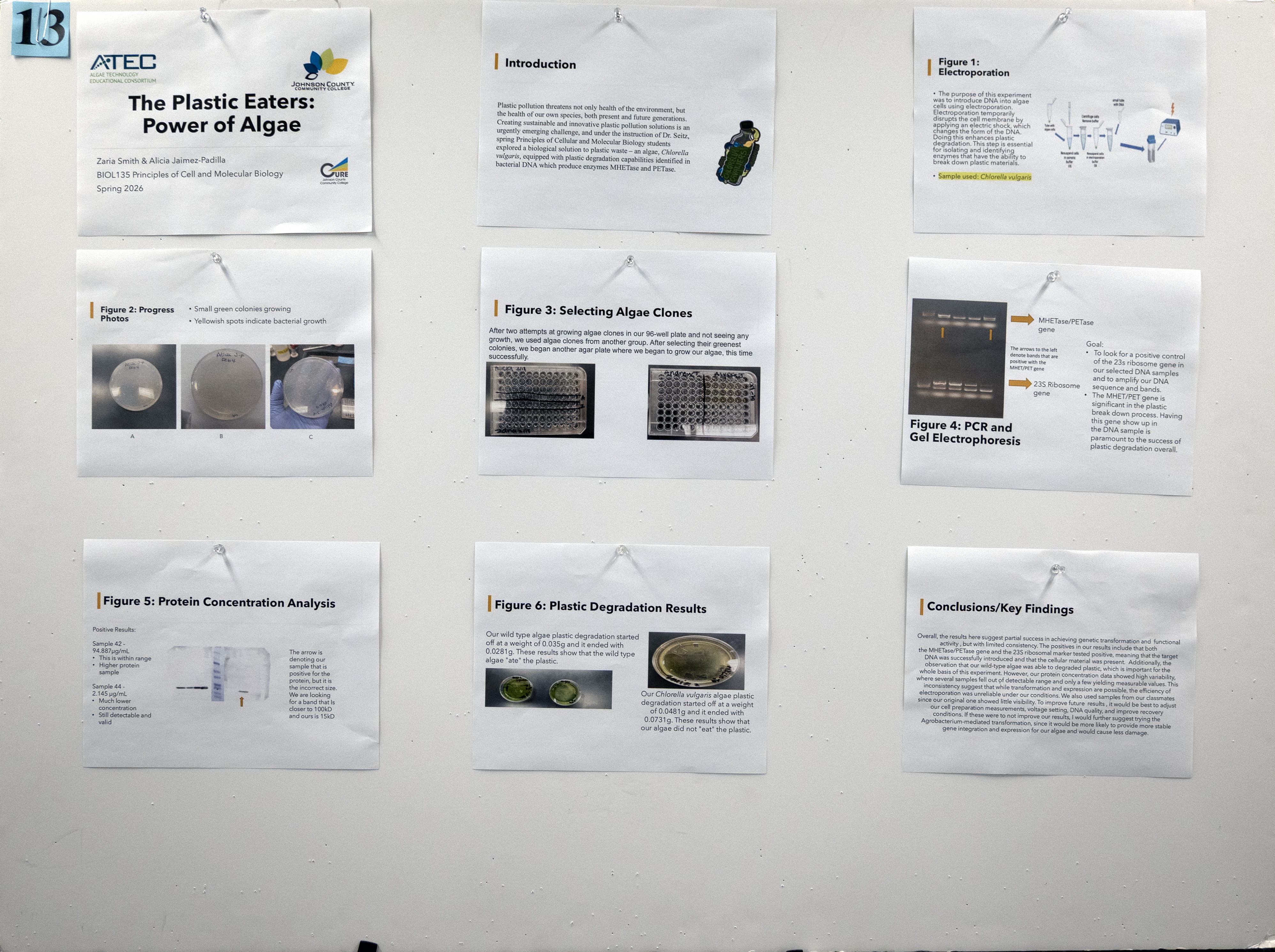
The Geneva Environment Network posits that the world is currently facing a plastics crisis; that plastic pollution threatens not only the health of the environment, but the health of our own species. Creating sustainable and innovative plastic pollution solutions is an urgently emerging challenge, and under the instruction of Dr. Seitz, spring Principles of Cellular and Molecular Biology students explored a biological solution to plastic waste- an alga, Chlorella vulgaris, equipped with plastic degradation capabilities identified in bacterial DNA which produce enzymes MHETase and PETase. Through the process of electroporation, we introduced the bacterial DNA to Chlorella vulgaris. We observed the algae colonies for three weeks in preparation for colony selection. We then began our plastic degradation assay experiment, measuring how much of the plastic coupons went into the algae and how much came out. My partner and I saw a suggested decrease in mass from 0.035mg to 0.0281mg in the plastic coupons. To identify if the foreign DNA was responsible, we used a process to isolate the DNA from our algae samples. Through centrifugation, mixing with reagents, sample reduction, and desiccant dehydration, we purified our algae cell samples and determined representation of experimental DNA through polymerase chain reaction (PCR) tests. The PCR Results lab, which involved using electrophoresis on DNA samples in gel wells, revealed that my cloned samples were positive for the foreign DNA sequences. This suggests that the experimental bacterial DNA sequences were present in the algae colonies that successfully decreased plastic volumes.
Image
Plastic Eaters: The Power of Algae
CoLab, COM 234
The Geneva Environment Network posits that the world is currently facing a plastics crisis; that plastic pollution threatens not only the health of the environment, but the health of our own species. Creating sustainable and innovative plastic pollution solutions is an urgently emerging challenge, and under the instruction of Dr. Seitz, spring Principles of Cellular and Molecular Biology students explored a biological solution to plastic waste- an alga, Chlorella vulgaris, equipped with plastic degradation capabilities identified in bacterial DNA which produce enzymes MHETase and PETase. Through the process of electroporation, we introduced the bacterial DNA to Chlorella vulgaris. We observed the algae colonies for three weeks in preparation for colony selection. We then began our plastic degradation assay experiment, measuring how much of the plastic coupons went into the algae and how much came out. My partner and I saw a suggested decrease in mass from 0.035mg to 0.0281mg in the plastic coupons. To identify if the foreign DNA was responsible, we used a process to isolate the DNA from our algae samples. Through centrifugation, mixing with reagents, sample reduction, and desiccant dehydration, we purified our algae cell samples and determined representation of experimental DNA through polymerase chain reaction (PCR) tests. The PCR Results lab, which involved using electrophoresis on DNA samples in gel wells, revealed that my cloned samples were positive for the foreign DNA sequences. This suggests that the experimental bacterial DNA sequences were present in the algae colonies that successfully decreased plastic volumes.
Comments
The faculty mentor for this project was Heather Seitz.