

Enhancing the Plastic-Degrading Capabilities of Chlorella Vulgaris via Genetic Engineering
Location
CoLab, COM 229
Start Date
30-4-2026 12:00 PM
Document Type
Poster
Description
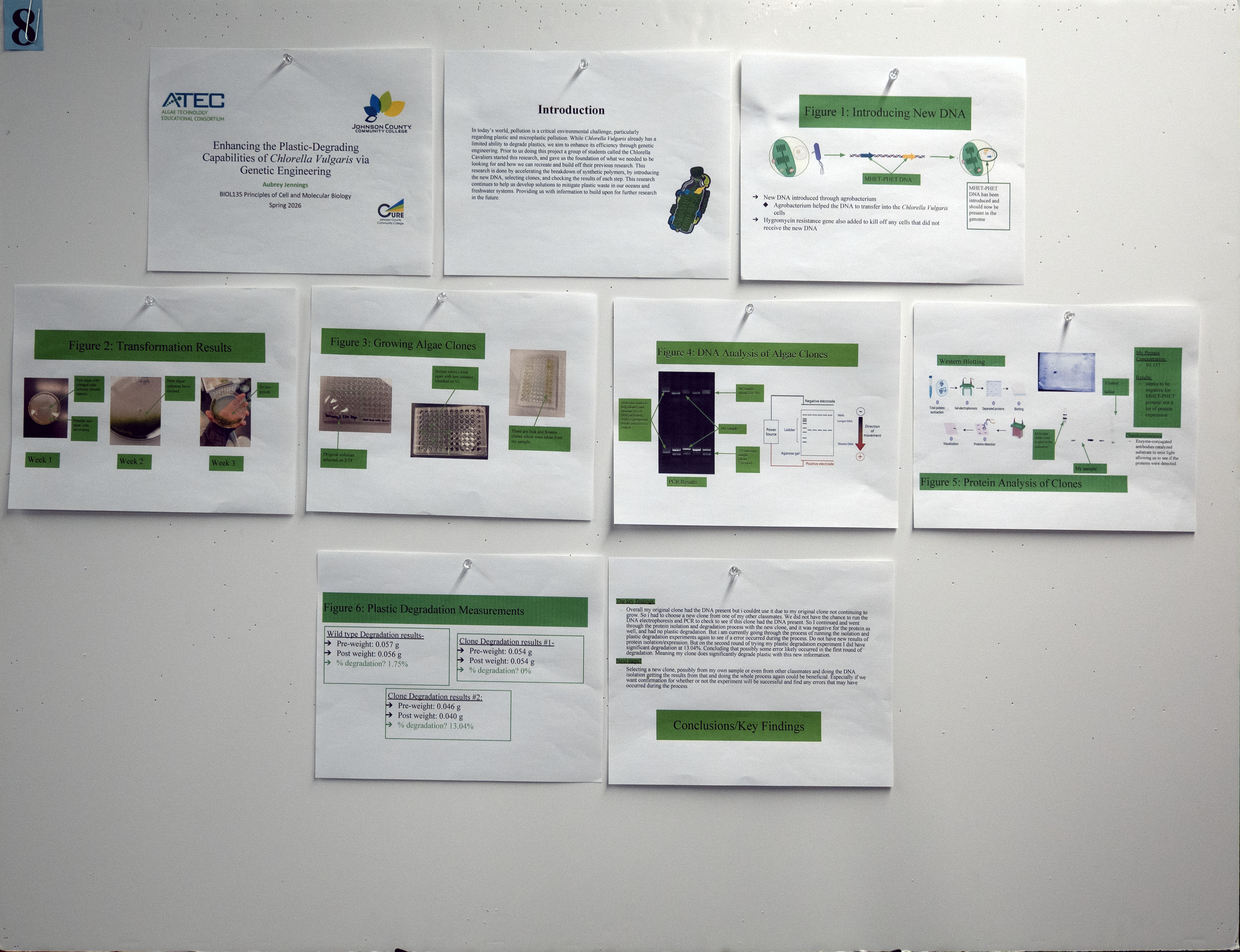
In today’s world, pollution is a critical environmental challenge, particularly regarding plastic and microplastic pollution. While Chlorella Vulagris already has a limited ability to degrade plastics, we aim to enhance its efficiency through genetic engineering. The first step in this research was to introduce our DNA into the algae samples. Following our addition of plastic-degrading enzymes to the algae samples, we selected one clone from about 20 others and isolated it after introducing the DNA. After isolating our clones, we screened them for the DNA and proteins introduced at the beginning of this research. We will then be using this clone to test the % degradation of plastic. There were several initial problems with the clone I had selected, but it ultimately contained DNA and proteins. Even though the clone I had selected, isolated, and tested contained the DNA, it did not continue to grow, so I will not be able to use it. So, I have selected a new clone, and I will be starting the process again. By following the same steps, I will obtain a new clone with the DNA present and a continuously growing clone that I will be able to use in the plastic degradation section of this research. By accelerating the breakdown of synthetic polymers, this research continues to help us develop solutions to mitigate plastic waste in our oceans and freshwater systems. Providing us with information to build upon for further research in the future.
Image
Enhancing the Plastic-Degrading Capabilities of Chlorella Vulgaris via Genetic Engineering
CoLab, COM 229
In today’s world, pollution is a critical environmental challenge, particularly regarding plastic and microplastic pollution. While Chlorella Vulagris already has a limited ability to degrade plastics, we aim to enhance its efficiency through genetic engineering. The first step in this research was to introduce our DNA into the algae samples. Following our addition of plastic-degrading enzymes to the algae samples, we selected one clone from about 20 others and isolated it after introducing the DNA. After isolating our clones, we screened them for the DNA and proteins introduced at the beginning of this research. We will then be using this clone to test the % degradation of plastic. There were several initial problems with the clone I had selected, but it ultimately contained DNA and proteins. Even though the clone I had selected, isolated, and tested contained the DNA, it did not continue to grow, so I will not be able to use it. So, I have selected a new clone, and I will be starting the process again. By following the same steps, I will obtain a new clone with the DNA present and a continuously growing clone that I will be able to use in the plastic degradation section of this research. By accelerating the breakdown of synthetic polymers, this research continues to help us develop solutions to mitigate plastic waste in our oceans and freshwater systems. Providing us with information to build upon for further research in the future.
Comments
The faculty mentor for this project was Heather Seitz.