

Location
CoLab, COM 100
Start Date
1-5-2025 8:30 AM
Document Type
Poster
Description
Temperature, moon phase, and water availability significantly affect wildlife in neighborhoods by influencing habitat conditions, food availability, and survival. Rising temperatures can cause heat stress, disrupt migration and breeding cycles, and force animals to seek cooler areas. Conversely, extreme cold may interfere with hibernation and nesting behaviors. Water levels also play a crucial role, as droughts can reduce drinking sources, limit vegetation growth, and increase competition among species. On the other hand, excessive rainfall and flooding may destroy habitats, displace wildlife, and push animals into urban areas. These environmental changes can lead to population declines and shifts in local ecosystems. Understanding these impacts is essential for promoting sustainable urban planning and conservation efforts to support wildlife in changing environments.
Image
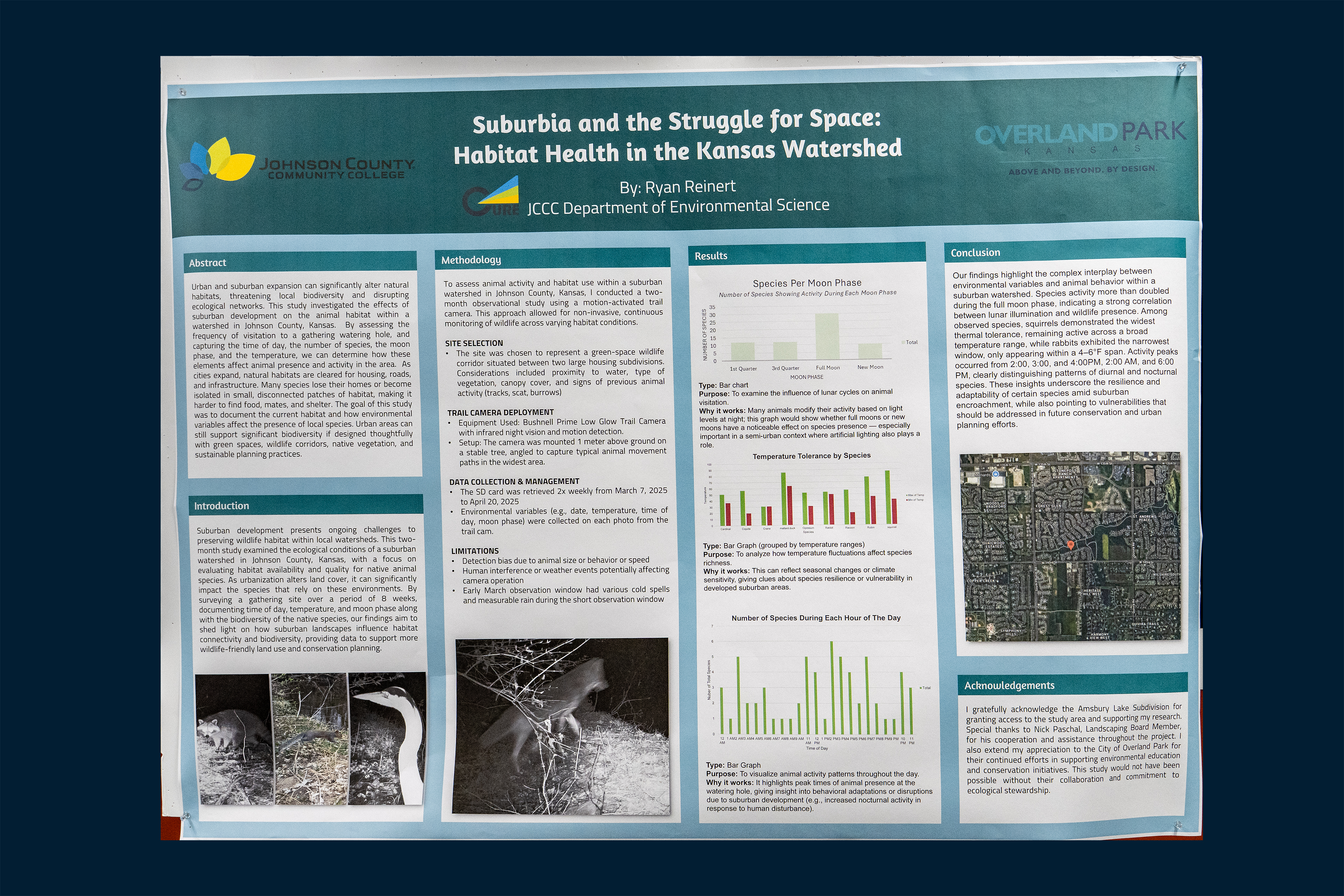
Biodiversity in a Residential Area
CoLab, COM 100
Temperature, moon phase, and water availability significantly affect wildlife in neighborhoods by influencing habitat conditions, food availability, and survival. Rising temperatures can cause heat stress, disrupt migration and breeding cycles, and force animals to seek cooler areas. Conversely, extreme cold may interfere with hibernation and nesting behaviors. Water levels also play a crucial role, as droughts can reduce drinking sources, limit vegetation growth, and increase competition among species. On the other hand, excessive rainfall and flooding may destroy habitats, displace wildlife, and push animals into urban areas. These environmental changes can lead to population declines and shifts in local ecosystems. Understanding these impacts is essential for promoting sustainable urban planning and conservation efforts to support wildlife in changing environments.
Comments
The faculty mentor for this project was Deborah Williams, Environmental Science.