

Location
CoLab, COM 100
Start Date
1-5-2025 8:30 AM
Document Type
Poster
Description
Managing common bacterial infections is becoming more difficult as antibiotic resistance continues to increase. This pressing issue for modern healthcare surfaces from bacteria's rapidgenetic adaptation, making existing antibiotics unsuccessful. As researchers working on the Tiny Earth project, we look for unusual bacteria in soil that can produce antibiotics to inhibit safe relatives of the ESKAPE pathogens that are known to develop antibiotic resistance. In this study, we discovered several bacterial isolates with potential antibiotic properties, including strains that effectively inhibited Escherichia coli. This study illustrates the importance of environmental microbiology in the discovery of antimicrobials and adds to the collective global effort to address antibiotic resistance.
Image
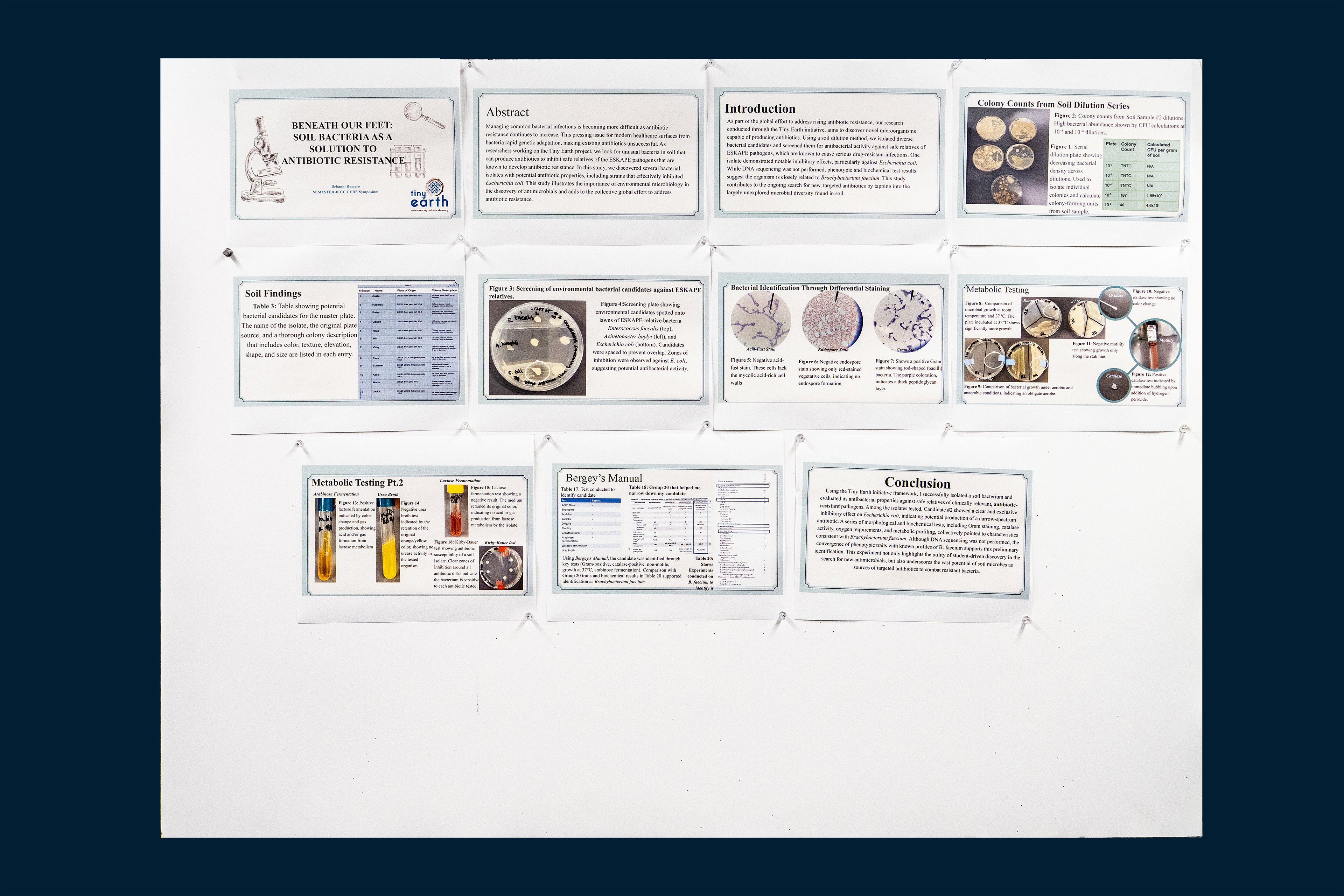
Beneath Our Feet: Soil Bacteria as a Solution to Antibiotic Resistance
CoLab, COM 100
Managing common bacterial infections is becoming more difficult as antibiotic resistance continues to increase. This pressing issue for modern healthcare surfaces from bacteria's rapidgenetic adaptation, making existing antibiotics unsuccessful. As researchers working on the Tiny Earth project, we look for unusual bacteria in soil that can produce antibiotics to inhibit safe relatives of the ESKAPE pathogens that are known to develop antibiotic resistance. In this study, we discovered several bacterial isolates with potential antibiotic properties, including strains that effectively inhibited Escherichia coli. This study illustrates the importance of environmental microbiology in the discovery of antimicrobials and adds to the collective global effort to address antibiotic resistance.
Comments
The faculty mentor for this project was Eulandria Biddle, Biology.