

Location
CoLab, COM 100
Start Date
1-5-2025 1:30 PM
Document Type
Poster
Description
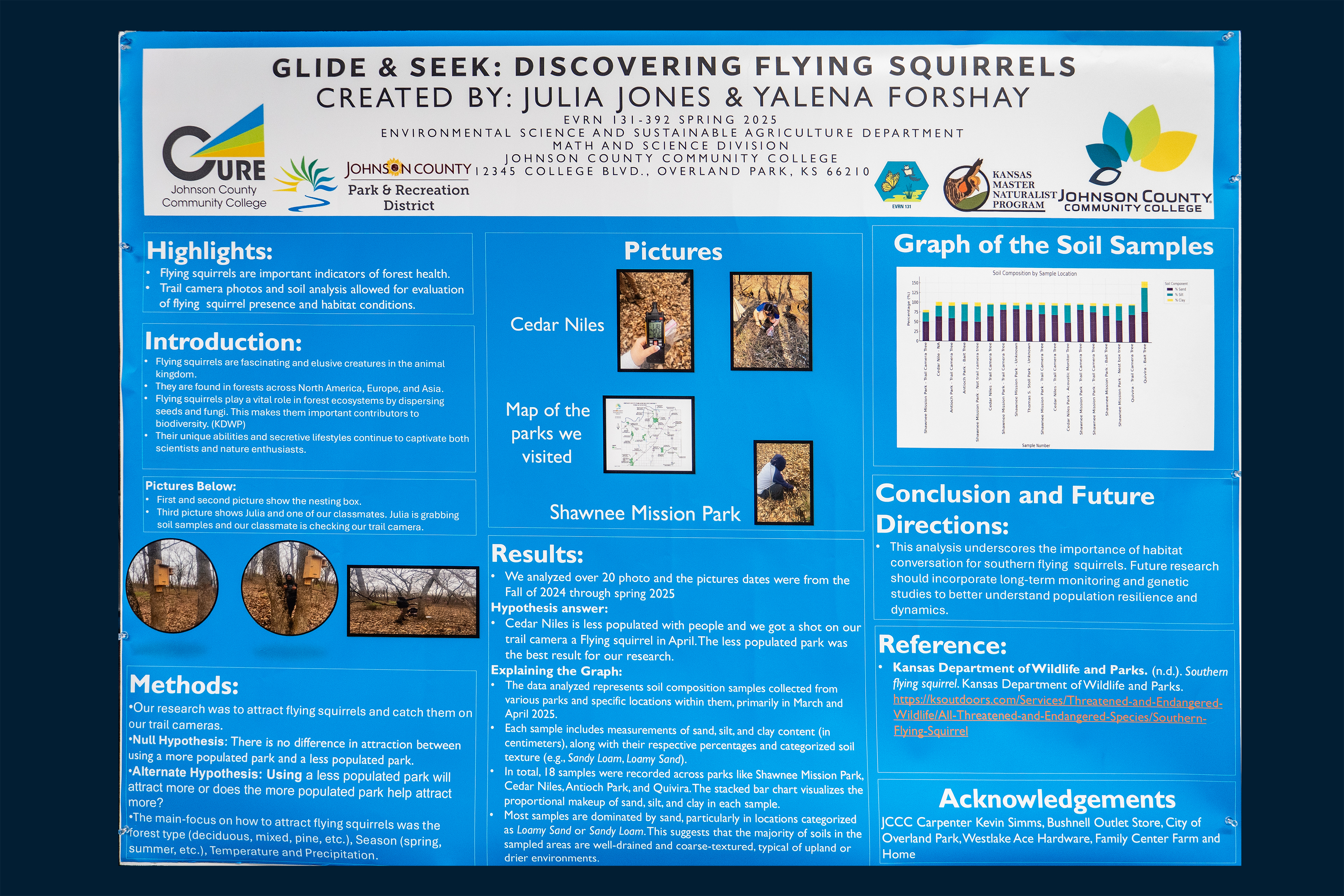
The purpose of trying to track the amount of equipment that is used is to keep the amount of attention regulated. If we know how populated the parks are then it is helpful for the research that way we know where the wildlife would be and how they react based on the amount of traffic through the site. To conduct this research, we will use acoustic monitoring and cameras to detect how the wildlife reacts through the whole day. Throughout conducting this research, the researchers expect that the less populated sites should get more action from the flying squirrels. Flying squirrels are rare in our area but with the right data and research there is a chance to track one down. Proposing that the flying squirrels don’t work out the back up is examining other animals. The choice of animal is a racoon. A good hypothesis of thought for raccoons is, if we change the amount of fruit we leave out for the racoons will the number of racoons change every time? Raccoons are attracted by food so fruit would be the best bats. Racoons are popular animals we see in parks. Our experiment is taking place in parks in the surrounding areas of the school. Having a thought that the flying squirrels will not show up, plenty of raccoons should be visible in our equipment. On the trail camera, we could catch them easily. Only thing to think about is if we should focus on racoons instead of flying squirrels.
Image
Park Findings
CoLab, COM 100
The purpose of trying to track the amount of equipment that is used is to keep the amount of attention regulated. If we know how populated the parks are then it is helpful for the research that way we know where the wildlife would be and how they react based on the amount of traffic through the site. To conduct this research, we will use acoustic monitoring and cameras to detect how the wildlife reacts through the whole day. Throughout conducting this research, the researchers expect that the less populated sites should get more action from the flying squirrels. Flying squirrels are rare in our area but with the right data and research there is a chance to track one down. Proposing that the flying squirrels don’t work out the back up is examining other animals. The choice of animal is a racoon. A good hypothesis of thought for raccoons is, if we change the amount of fruit we leave out for the racoons will the number of racoons change every time? Raccoons are attracted by food so fruit would be the best bats. Racoons are popular animals we see in parks. Our experiment is taking place in parks in the surrounding areas of the school. Having a thought that the flying squirrels will not show up, plenty of raccoons should be visible in our equipment. On the trail camera, we could catch them easily. Only thing to think about is if we should focus on racoons instead of flying squirrels.
Comments
The faculty mentor for this project was Stephanie Ferrero, Environmental Science.