

Location
CoLab, COM 100
Start Date
1-5-2025 6:45 PM
Document Type
Poster
Description
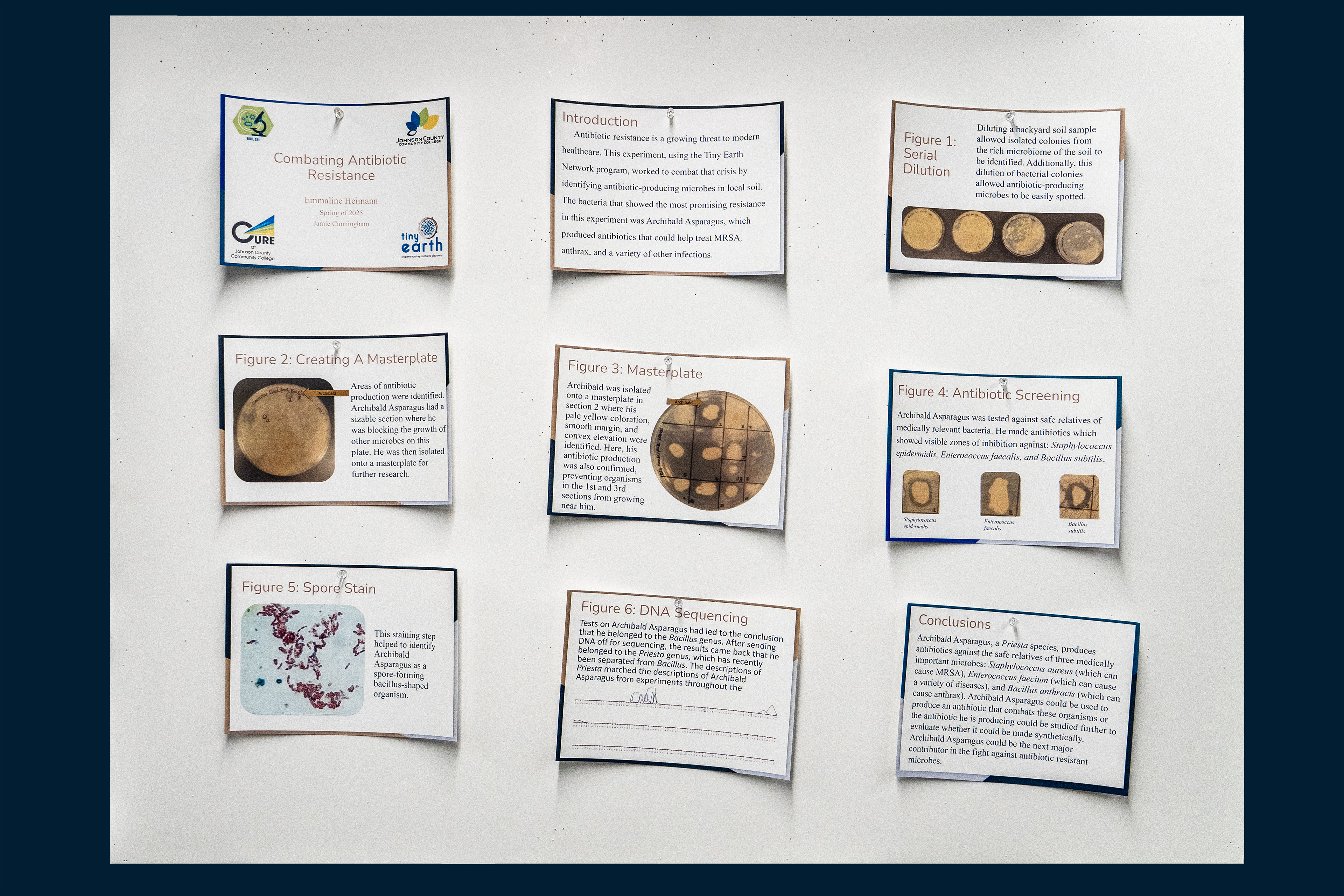
Antibiotic resistance is a growing threat in the modern world. Over the past hundred years, bacteria have evolved to evade the destruction of the antibiotics we currently use. This is incredibly dangerous because it can leave people without hope of recovery for what have been easily treatable diseases for decades. This will continue to be an issue unless new antibiotics are found. In response to this growing threat, programs such as the Tiny Earth Network and the Small World Initiative have chosen to take action, allowing students to find solutions to this growing problem. This experiment, using the Tiny Earth Network program, found antibiotic-producing microbes in local soil. Many of these bacteria showed antibiotic production with zones of inhibition against organisms closely related to many medically important bacteria. The bacteria that showed the most promising resistance, which I named Archibald Asparagus, showed sizable zones of inhibition against safe relatives of the bacteria: Staphylococcus aureus (which can cause MRSA), Enterococcus faecium (which can cause a variety of infections), and Bacillus anthracis (which can cause anthrax). This discovery along with the research of others around the world could slow the progression of the antibiotic resistance crisis.
Image
Combatting Antibiotic Resistant Bacteria
CoLab, COM 100
Antibiotic resistance is a growing threat in the modern world. Over the past hundred years, bacteria have evolved to evade the destruction of the antibiotics we currently use. This is incredibly dangerous because it can leave people without hope of recovery for what have been easily treatable diseases for decades. This will continue to be an issue unless new antibiotics are found. In response to this growing threat, programs such as the Tiny Earth Network and the Small World Initiative have chosen to take action, allowing students to find solutions to this growing problem. This experiment, using the Tiny Earth Network program, found antibiotic-producing microbes in local soil. Many of these bacteria showed antibiotic production with zones of inhibition against organisms closely related to many medically important bacteria. The bacteria that showed the most promising resistance, which I named Archibald Asparagus, showed sizable zones of inhibition against safe relatives of the bacteria: Staphylococcus aureus (which can cause MRSA), Enterococcus faecium (which can cause a variety of infections), and Bacillus anthracis (which can cause anthrax). This discovery along with the research of others around the world could slow the progression of the antibiotic resistance crisis.
Comments
The faculty mentor for this project was Jamie Cunningham, Biology.