

Location
CoLab, COM 100
Start Date
1-5-2025 8:30 AM
Document Type
Poster
Description
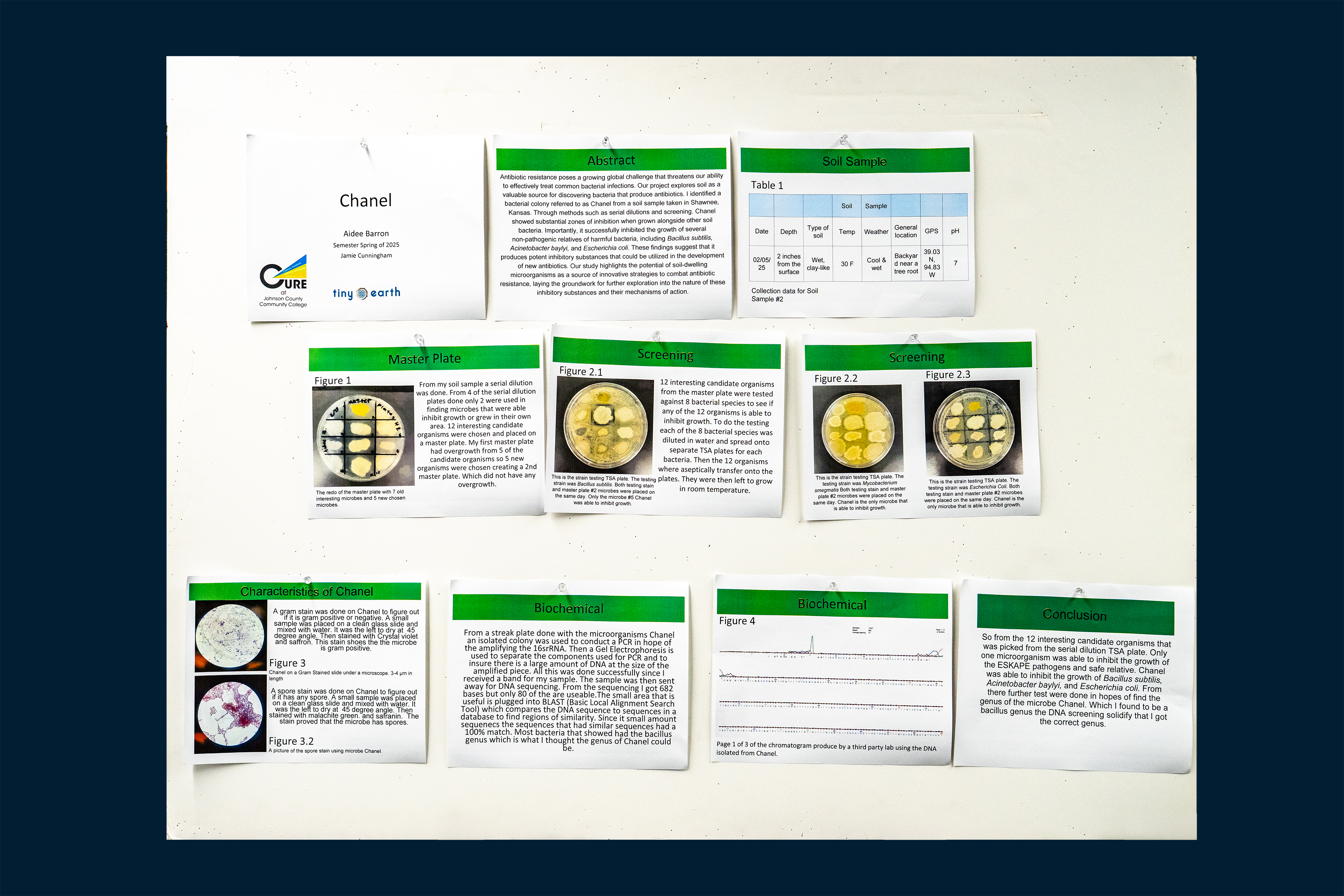
Antibiotic resistance poses a growing global challenge that threatens our ability to effectively treat common bacterial infections, searching for new antimicrobial agents is essential. Our project investigates soil as a valuable source for discovering novel bacteria that produce antibiotics. We identified a noteworthy bacterial colony, referred to as Chanel, from a soil sample taken in Shawnee, Kansas. Through methods such as serial dilutions and competitive growth assays, Chanel showed substantial zones of inhibition when grown alongside other soil bacteria. Importantly, it successfully inhibited the growth of several non-pathogenic relatives of harmful bacteria, including Bacillus subtilis, Acinetobacter baylyi, and Escherichia coli. These findings suggest that it produces potent inhibitory substances that could be utilized in the development of new antibiotics. Our study highlights the potential of soil-dwelling microorganisms as a source of innovative strategies to combat antibiotic resistance, laying the groundwork for further exploration into the nature of these inhibitory substances and their mechanisms of action.
Image
Chanel
CoLab, COM 100
Antibiotic resistance poses a growing global challenge that threatens our ability to effectively treat common bacterial infections, searching for new antimicrobial agents is essential. Our project investigates soil as a valuable source for discovering novel bacteria that produce antibiotics. We identified a noteworthy bacterial colony, referred to as Chanel, from a soil sample taken in Shawnee, Kansas. Through methods such as serial dilutions and competitive growth assays, Chanel showed substantial zones of inhibition when grown alongside other soil bacteria. Importantly, it successfully inhibited the growth of several non-pathogenic relatives of harmful bacteria, including Bacillus subtilis, Acinetobacter baylyi, and Escherichia coli. These findings suggest that it produces potent inhibitory substances that could be utilized in the development of new antibiotics. Our study highlights the potential of soil-dwelling microorganisms as a source of innovative strategies to combat antibiotic resistance, laying the groundwork for further exploration into the nature of these inhibitory substances and their mechanisms of action.
Comments
The faculty mentor for this project was Jamie Cunningham, Biology.