

Location
CoLab, COM 100
Start Date
1-5-2025 5:30 PM
Document Type
Poster
Description
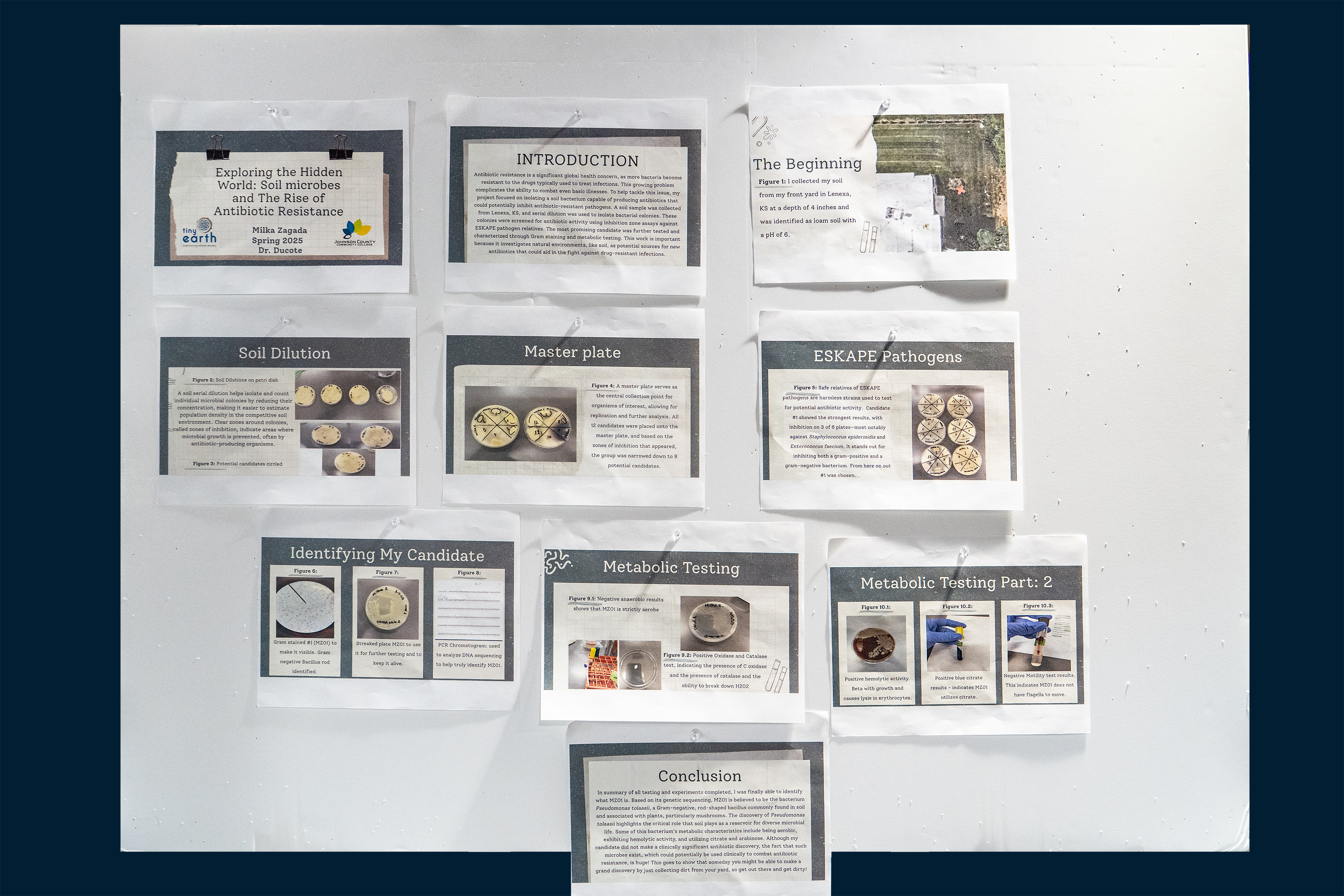
Antibiotic resistance is a growing problem in medicine. Over time, humans have become increasingly resistant to antibiotics, leading to more severe infections. This experiment focused on isolating a unique antibiotic-producing soil bacterium, testing its antibiotic properties, and characterizing the bacterium. The study aimed to explore soil microorganisms' potential and ability to inhibit antibiotic-resistant pathogens using aseptic techniques. A soil sample was collected from Lenexa, and bacterial isolates were obtained through selective culturing methods, including serial dilution and plating on nutrient agar. The bacterial colonies that appeared were initially screened for their ability to produce antibiotics using a preliminary inhibition zone assay against common pathogens. After being isolated, the bacterium was tested for its ability to inhibit the growth of various antibiotic-resistant pathogens, specifically those in the ESKAPE group. Its effectiveness in suppressing the growth of these pathogens was evaluated using screening plates, which offered insights into its potential for antibiotic inhibition. These plates provide a controlled environment that allows for precise measurement of inhibition zones. The bacterium was then subjected to further analysis to determine its species identity. A Gram stain revealed that it was a Gram-negative bacillus that did not form spores. Further characterization was performed to explore the bacterium’s antibiotic production mechanisms and resistance profiles, contributing to a broader understanding of how soil bacteria can be used to fight antibiotic resistance. This study highlights the potential of soil microbiomes in discovering new antimicrobial agents.
Image
Exploring the Hidden World: Soil Microbes and the Rise of Antibiotic Resistance
CoLab, COM 100
Antibiotic resistance is a growing problem in medicine. Over time, humans have become increasingly resistant to antibiotics, leading to more severe infections. This experiment focused on isolating a unique antibiotic-producing soil bacterium, testing its antibiotic properties, and characterizing the bacterium. The study aimed to explore soil microorganisms' potential and ability to inhibit antibiotic-resistant pathogens using aseptic techniques. A soil sample was collected from Lenexa, and bacterial isolates were obtained through selective culturing methods, including serial dilution and plating on nutrient agar. The bacterial colonies that appeared were initially screened for their ability to produce antibiotics using a preliminary inhibition zone assay against common pathogens. After being isolated, the bacterium was tested for its ability to inhibit the growth of various antibiotic-resistant pathogens, specifically those in the ESKAPE group. Its effectiveness in suppressing the growth of these pathogens was evaluated using screening plates, which offered insights into its potential for antibiotic inhibition. These plates provide a controlled environment that allows for precise measurement of inhibition zones. The bacterium was then subjected to further analysis to determine its species identity. A Gram stain revealed that it was a Gram-negative bacillus that did not form spores. Further characterization was performed to explore the bacterium’s antibiotic production mechanisms and resistance profiles, contributing to a broader understanding of how soil bacteria can be used to fight antibiotic resistance. This study highlights the potential of soil microbiomes in discovering new antimicrobial agents.
Comments
The faculty mentor for this project was Rachael Ott, Biology.