

Location
CoLab, COM 100
Start Date
1-5-2025 5:30 PM
Document Type
Poster
Description
Antibiotic resistance is a growing problem in modern medicine, as many bacterial pathogens have evolved mechanisms to withstand commonly used treatments. This has led to an urgent need for new antimicrobial compounds to combat drug-resistant infections. One group of particularly concerning bacteria is the ESKAPE pathogens, which include Enterococcus faecium, Staphylococcus aureus, Klebsiella pneumoniae, Acinetobacter baumannii, Pseudomonas aeruginosa, and Enterobacter species. These organisms are known for their ability to "escape" the effects of antibiotics, making them major contributors to hospital-acquired infections. To address this pressing issue, a survey of soil microorganisms from a site in Ottawa, KS was collected to identify potential antibiotic-producing candidates. Soil sample was collected, diluted, and cultured on selective media to isolate bacteria capable of producing antimicrobial compounds. The initial screening revealed 12 promising isolates that demonstrated inhibitory activity against non-pathogenic relatives of ESKAPE pathogens. Further testing, including secondary screenings and biochemical characterization, narrowed the selection to a single highly effective candidate. This candidate is a Gram-positive, spore-forming rod, suggesting it may belong to the genus Bacillus or Streptomyces, both of which are well-known producers of antibiotics. Further studies, including genetic sequencing and metabolite analysis, will be necessary to determine the specific identity of this organism and the nature of the antimicrobial compound it produces. If successful, this discovery could contribute to the ongoing search for novel antibiotics to combat drug-resistant infections.
Image
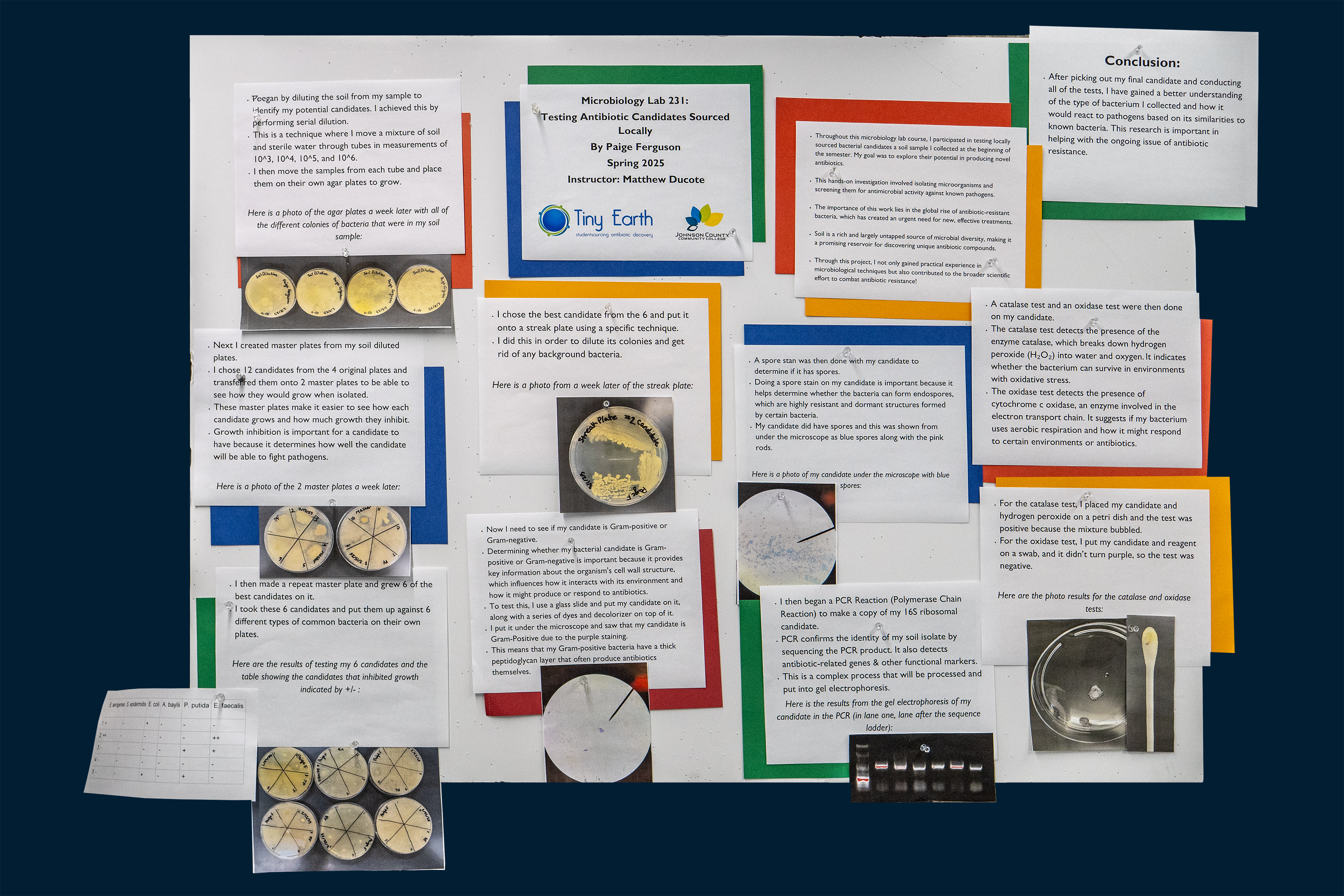
Procedures of Finding Bacteria that Inhibit Growth as a Way to Find Antibiotic Resistance
CoLab, COM 100
Antibiotic resistance is a growing problem in modern medicine, as many bacterial pathogens have evolved mechanisms to withstand commonly used treatments. This has led to an urgent need for new antimicrobial compounds to combat drug-resistant infections. One group of particularly concerning bacteria is the ESKAPE pathogens, which include Enterococcus faecium, Staphylococcus aureus, Klebsiella pneumoniae, Acinetobacter baumannii, Pseudomonas aeruginosa, and Enterobacter species. These organisms are known for their ability to "escape" the effects of antibiotics, making them major contributors to hospital-acquired infections. To address this pressing issue, a survey of soil microorganisms from a site in Ottawa, KS was collected to identify potential antibiotic-producing candidates. Soil sample was collected, diluted, and cultured on selective media to isolate bacteria capable of producing antimicrobial compounds. The initial screening revealed 12 promising isolates that demonstrated inhibitory activity against non-pathogenic relatives of ESKAPE pathogens. Further testing, including secondary screenings and biochemical characterization, narrowed the selection to a single highly effective candidate. This candidate is a Gram-positive, spore-forming rod, suggesting it may belong to the genus Bacillus or Streptomyces, both of which are well-known producers of antibiotics. Further studies, including genetic sequencing and metabolite analysis, will be necessary to determine the specific identity of this organism and the nature of the antimicrobial compound it produces. If successful, this discovery could contribute to the ongoing search for novel antibiotics to combat drug-resistant infections.
Comments
The faculty mentor for this project was Matthew Ducote, Biology.