

Location
CoLab, COM 100
Start Date
1-5-2025 5:30 PM
Document Type
Poster
Description
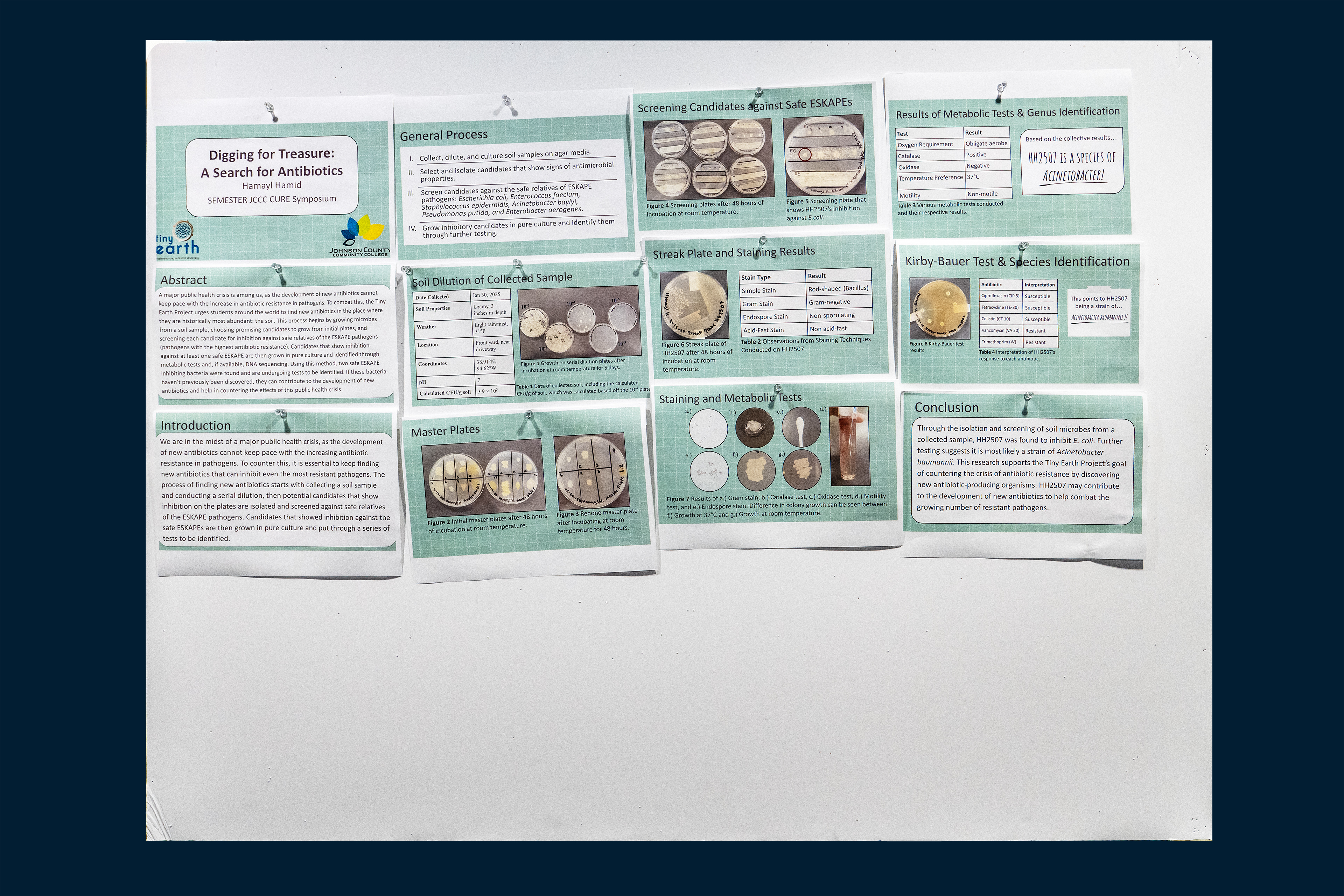
A major public health crisis is among us, as the development of new antibiotics cannot keep pace with the increase in antibiotic resistance in pathogens. To combat this, the Tiny Earth Project urges students around the world to find new antibiotics in the place where they are historically most abundant: the soil. This process begins by growing microbes from a soil sample, choosing promising candidates to grow from initial plates, and screening each candidate for inhibition against safe relatives of the ESKAPE pathogens (pathogens with the highest antibiotic resistance). Candidates that show inhibition against at least one safe ESKAPE are then grown in pure culture and identified through metabolic tests and DNA sequencing. Using this method, two safe ESKAPE inhibiting bacteria were found and are undergoing tests to be identified. If these bacteria haven’t previously been discovered, they can contribute to the development of new antibiotics and help in countering the effects of this public health crisis.
Image
Digging for Treasure: A Search for New Antibiotics
CoLab, COM 100
A major public health crisis is among us, as the development of new antibiotics cannot keep pace with the increase in antibiotic resistance in pathogens. To combat this, the Tiny Earth Project urges students around the world to find new antibiotics in the place where they are historically most abundant: the soil. This process begins by growing microbes from a soil sample, choosing promising candidates to grow from initial plates, and screening each candidate for inhibition against safe relatives of the ESKAPE pathogens (pathogens with the highest antibiotic resistance). Candidates that show inhibition against at least one safe ESKAPE are then grown in pure culture and identified through metabolic tests and DNA sequencing. Using this method, two safe ESKAPE inhibiting bacteria were found and are undergoing tests to be identified. If these bacteria haven’t previously been discovered, they can contribute to the development of new antibiotics and help in countering the effects of this public health crisis.
Comments
The faculty mentor for this project was Eulandria Biddle, Biology.