

Location
CoLab, COM 100
Start Date
1-5-2025 2:45 PM
Document Type
Poster
Description
Antibiotic-resistant strains of microbes are dangerous and have become a problem in hospitals and are now spreading throughout the community. ESKAPE pathogens, the six more common pathogens that cause major threats in clinical settings, have evolved to develop antibiotic resistance against multiple popular antibiotics used in the last decades, rendering them ineffective. To aid in the search for new sources of antibiotics, the Tiny Earth project has given the opportunity for students around the world to look for microbes in the soil capable of inhibiting safe relatives of ESKAPE pathogens. Through serial dilution, plating of microbes, antibiotic screening, and other tests, I have discovered candidate GHC2, an antibiotic producing bacteria capable of inhibiting growth of Staphylococcus epidermidis, and Bacillus subtilis.
Image
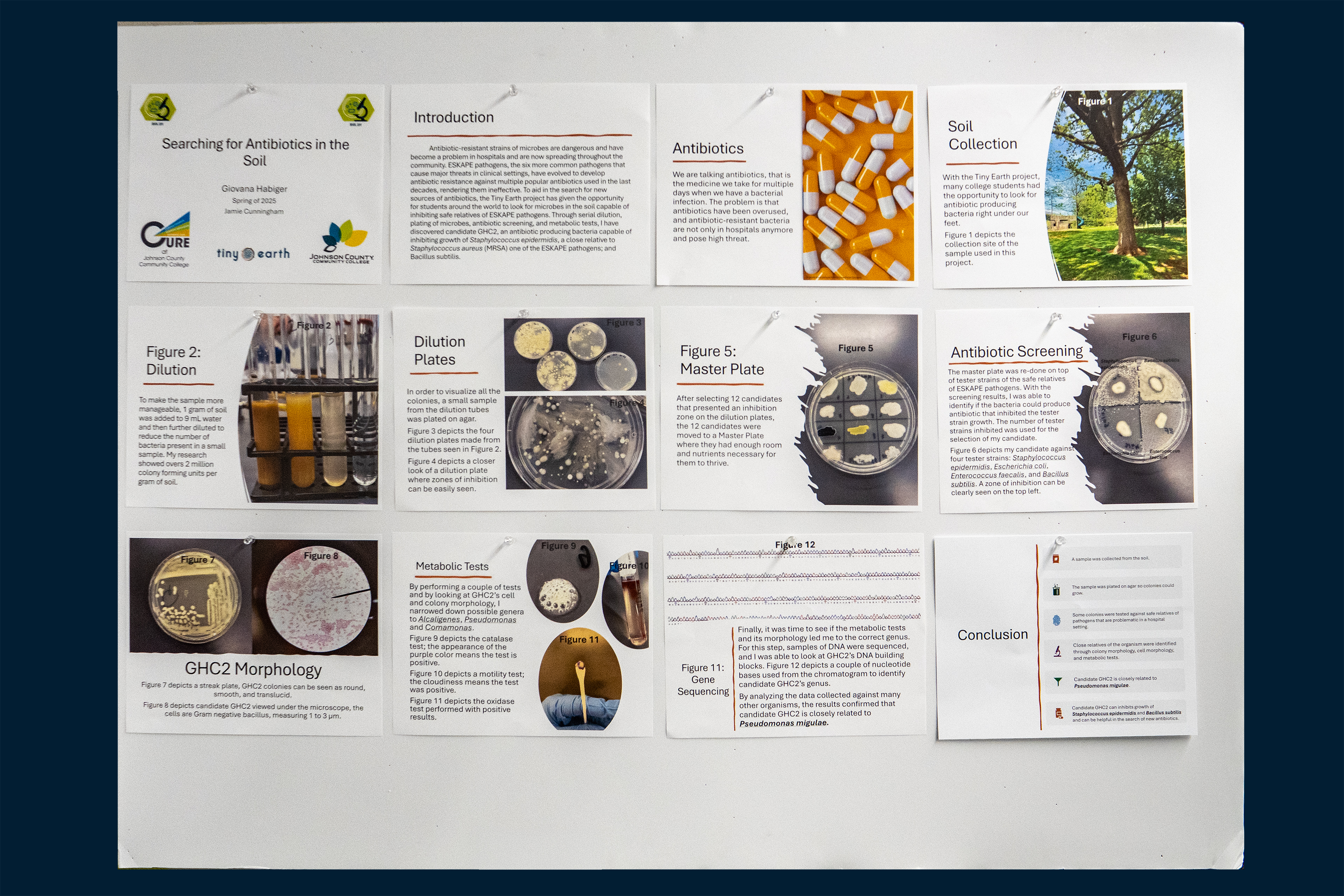
Searching for Antibiotics in the Soil
CoLab, COM 100
Antibiotic-resistant strains of microbes are dangerous and have become a problem in hospitals and are now spreading throughout the community. ESKAPE pathogens, the six more common pathogens that cause major threats in clinical settings, have evolved to develop antibiotic resistance against multiple popular antibiotics used in the last decades, rendering them ineffective. To aid in the search for new sources of antibiotics, the Tiny Earth project has given the opportunity for students around the world to look for microbes in the soil capable of inhibiting safe relatives of ESKAPE pathogens. Through serial dilution, plating of microbes, antibiotic screening, and other tests, I have discovered candidate GHC2, an antibiotic producing bacteria capable of inhibiting growth of Staphylococcus epidermidis, and Bacillus subtilis.
Comments
The faculty mentor for this project was Jamie Cunningham, Biology.