

Location
CoLab, COM 100
Start Date
1-5-2025 1:30 PM
Document Type
Poster
Description
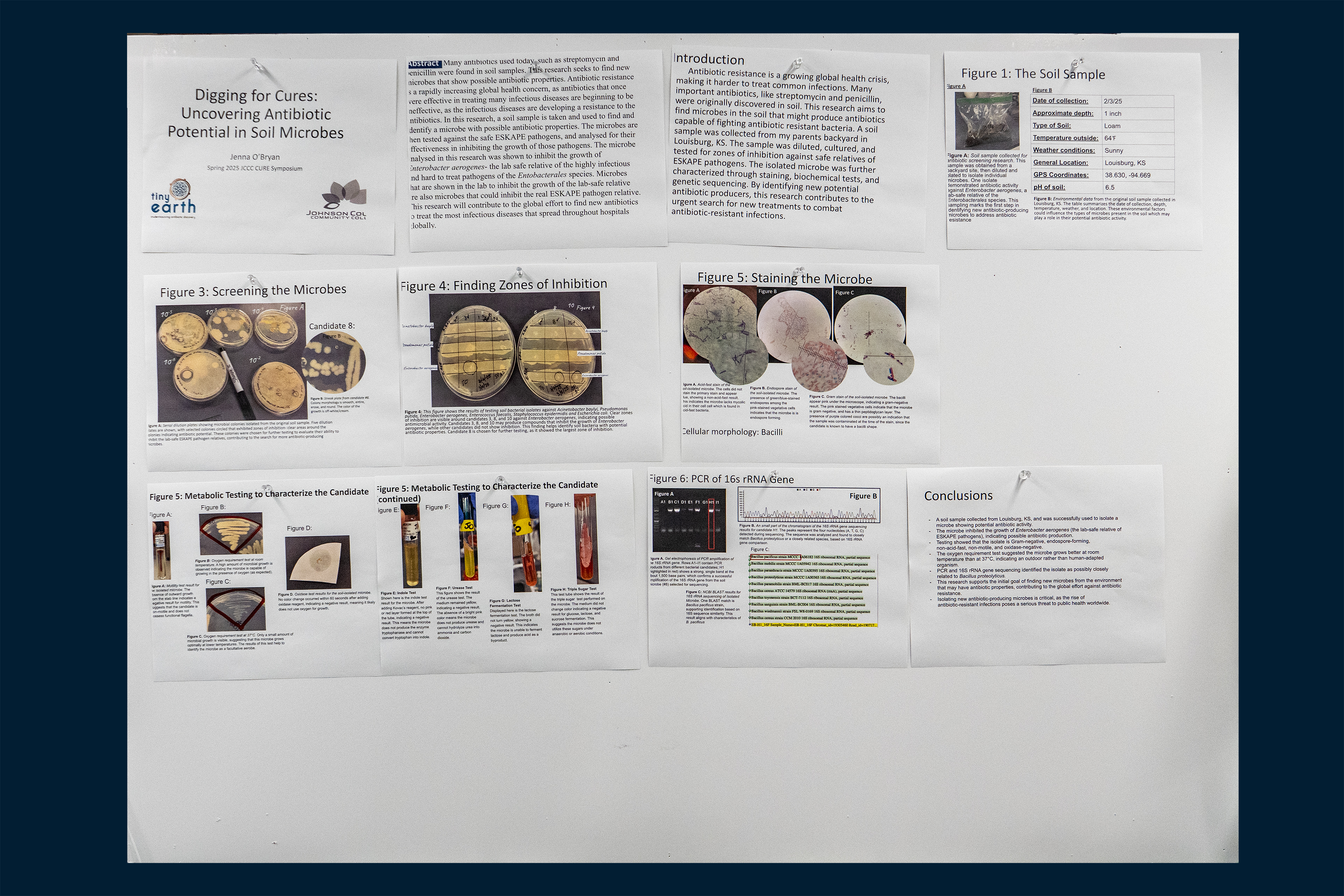
Many antibiotics used today, such as streptomycin and penicillin were found in soil samples. This research seeks to find new microbes that show possible antibiotic properties. Antibiotic resistance is a rapidly increasing global health concern, as antibiotics that once were effective in treating many infectious diseases are beginning to be ineffective, as the infectious diseases are developing a resistance to the antibiotics. In this research, a soil sample is taken and used to find and identify a microbe with possible antibiotic properties. The microbes are then tested against the safe ESKAPE pathogens, and analysed for their effectiveness in inhibiting the growth of those pathogens. The microbe analysed in this research was shown to inhibit the growth of Enterobacter aerogenes- the lab safe relative of the highly infectious and hard to treat pathogens of the Entobacterales species. Microbes that are shown in the lab to inhibit the growth of the lab-safe relative are also microbes that could inhibit the real ESKAPE pathogen relative. This research will contribute to the global effort to find new antibiotics to treat the most infectious diseases that spread throughout hospitals globally.
Image
Digging for Cures: Uncovering Antibiotic Potential in Soil Microbes
CoLab, COM 100
Many antibiotics used today, such as streptomycin and penicillin were found in soil samples. This research seeks to find new microbes that show possible antibiotic properties. Antibiotic resistance is a rapidly increasing global health concern, as antibiotics that once were effective in treating many infectious diseases are beginning to be ineffective, as the infectious diseases are developing a resistance to the antibiotics. In this research, a soil sample is taken and used to find and identify a microbe with possible antibiotic properties. The microbes are then tested against the safe ESKAPE pathogens, and analysed for their effectiveness in inhibiting the growth of those pathogens. The microbe analysed in this research was shown to inhibit the growth of Enterobacter aerogenes- the lab safe relative of the highly infectious and hard to treat pathogens of the Entobacterales species. Microbes that are shown in the lab to inhibit the growth of the lab-safe relative are also microbes that could inhibit the real ESKAPE pathogen relative. This research will contribute to the global effort to find new antibiotics to treat the most infectious diseases that spread throughout hospitals globally.
Comments
The faculty mentor for this project was Eulandria Biddle, Biology.