

Location
CoLab, COM 100
Start Date
1-5-2025 12:15 PM
Document Type
Poster
Description
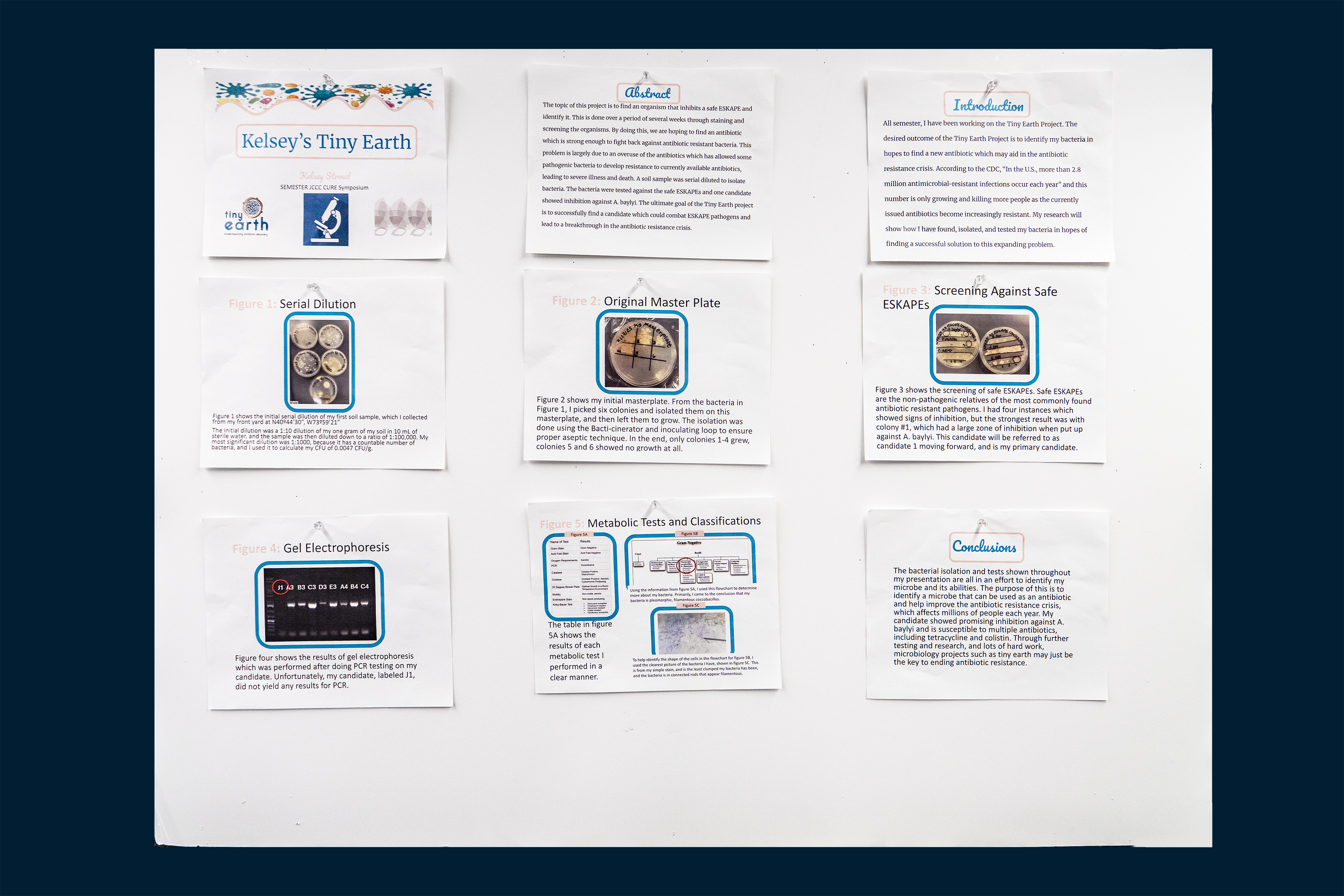
The topic of this project is to find an organism that inhibits a safe ESKAPE and identify it. This is done over a period of several weeks through staining and screening the organisms. By doing this, we are hoping to find an antibiotic which is strong enough to fight back against antibiotic resistant bacteria. This problem is largely due to an overuse of the antibiotics which has allowed some pathogenic bacteria to develop immunity to currently available antibiotics, leading to severe illness and death. We have addressed this issue by retrieving samples from a virtually untapped source of antibiotics – the soil around us. We have since serially diluted our soil samples, isolated organisms, testing them against safe ESKAPEs, and stained the candidates in an effort to identify them. I have thus far discovered two possible candidates, but I have been focusing on my candidate #1, which has consistently shown signs of inhibition against the safe ESKAPEs. The final goal of the Tiny Earth project is to successfully find a candidate which could combat ESKAPE pathogens and lead to a breakthrough in the antibiotic resistance crisis.
Image
Kelsey’s Tiny Earth Project
CoLab, COM 100
The topic of this project is to find an organism that inhibits a safe ESKAPE and identify it. This is done over a period of several weeks through staining and screening the organisms. By doing this, we are hoping to find an antibiotic which is strong enough to fight back against antibiotic resistant bacteria. This problem is largely due to an overuse of the antibiotics which has allowed some pathogenic bacteria to develop immunity to currently available antibiotics, leading to severe illness and death. We have addressed this issue by retrieving samples from a virtually untapped source of antibiotics – the soil around us. We have since serially diluted our soil samples, isolated organisms, testing them against safe ESKAPEs, and stained the candidates in an effort to identify them. I have thus far discovered two possible candidates, but I have been focusing on my candidate #1, which has consistently shown signs of inhibition against the safe ESKAPEs. The final goal of the Tiny Earth project is to successfully find a candidate which could combat ESKAPE pathogens and lead to a breakthrough in the antibiotic resistance crisis.
Comments
The faculty mentor for this project was Eulandria Biddle, Biology.