

Location
CoLab, COM 100
Start Date
1-5-2025 12:15 PM
Document Type
Poster
Description
Energy drinks (EDs) are widely consumed, particularly among young adults, for their perceived benefits of increased alertness and performance. However, concerns about their impact on cardiovascular and cerebrovascular health persist, with studies highlighting potential risks such as elevated blood pressure and Tc interval prolongation. This project builds upon existing research by examining the acute effects of energy drink consumption on cardiovascular parameters, including electrocardiographic changes, blood pressure fluctuations, and implications for individuals with pre-existing conditions. In addition to reviewing existing literature, a survey of approximately 50 participants was conducted to gather data on the prevalence and patterns of energy drink use. The next phase will involve analyzing survey responses to identify common self-reported effects of energy drink consumption. This analysis will focus on trends in user experiences, such as changes in energy levels, heart rate, sleep patterns, and other noticeable effects. The findings may help raise awareness of potential short-term impacts and contribute to future research on consumer perceptions and health concerns related to energy drinks.
Image
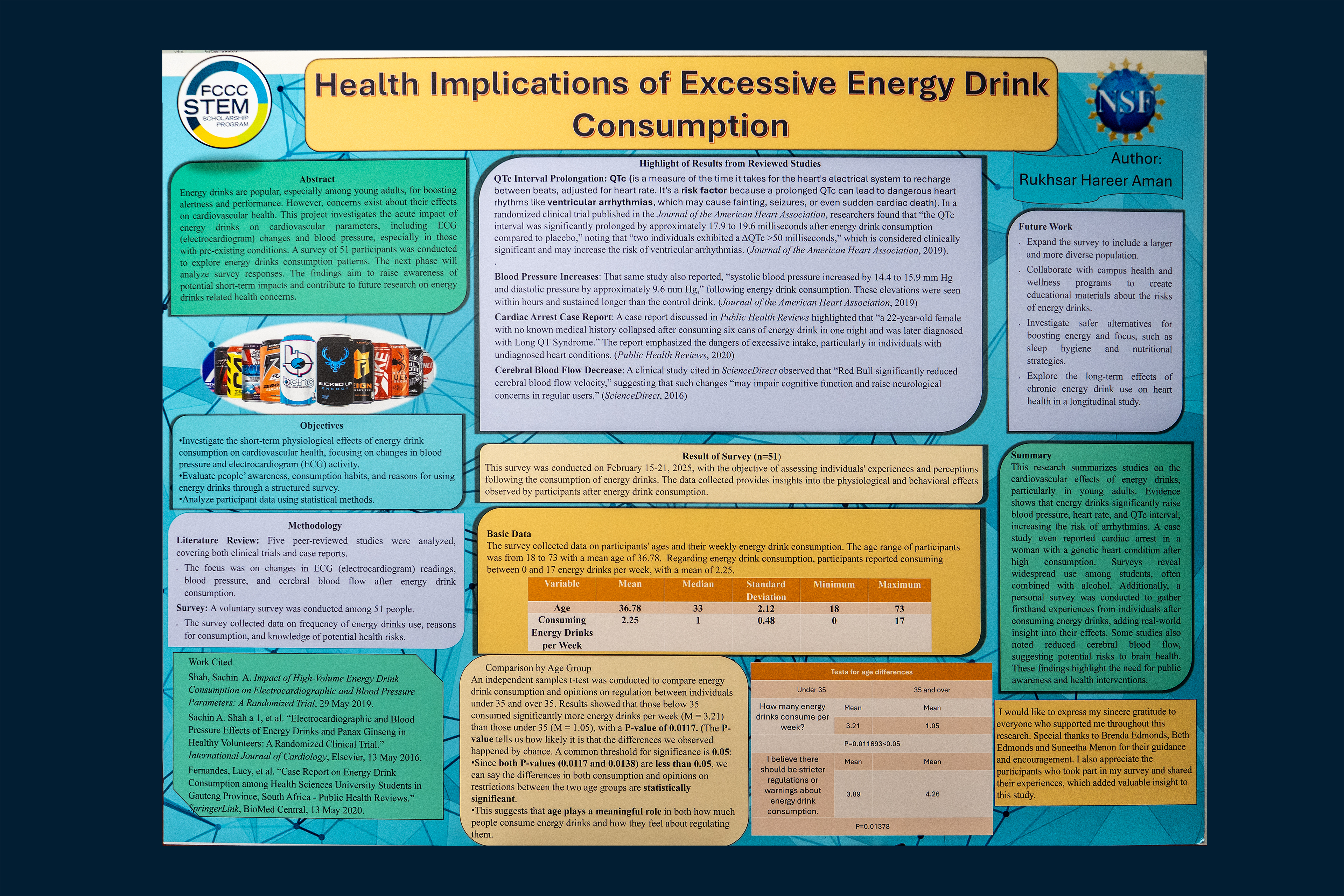
Excessive Use of Energy Drinks
CoLab, COM 100
Energy drinks (EDs) are widely consumed, particularly among young adults, for their perceived benefits of increased alertness and performance. However, concerns about their impact on cardiovascular and cerebrovascular health persist, with studies highlighting potential risks such as elevated blood pressure and Tc interval prolongation. This project builds upon existing research by examining the acute effects of energy drink consumption on cardiovascular parameters, including electrocardiographic changes, blood pressure fluctuations, and implications for individuals with pre-existing conditions. In addition to reviewing existing literature, a survey of approximately 50 participants was conducted to gather data on the prevalence and patterns of energy drink use. The next phase will involve analyzing survey responses to identify common self-reported effects of energy drink consumption. This analysis will focus on trends in user experiences, such as changes in energy levels, heart rate, sleep patterns, and other noticeable effects. The findings may help raise awareness of potential short-term impacts and contribute to future research on consumer perceptions and health concerns related to energy drinks.
Comments
The faculty mentor for this project was Beth Edmonds, STEM Scholars.