

Location
CoLab, OCB 100
Start Date
25-4-2024 12:00 PM
Document Type
Poster
Description
With the rise of popularity in the regenerative agriculture movement it is important to understand the quantitative differences in greenhouse gas emissions between traditional and regenerative ranching. This literature review will add clarity to the greenhouse gas emission levels of both styles of ranching to determine next steps in our global food economy. It is imperative that greenhouse gas emissions are limited and that long term carbon sequestration methods are being implemented. The research suggests that regenerative ranching can bring the emissions associated with eating meat down to zero with carbon credits leftover.
Image
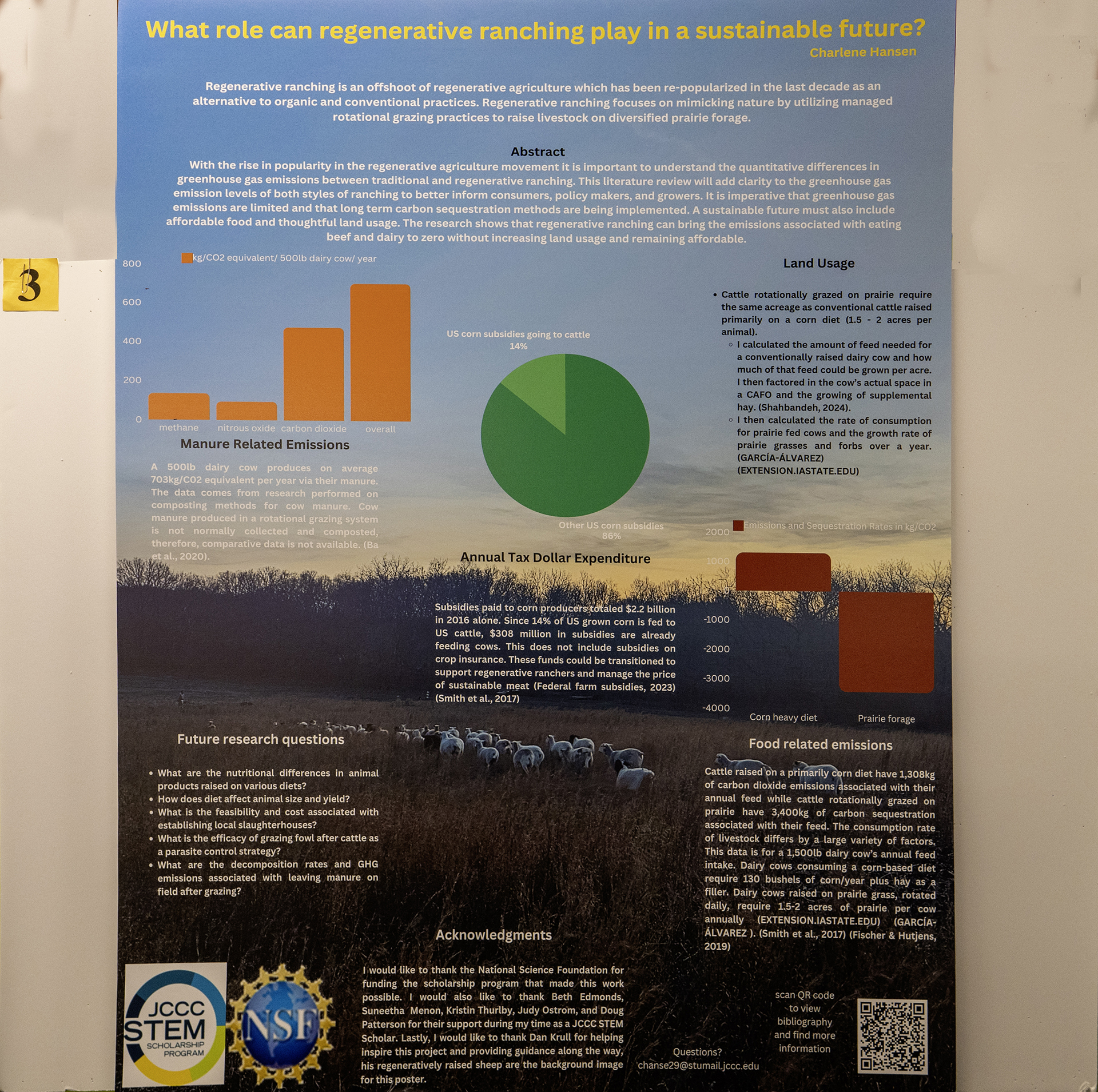
The Role of Regenerative Ranching in a Sustainable Future
CoLab, OCB 100
With the rise of popularity in the regenerative agriculture movement it is important to understand the quantitative differences in greenhouse gas emissions between traditional and regenerative ranching. This literature review will add clarity to the greenhouse gas emission levels of both styles of ranching to determine next steps in our global food economy. It is imperative that greenhouse gas emissions are limited and that long term carbon sequestration methods are being implemented. The research suggests that regenerative ranching can bring the emissions associated with eating meat down to zero with carbon credits leftover.
Comments
The faculty mentor for this project was Beth Edmonds, STEM Scholars.