

Location
CoLab, OCB 100
Start Date
25-4-2024 10:30 AM
Document Type
Poster
Description
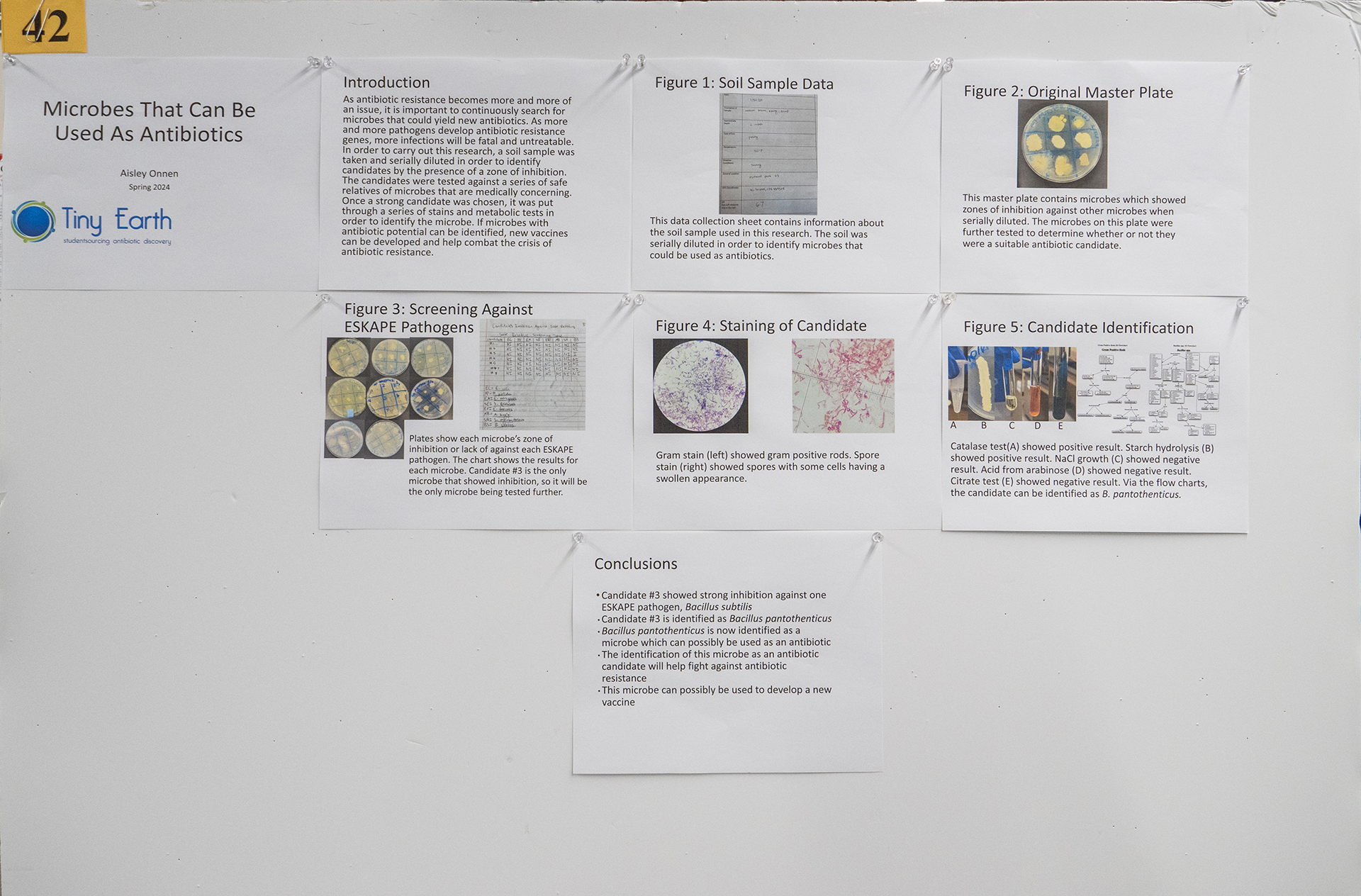
The goal of this research is to identify microbes that are potential antibiotic candidates from a soil sample from the Kansas City area. Many pathogenic microorganisms are developing resistance to the antibiotics that are used to fight infections today, so it is important to work to identify microbes which could be used to make new antibiotics. Soil is an excellent source for finding these microbes because it rarely contains pathogenic microorganisms and there are millions of microbes in each gram of soil. The soil sample used for this research was first serially diluted in order to identify microbes that inhibited the growth of others. After candidates were identified, they were transferred to a master plate. The candidates were then tested against safe relatives of pathogenic microorganisms that are medically concerning today. PCR and gel electrophoresis were used to genetically sequence the candidates that showed inhibition against the safe relatives in order to identify what species and genus they may belong to.
Image
Antibiotic Candidates from Soil
CoLab, OCB 100
The goal of this research is to identify microbes that are potential antibiotic candidates from a soil sample from the Kansas City area. Many pathogenic microorganisms are developing resistance to the antibiotics that are used to fight infections today, so it is important to work to identify microbes which could be used to make new antibiotics. Soil is an excellent source for finding these microbes because it rarely contains pathogenic microorganisms and there are millions of microbes in each gram of soil. The soil sample used for this research was first serially diluted in order to identify microbes that inhibited the growth of others. After candidates were identified, they were transferred to a master plate. The candidates were then tested against safe relatives of pathogenic microorganisms that are medically concerning today. PCR and gel electrophoresis were used to genetically sequence the candidates that showed inhibition against the safe relatives in order to identify what species and genus they may belong to.
Comments
The faculty mentor for this project was Rachael Ott, Biology.