

Location
CoLab, OCB 100
Start Date
25-4-2024 10:30 AM
Document Type
Poster
Description
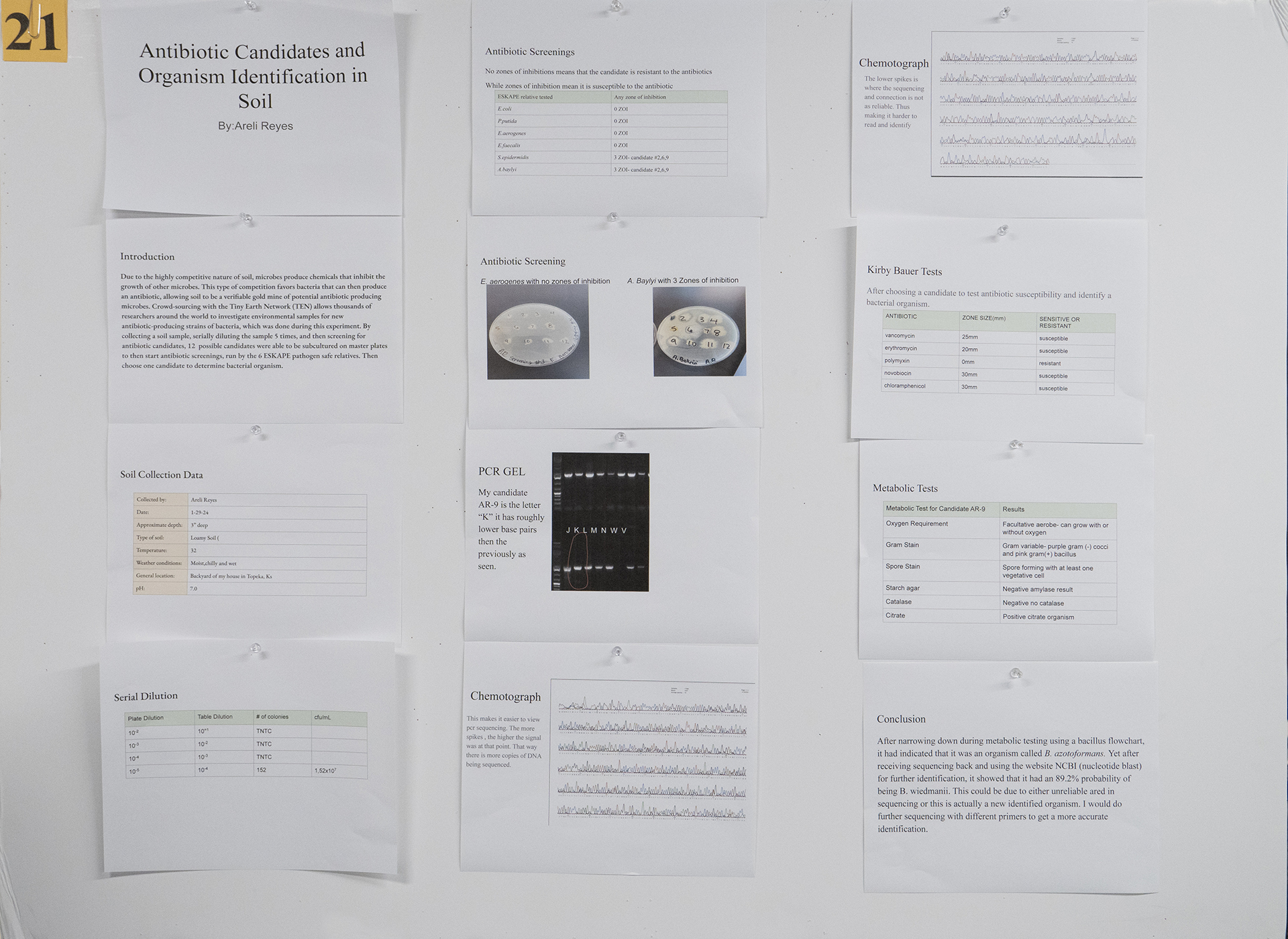
Due to the highly competitive nature of soil, microbes produce chemicals that inhibit the growth of other microbes. This type of competition favors bacteria that can then produce an antibiotic, allowing soil to be a verifiable gold mine of potential antibiotic producing microbes. Crowd-sourcing with the Tiny Earth Network (TEN) allows thousands of researchers around the world to investigate environmental samples for new antibiotic-producing strains of bacteria, which was done during this experiment. By collecting a soil sample, serially diluting the sample 5 times, and then screening for antibiotic candidates, 12 possible candidates were able to be subcultured on master plates to then start antibiotic screenings, run by the 6 ESKAPE pathogen safe relatives.
Image
Antibiotic Candidates in Soil
CoLab, OCB 100
Due to the highly competitive nature of soil, microbes produce chemicals that inhibit the growth of other microbes. This type of competition favors bacteria that can then produce an antibiotic, allowing soil to be a verifiable gold mine of potential antibiotic producing microbes. Crowd-sourcing with the Tiny Earth Network (TEN) allows thousands of researchers around the world to investigate environmental samples for new antibiotic-producing strains of bacteria, which was done during this experiment. By collecting a soil sample, serially diluting the sample 5 times, and then screening for antibiotic candidates, 12 possible candidates were able to be subcultured on master plates to then start antibiotic screenings, run by the 6 ESKAPE pathogen safe relatives.
Comments
The faculty mentor for this project was Melissa Beaty, Biology.