

Location
CoLab, OCB 100
Start Date
25-4-2024 10:30 AM
Document Type
Poster
Description
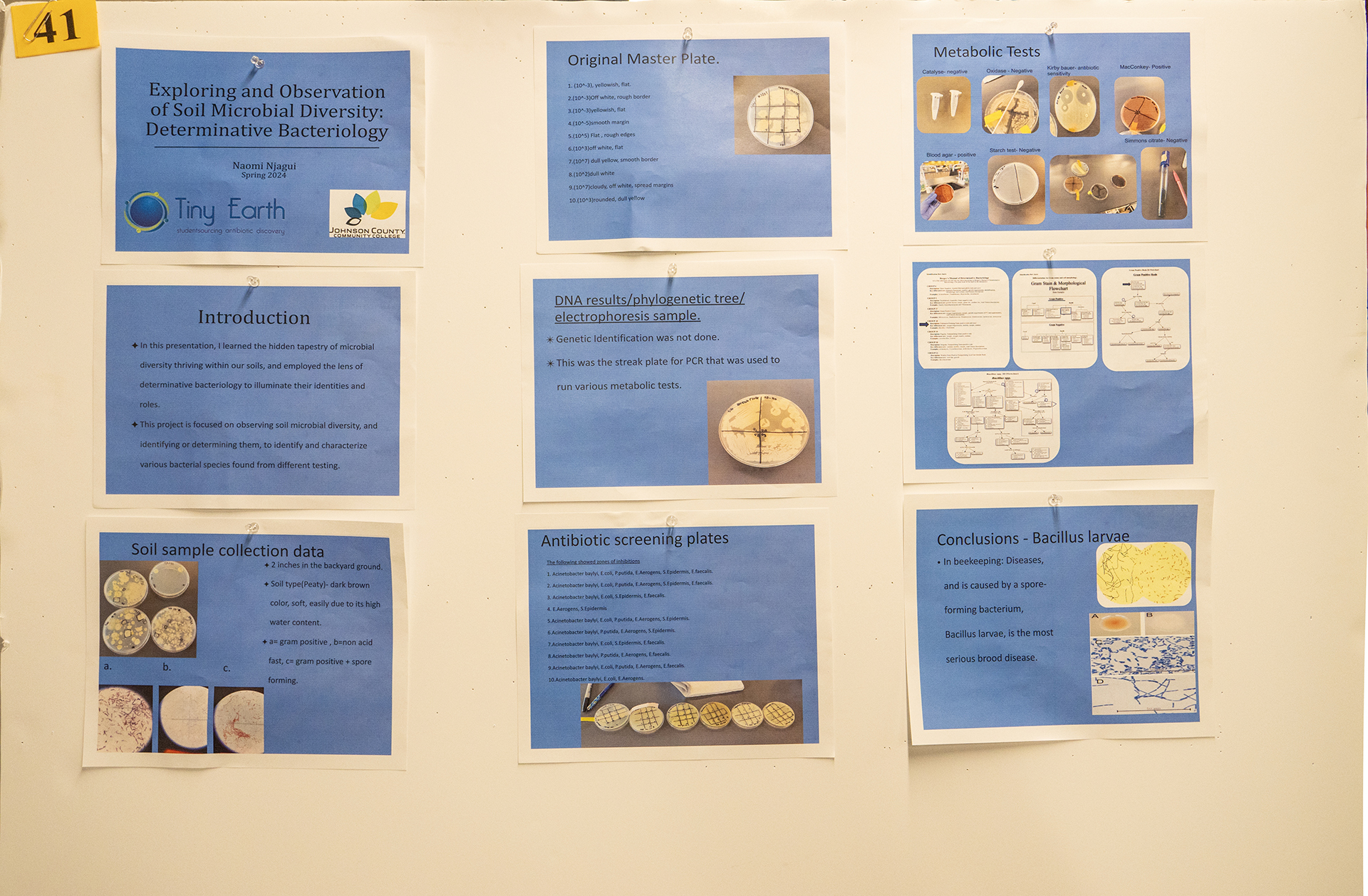
Exploring the diversity of microorganisms in soil is important for understanding how various ecosystems function. In this Project I conducted a master plate experiment to examine the microbial communities in the soil sample that was collected. This starred with the dilution of the soil sample several times approximately 6 times, and then spreading the 0.1 ml solution onto an agar plate that is mixed with different nutrients to encourage various the types of microbial growth. Next, the plates were closely observed for individual colonies that grew from all the plates, paying close attention to their morphology from the color, size, and shape. The bacteria from the zones of inhibition were carefully picked out with an inoculating loop after incineration and later placed on another agar plate that was organized into a master plate for antibiotic screening. The master plate consisted of10 colonies that piqued interest and moved on to the antibiotic screening plates. There were 6 safe relatives of bacteria for antibiotic screening, and each of them were swabbed before the master plate colonies were placed on it. The screening showed varying degrees of antibiotic reaction across the 6 plates. The results are yet to be read however, these projects contributed to the understanding of how soil bacteria handle antibiotics since they can pass on resistance to other bacteria. By figuring this out, we can be smarter about using antibiotics and stop resistance from spreading.
Image
Exploring and Observation of Soil Microbial Diversity: Master Plate Experiment
CoLab, OCB 100
Exploring the diversity of microorganisms in soil is important for understanding how various ecosystems function. In this Project I conducted a master plate experiment to examine the microbial communities in the soil sample that was collected. This starred with the dilution of the soil sample several times approximately 6 times, and then spreading the 0.1 ml solution onto an agar plate that is mixed with different nutrients to encourage various the types of microbial growth. Next, the plates were closely observed for individual colonies that grew from all the plates, paying close attention to their morphology from the color, size, and shape. The bacteria from the zones of inhibition were carefully picked out with an inoculating loop after incineration and later placed on another agar plate that was organized into a master plate for antibiotic screening. The master plate consisted of10 colonies that piqued interest and moved on to the antibiotic screening plates. There were 6 safe relatives of bacteria for antibiotic screening, and each of them were swabbed before the master plate colonies were placed on it. The screening showed varying degrees of antibiotic reaction across the 6 plates. The results are yet to be read however, these projects contributed to the understanding of how soil bacteria handle antibiotics since they can pass on resistance to other bacteria. By figuring this out, we can be smarter about using antibiotics and stop resistance from spreading.
Comments
The faculty mentor for this project was Rachael Ott, Biology.