

Location
CoLab, OCB 100
Start Date
25-4-2024 10:30 AM
Document Type
Poster
Description
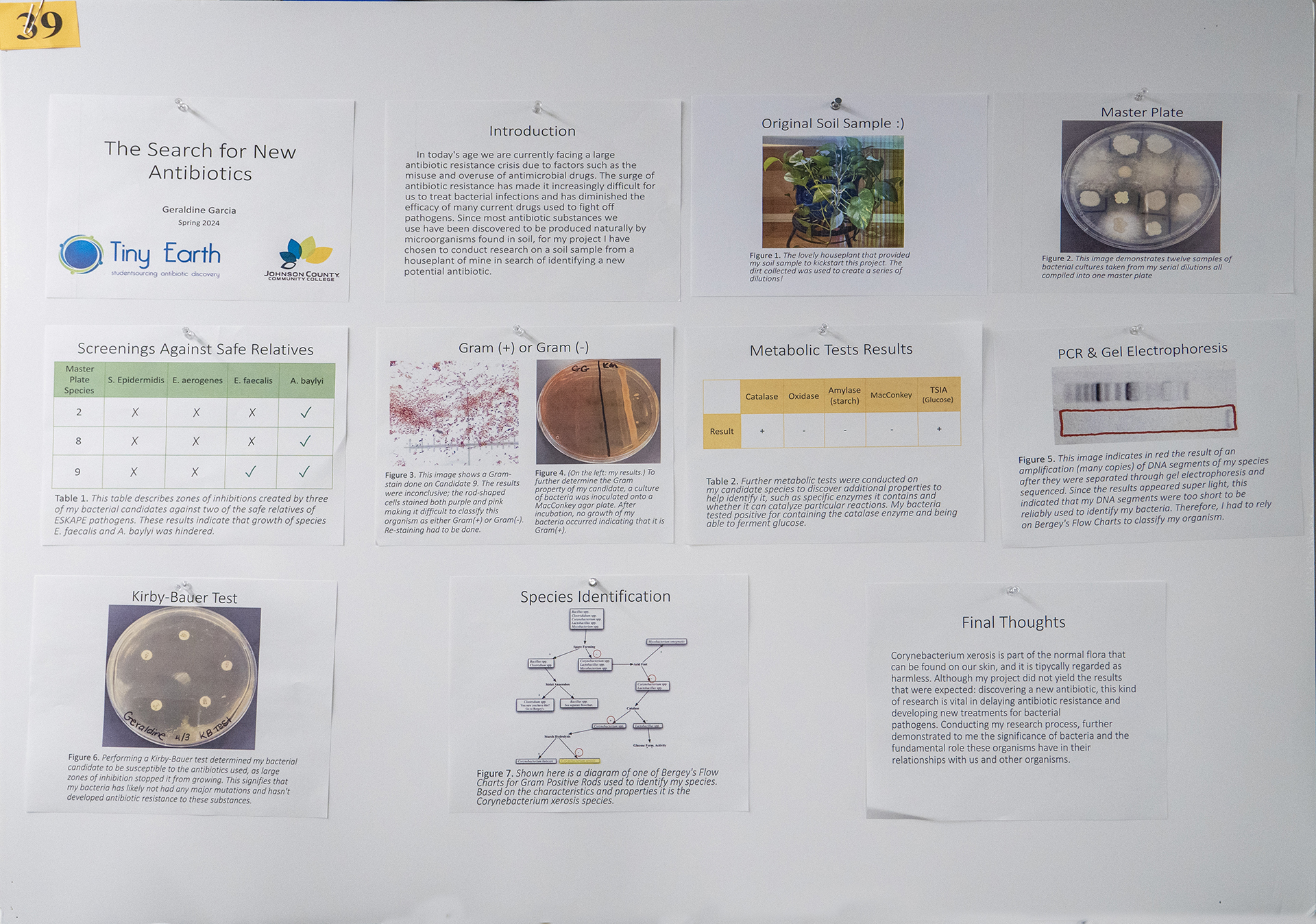
Upon Alexander Fleming’s discovery of the first antibiotic substance: penicillin, the development of antibiotics has completely transformed and advanced the world of medicine as we know it today. Antibiotic therapy has been absolutely indispensable in our fight against bacterial diseases and infections, as they have not only helped save billions of lives but have also taught us how many microorganisms function. Though unfortunately, we are now facing an antibiotic resistance crisis largely due to the misuse and overuse of antimicrobial drugs. Bacterial resistance has made it more difficult to treat infections and has diminished the efficacy of current drugs used to treat pathogens. Because many antibiotic substances have been discovered and produced by microorganisms found in soil, for my project I have chosen to conduct research on a soil sample from a houseplant of mine in order to find a new potential antibiotic. In pursuit of this, I have employed a few procedures in my investigation such as a serial dilution of my soil sample to identify my antibiotic candidate, screenings on safe relatives of ESKAPE pathogens to determine any inhibition caused by my candidate, and PCR to identify my bacterial species. This research is important because it demonstrates the significance of bacteria and the fundamental role these organisms have in their relationships with us and other organisms, despite being microscopic. It is vital in delaying antibiotic resistance and developing new treatments for bacterial pathogens.
Image
In Search for an Antibiotic
CoLab, OCB 100
Upon Alexander Fleming’s discovery of the first antibiotic substance: penicillin, the development of antibiotics has completely transformed and advanced the world of medicine as we know it today. Antibiotic therapy has been absolutely indispensable in our fight against bacterial diseases and infections, as they have not only helped save billions of lives but have also taught us how many microorganisms function. Though unfortunately, we are now facing an antibiotic resistance crisis largely due to the misuse and overuse of antimicrobial drugs. Bacterial resistance has made it more difficult to treat infections and has diminished the efficacy of current drugs used to treat pathogens. Because many antibiotic substances have been discovered and produced by microorganisms found in soil, for my project I have chosen to conduct research on a soil sample from a houseplant of mine in order to find a new potential antibiotic. In pursuit of this, I have employed a few procedures in my investigation such as a serial dilution of my soil sample to identify my antibiotic candidate, screenings on safe relatives of ESKAPE pathogens to determine any inhibition caused by my candidate, and PCR to identify my bacterial species. This research is important because it demonstrates the significance of bacteria and the fundamental role these organisms have in their relationships with us and other organisms, despite being microscopic. It is vital in delaying antibiotic resistance and developing new treatments for bacterial pathogens.
Comments
The faculty mentor for this project was Rachael Ott, Biology.