

Location
CoLab, OCB 100
Start Date
25-4-2024 10:30 AM
Document Type
Poster
Description
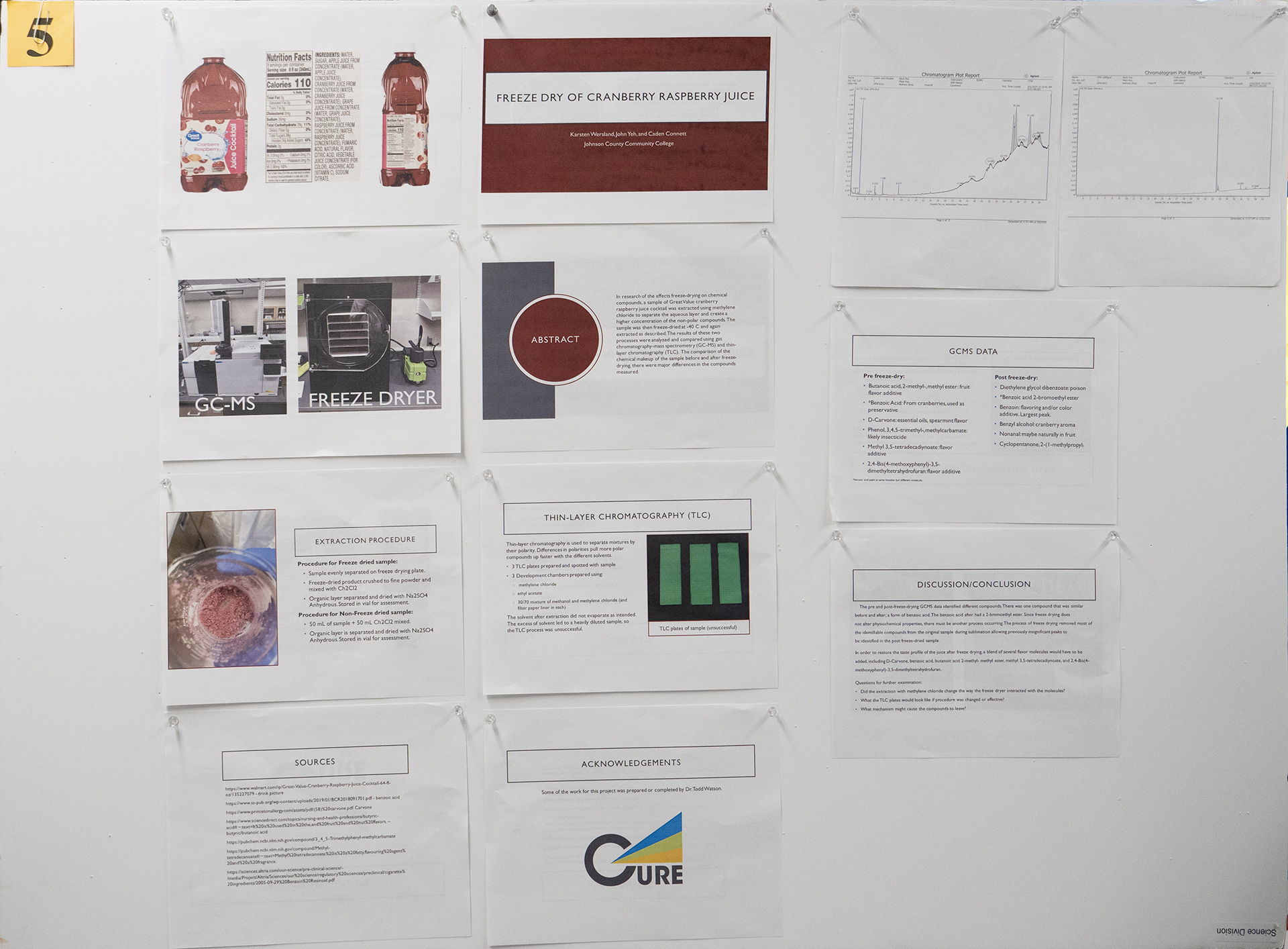
In further exploration of the science of freeze-drying a cranberry raspberry juice cocktail was extracted using methylene chloride to separate the aqueous layer out and create a higher concentration of the non-polar compounds. This was then analyzed using gas chromatography, mass spectrometry, and thin layer chromatography. The initial data was collected, then the sample of cranberry raspberry juice was freeze dried. Once freeze-dried the sample was crushed up and mixed with boiling deionized water and cooled, once cooled it was again extracted using methylene chloride. Data was collected on this post freeze-drying sample for the three aforementioned tests. In comparison of the chemical make up of the sample before and after freeze drying, there were major differences of the compounds measured.
Image
Freeze Drying Analysis of Cranberry Raspberry Juice
CoLab, OCB 100
In further exploration of the science of freeze-drying a cranberry raspberry juice cocktail was extracted using methylene chloride to separate the aqueous layer out and create a higher concentration of the non-polar compounds. This was then analyzed using gas chromatography, mass spectrometry, and thin layer chromatography. The initial data was collected, then the sample of cranberry raspberry juice was freeze dried. Once freeze-dried the sample was crushed up and mixed with boiling deionized water and cooled, once cooled it was again extracted using methylene chloride. Data was collected on this post freeze-drying sample for the three aforementioned tests. In comparison of the chemical make up of the sample before and after freeze drying, there were major differences of the compounds measured.
Comments
The faculty mentor for this project was Todd Watson, Chemistry.