

Location
CoLab, OCB 100
Start Date
25-4-2024 10:30 AM
Document Type
Poster
Description
The purpose of this experiment is to test for antibiotic producing microbes found in soil samples. As antibiotic resistance grows more rampant and increasingly more difficult to combat, the need for new antibiotics increases as well. Since several types of bacteria have not yet been studied, the need for further tests from researchers and microbiology lab students can help expand the search. The process of steps starts with soil dilution to help find what is referred to as zones of inhibition between microbial colonies. The zones show where a bacteria has produced a chemical that is inhibiting the growth of other bacteria. These bacterial colonies are ideal for further research into antibiotic resistance. After selecting 12 viable candidates, they will be placed on a master plate and used to test the six “Safe Relatives” to the ESKAPE pathogens that have an increased resistance to antibiotics. One candidate will be selected and used in the PCR (polymerase chain reaction) testing method. Once the PCR test has been completed, the DNA results of the test will be sent to an outside laboratory to run the sequencing of the 16s rRNA gene.
Image
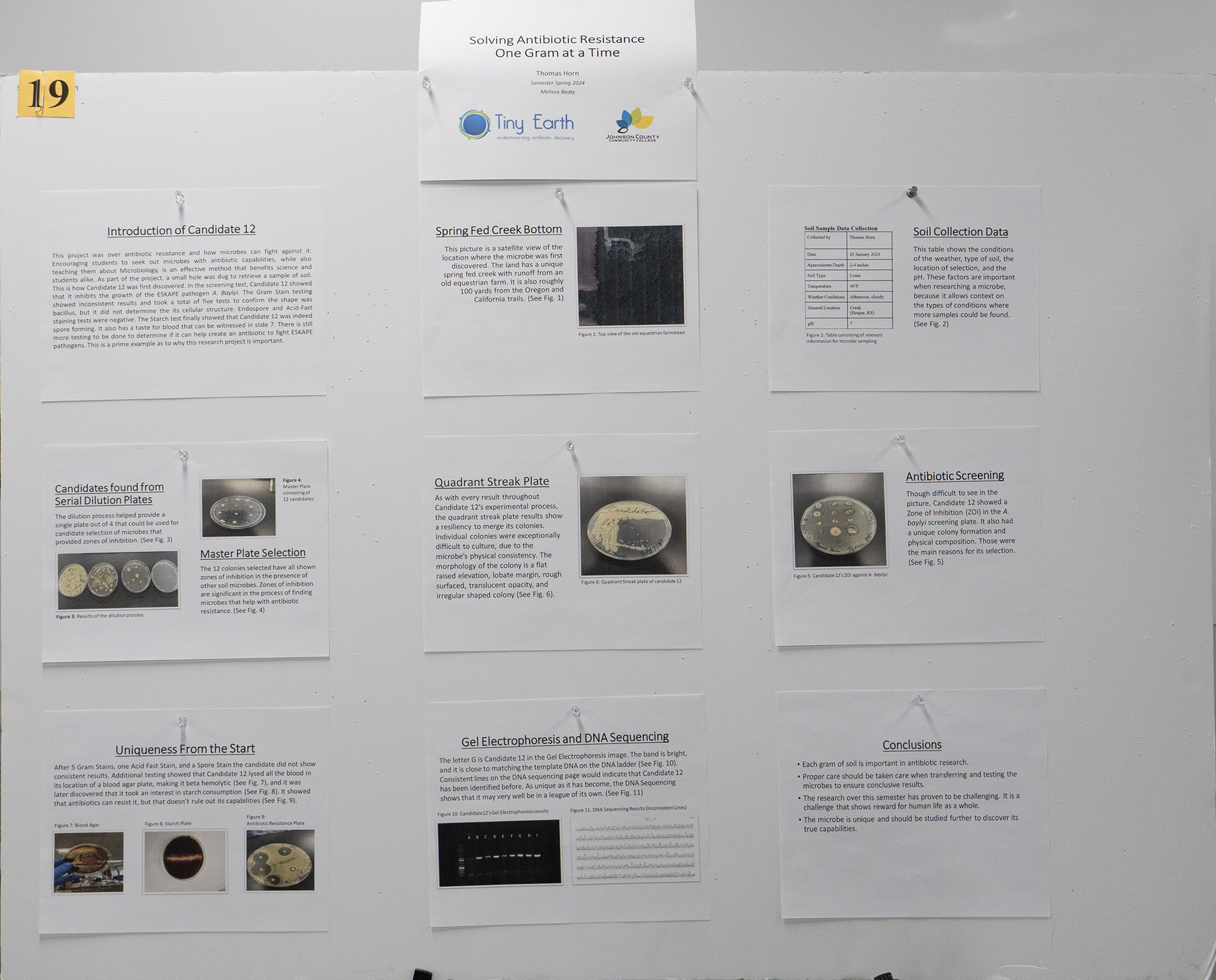
Solving Antibiotic Resistance One Gram at a Time
CoLab, OCB 100
The purpose of this experiment is to test for antibiotic producing microbes found in soil samples. As antibiotic resistance grows more rampant and increasingly more difficult to combat, the need for new antibiotics increases as well. Since several types of bacteria have not yet been studied, the need for further tests from researchers and microbiology lab students can help expand the search. The process of steps starts with soil dilution to help find what is referred to as zones of inhibition between microbial colonies. The zones show where a bacteria has produced a chemical that is inhibiting the growth of other bacteria. These bacterial colonies are ideal for further research into antibiotic resistance. After selecting 12 viable candidates, they will be placed on a master plate and used to test the six “Safe Relatives” to the ESKAPE pathogens that have an increased resistance to antibiotics. One candidate will be selected and used in the PCR (polymerase chain reaction) testing method. Once the PCR test has been completed, the DNA results of the test will be sent to an outside laboratory to run the sequencing of the 16s rRNA gene.
Comments
The faculty mentor for this project was Melissa Beaty, Biology.