

Location
CoLab, OCB 100
Start Date
25-4-2024 9:00 AM
Document Type
Poster
Description
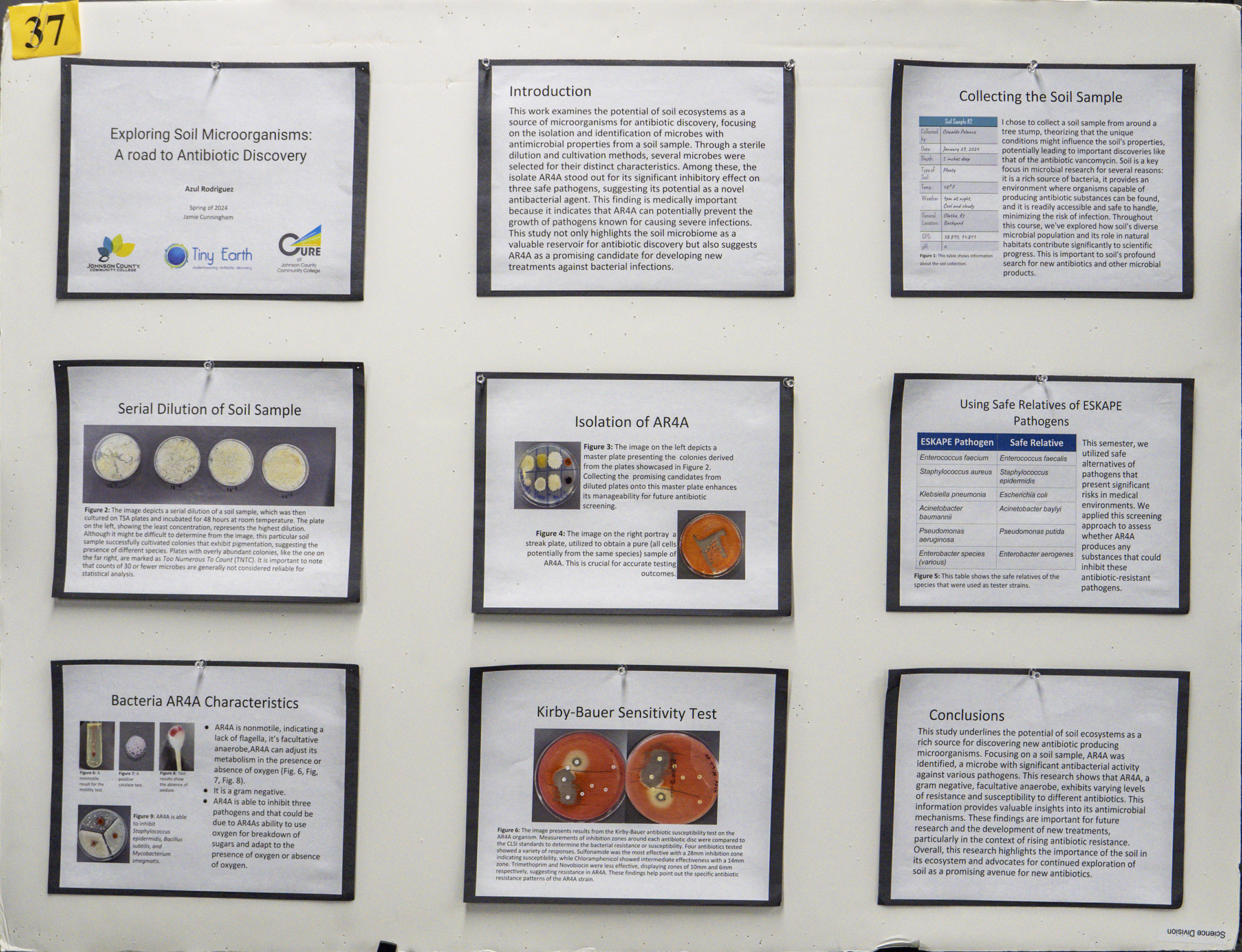
This research establishes a contribution to the field of antibiotic discovery. Soil ecosystems are known to be rich reservoirs of microorganisms that can produce different antimicrobial compounds. The procedures involved in isolating and identifying microbes with potential antibiotic properties from a soil sample. Initially, the soil sample collected from a backyard was diluted in sterile water to create a series of dilutions. From the microbial colonies grown, nine were selectively transferred to clean plates to further observe their growth characteristics, such as size, color, and margin. This step was crucial for isolating individual microbes for further study. Among these isolated microbes, a few showed potential inhibition. My final candidate, AR4A, demonstrated a promising outcome in the presence of the tester strain Staphylococcus epidermidis, which is recognized as a harmless relative of the more virulent Staphylococcus aureus. The observed zone of inhibition around AR4A, where the Staphylococcus epidermidis bacteria could not grow, suggests that AR4A is capable of destroying bacterial growth. This finding is medically important because it indicates that AR4A can potentially prevent the growth of pathogens known for causing severe infections. The ability of AR4A to limit the growth of Staphylococcus epidermidis offers a promising approach for developing treatments that could fight against Staphylococcus aureus.
Image
Exploring Soil Microorganisms: A Road to Antibiotic Discovery
CoLab, OCB 100
This research establishes a contribution to the field of antibiotic discovery. Soil ecosystems are known to be rich reservoirs of microorganisms that can produce different antimicrobial compounds. The procedures involved in isolating and identifying microbes with potential antibiotic properties from a soil sample. Initially, the soil sample collected from a backyard was diluted in sterile water to create a series of dilutions. From the microbial colonies grown, nine were selectively transferred to clean plates to further observe their growth characteristics, such as size, color, and margin. This step was crucial for isolating individual microbes for further study. Among these isolated microbes, a few showed potential inhibition. My final candidate, AR4A, demonstrated a promising outcome in the presence of the tester strain Staphylococcus epidermidis, which is recognized as a harmless relative of the more virulent Staphylococcus aureus. The observed zone of inhibition around AR4A, where the Staphylococcus epidermidis bacteria could not grow, suggests that AR4A is capable of destroying bacterial growth. This finding is medically important because it indicates that AR4A can potentially prevent the growth of pathogens known for causing severe infections. The ability of AR4A to limit the growth of Staphylococcus epidermidis offers a promising approach for developing treatments that could fight against Staphylococcus aureus.
Comments
The faculty mentor for this project was Jaime Cunningham, Biology.