

Location
CoLab, OCB 100
Start Date
25-4-2024 9:00 AM
Document Type
Poster
Description
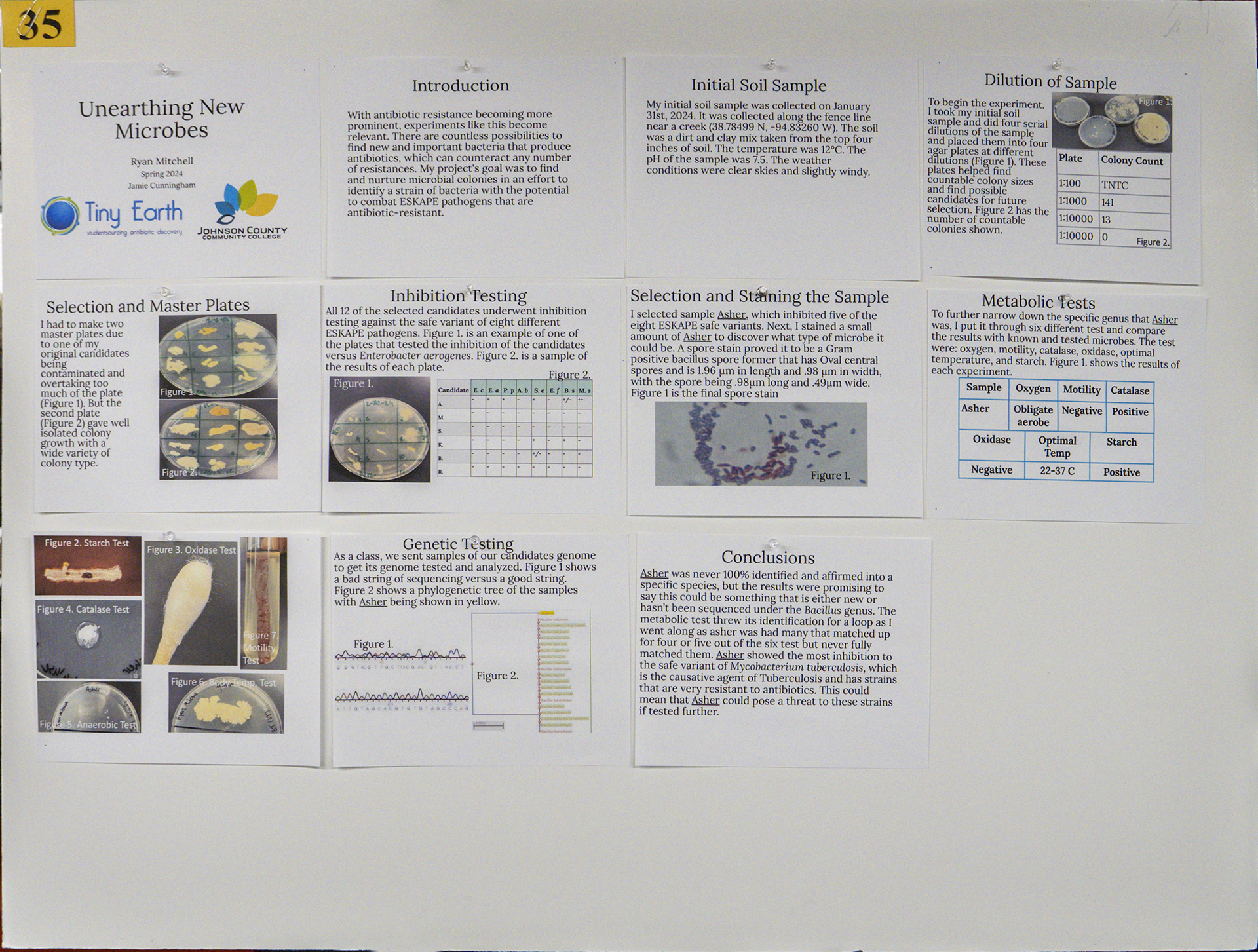
The prevalence of antibiotic resistance increases along with the spread of bacterial pathogens. One approach to combat antibiotic resistance is to study microbes that can be found in soil samples. By isolating soil microbes from these samples, we can potentially unearth new antibiotics effective against drug-resistant bacteria. In this experiment, samples were taken from clay soil near a creek bed and diluted into testing plates. We then diluted the soil samples in water to get a usable sample of microbes. Samples of the dilutions were taken and then grown on agar plates in a lab setting at room temperature. These plates were then analyzed for zones of inhibition, which are clear areas around the microbial colonies. The larger these zones are, the greater the antibiotic production. After these individual colonies were identified, samples were taken and then placed onto a master plate which is made to ensure sample purity and grow enough of the microbe for future testing. Once an effective master plate is made, the colonies are then tested against safe relatives of dangerous bacteria, called ESKAPE pathogens. The colony that showed the most inhibition was then grown by itself to be utilized in different testing that would identify what kind of microbe it is. The sample chosen is named Asher, this sample has shown inhibition for a number of safe relatives namely Mycobacterium smegmatis which is the safe relative of the bacteria that causes tuberculosis.
Image
Unearthing Antibiotics from the Soil
CoLab, OCB 100
The prevalence of antibiotic resistance increases along with the spread of bacterial pathogens. One approach to combat antibiotic resistance is to study microbes that can be found in soil samples. By isolating soil microbes from these samples, we can potentially unearth new antibiotics effective against drug-resistant bacteria. In this experiment, samples were taken from clay soil near a creek bed and diluted into testing plates. We then diluted the soil samples in water to get a usable sample of microbes. Samples of the dilutions were taken and then grown on agar plates in a lab setting at room temperature. These plates were then analyzed for zones of inhibition, which are clear areas around the microbial colonies. The larger these zones are, the greater the antibiotic production. After these individual colonies were identified, samples were taken and then placed onto a master plate which is made to ensure sample purity and grow enough of the microbe for future testing. Once an effective master plate is made, the colonies are then tested against safe relatives of dangerous bacteria, called ESKAPE pathogens. The colony that showed the most inhibition was then grown by itself to be utilized in different testing that would identify what kind of microbe it is. The sample chosen is named Asher, this sample has shown inhibition for a number of safe relatives namely Mycobacterium smegmatis which is the safe relative of the bacteria that causes tuberculosis.
Comments
The faculty mentor for this project was Jaime Cunningham, Biology.