

Location
CoLab, OCB 100
Start Date
25-4-2024 9:00 AM
Document Type
Poster
Description
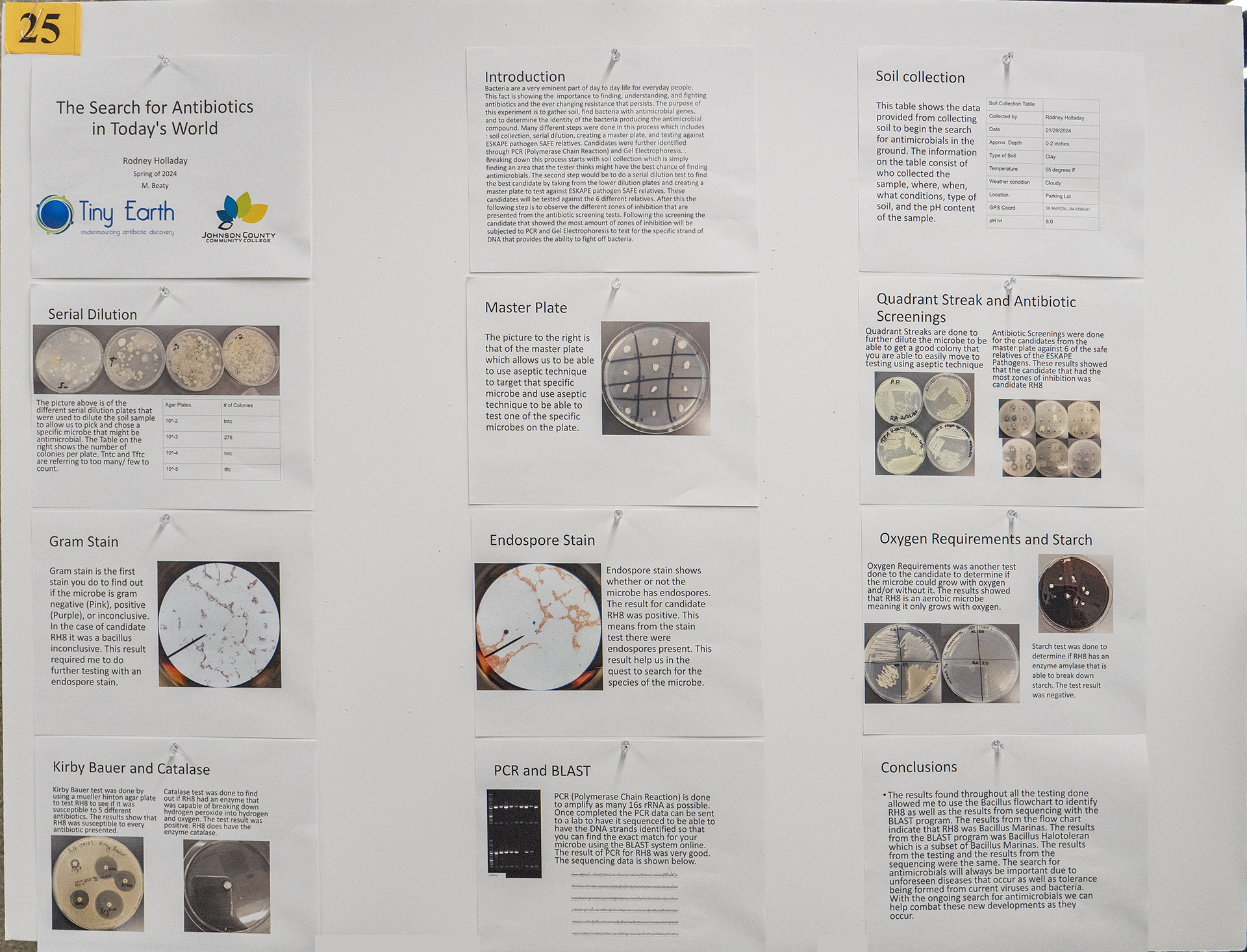
Bacteria are a very eminent part of day to day life for everyday people. This fact is showing the importance to finding, understanding, and fighting antibiotics and the ever changing resistance that persists. The purpose of this experiment is to gather soil, find bacteria with antimicrobial genes, and to determine the identity of the bacteria producing the antimicrobial compound. Many different steps were done in this process which includes : soil collection, serial dilution, creating a master plate, and testing against ESKAPE pathogen SAFE relatives. Candidates were further identified through PCR (Polymerase Chain Reaction) and Gel Electrophoresis. . Breaking down this process starts with soil collection which is simply finding an area that the tester thinks might have the best chance of finding antimicrobials. The second step would be to do a serial dilution test to find the best candidate by taking from the lower dilution plates and creating a master plate to test against ESKAPE pathogen SAFE relatives. These candidates will be tested against the 6 different relatives. After this the following step is to observe the different zones of inhibition that are presented from the antibiotic screening tests. Following the screening the candidate that showed the most amount of zones of inhibition will be subjected to PCR and Gel Electrophoresis to test for the specific strand of DNA that provides the ability to fight off bacteria.
Image
The Search for Antibiotics in Today's World
CoLab, OCB 100
Bacteria are a very eminent part of day to day life for everyday people. This fact is showing the importance to finding, understanding, and fighting antibiotics and the ever changing resistance that persists. The purpose of this experiment is to gather soil, find bacteria with antimicrobial genes, and to determine the identity of the bacteria producing the antimicrobial compound. Many different steps were done in this process which includes : soil collection, serial dilution, creating a master plate, and testing against ESKAPE pathogen SAFE relatives. Candidates were further identified through PCR (Polymerase Chain Reaction) and Gel Electrophoresis. . Breaking down this process starts with soil collection which is simply finding an area that the tester thinks might have the best chance of finding antimicrobials. The second step would be to do a serial dilution test to find the best candidate by taking from the lower dilution plates and creating a master plate to test against ESKAPE pathogen SAFE relatives. These candidates will be tested against the 6 different relatives. After this the following step is to observe the different zones of inhibition that are presented from the antibiotic screening tests. Following the screening the candidate that showed the most amount of zones of inhibition will be subjected to PCR and Gel Electrophoresis to test for the specific strand of DNA that provides the ability to fight off bacteria.
Comments
The faculty mentor for this project was Melissa Beaty, Biology.