

Location
CoLab, OCB 100
Start Date
25-4-2024 6:00 PM
Document Type
Poster
Description
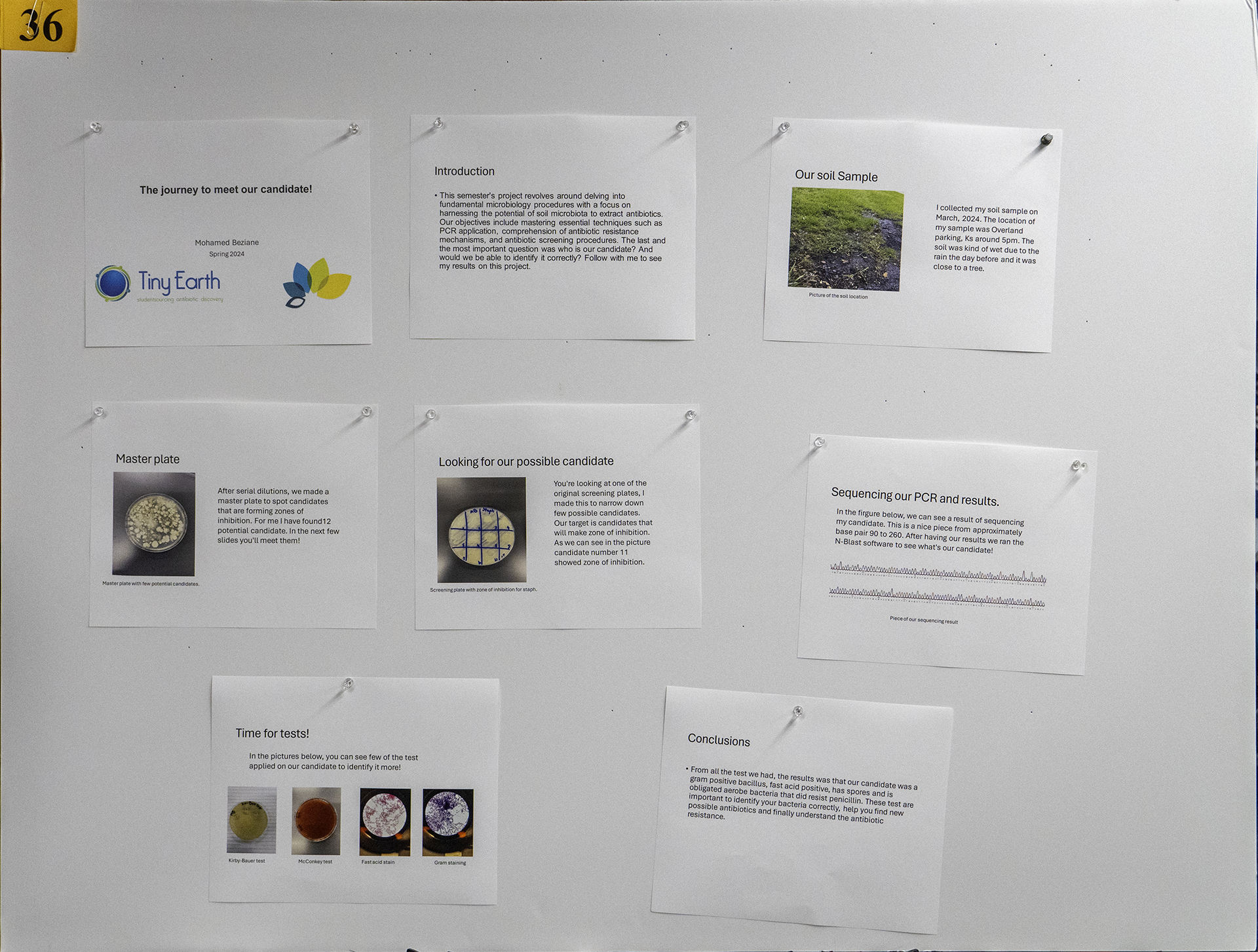
This semester's project revolves around delving into fundamental microbiology procedures with a focus on harnessing the potential of soil microbiota to extract antibiotics. Our objectives include mastering essential techniques such as PCR application, comprehension of antibiotic resistance mechanisms, and antibiotic screening procedures. starting with the foundational stage, westarted by collecting soil samples and implementing serial dilution techniques. mastering these techniques gave a better aspect in creating a master plate to select potential antibiotic-producing candidates. Subsequently, we started the antibiotic screening process to locate candidates capable of inducing a zone of inhibition. Additionally, we practiced various staining techniques, including simple staining, gram staining, fast acid, and spore staining methods. Upon mastery of these techniques, we proceeded to prepare a streak plate with our potential candidate. Following the incubation period, we conducted PCR tests. There are few other tests to perform before the end of this semester. These tests will help us to identify the antibiotic our candidate is making. The step by step techniques learned in this course not only aids in comprehending antibiotic resistance mechanisms and antibiotics, but also equips us with a diverse skill set crucial in the field of microbiology.
Image
Bacterial Resistance
CoLab, OCB 100
This semester's project revolves around delving into fundamental microbiology procedures with a focus on harnessing the potential of soil microbiota to extract antibiotics. Our objectives include mastering essential techniques such as PCR application, comprehension of antibiotic resistance mechanisms, and antibiotic screening procedures. starting with the foundational stage, westarted by collecting soil samples and implementing serial dilution techniques. mastering these techniques gave a better aspect in creating a master plate to select potential antibiotic-producing candidates. Subsequently, we started the antibiotic screening process to locate candidates capable of inducing a zone of inhibition. Additionally, we practiced various staining techniques, including simple staining, gram staining, fast acid, and spore staining methods. Upon mastery of these techniques, we proceeded to prepare a streak plate with our potential candidate. Following the incubation period, we conducted PCR tests. There are few other tests to perform before the end of this semester. These tests will help us to identify the antibiotic our candidate is making. The step by step techniques learned in this course not only aids in comprehending antibiotic resistance mechanisms and antibiotics, but also equips us with a diverse skill set crucial in the field of microbiology.
Comments
The faculty mentor for this project was Rachael Ott, Biology.