

Location
CoLab, OCB 100
Start Date
25-4-2024 6:00 PM
Document Type
Poster
Description
Through innovative and sustainable solutions, this multidisciplinary research project aims to address harmful algal blooms (HABs). Nutrient pollution is often a contributing factor to algae blooms, which threaten aquatic ecosystems, water quality, and public health. As a result of using Cradle-to-Cradle design philosophy, this project aims to inspire regenerative systems that mimic natural processes. The BioReclaim project strives to understand the underlying causes of algal blooms and develop effective strategies to counteract them through a combination of research, design, and implementation. This project investigates the ecological dynamics that drive algae bloom formation, explores developing agriculture practices to reduce nutrient runoff, and examine eco-friendly filtration systems for removing excess nutrients. Algal populations may also be managed without hazardous chemicals by using natural biocontrol methods. Algal blooms pose an immediate threat to aquatic ecosystems, but the project aims to promote their long-term sustainability and resilience. By educating and empowering people, I hope hopes inspire broader action towards a healthy and more balanced relationship with nature through Cradle-to-Cradle principles in environmental management.
Image
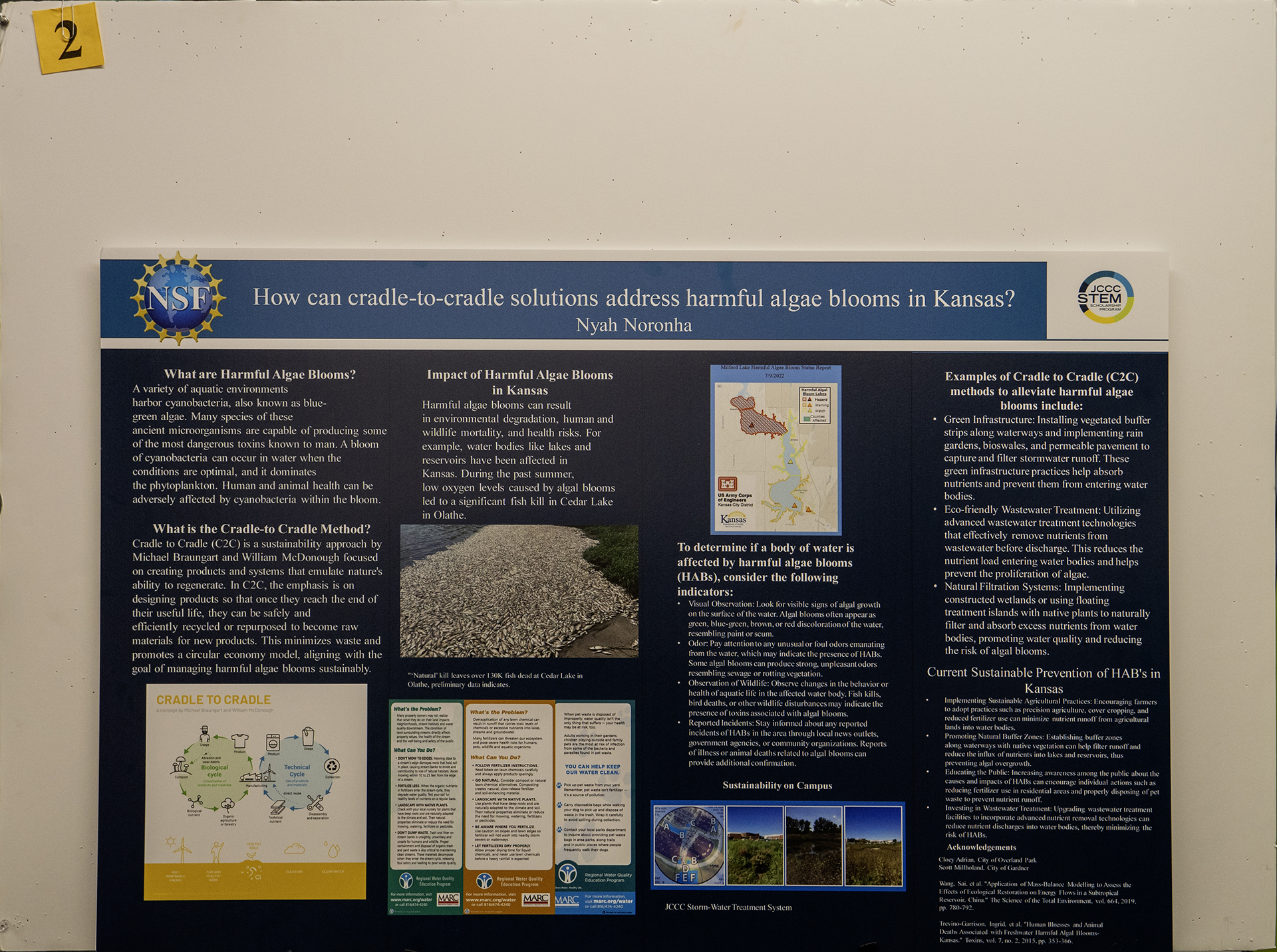
BioReclaim: Applying Cradle-to-Cradle Principles to Counter Algal Threats
CoLab, OCB 100
Through innovative and sustainable solutions, this multidisciplinary research project aims to address harmful algal blooms (HABs). Nutrient pollution is often a contributing factor to algae blooms, which threaten aquatic ecosystems, water quality, and public health. As a result of using Cradle-to-Cradle design philosophy, this project aims to inspire regenerative systems that mimic natural processes. The BioReclaim project strives to understand the underlying causes of algal blooms and develop effective strategies to counteract them through a combination of research, design, and implementation. This project investigates the ecological dynamics that drive algae bloom formation, explores developing agriculture practices to reduce nutrient runoff, and examine eco-friendly filtration systems for removing excess nutrients. Algal populations may also be managed without hazardous chemicals by using natural biocontrol methods. Algal blooms pose an immediate threat to aquatic ecosystems, but the project aims to promote their long-term sustainability and resilience. By educating and empowering people, I hope hopes inspire broader action towards a healthy and more balanced relationship with nature through Cradle-to-Cradle principles in environmental management.
Comments
The faculty mentor for this project was Beth Edmonds, STEM Scholars.