

Location
CoLab, OCB 100
Start Date
25-4-2024 6:00 PM
Document Type
Poster
Description
Antibiotics are a crucial component in fighting off infectious bacteria. As various illnesses and diseases rise and spread throughout the world, antibiotics help treat those who are most susceptible and infected. A huge majority of antibiotics are actually sourced from soil, and the focus of this project is finding a potentially effective antibiotic from our nearby environment. The process began by obtaining a sample of dirt then diluting and culturing it to make the antibiotic. After a series of screenings and tests, I found a potentially viable anti-microbial candidate. This candidate, that I named A, was whiteish with a yellow tint. I proceeded to test it against the safe relatives of the ESKAPE pathogen to see if it was successful in inhibiting the pathogens. I found that A created moderate inhibition against the bacteria Acinetobacter baylyi, which is the safe relative of Acinetobacter baumannii. Further screenings revealed that A is a gram positive endosporing rod bacteria. These findings are important because antibiotic resistance is on the rise so discovering new antibiotics is one way to lessen the severity of this issue.
Image
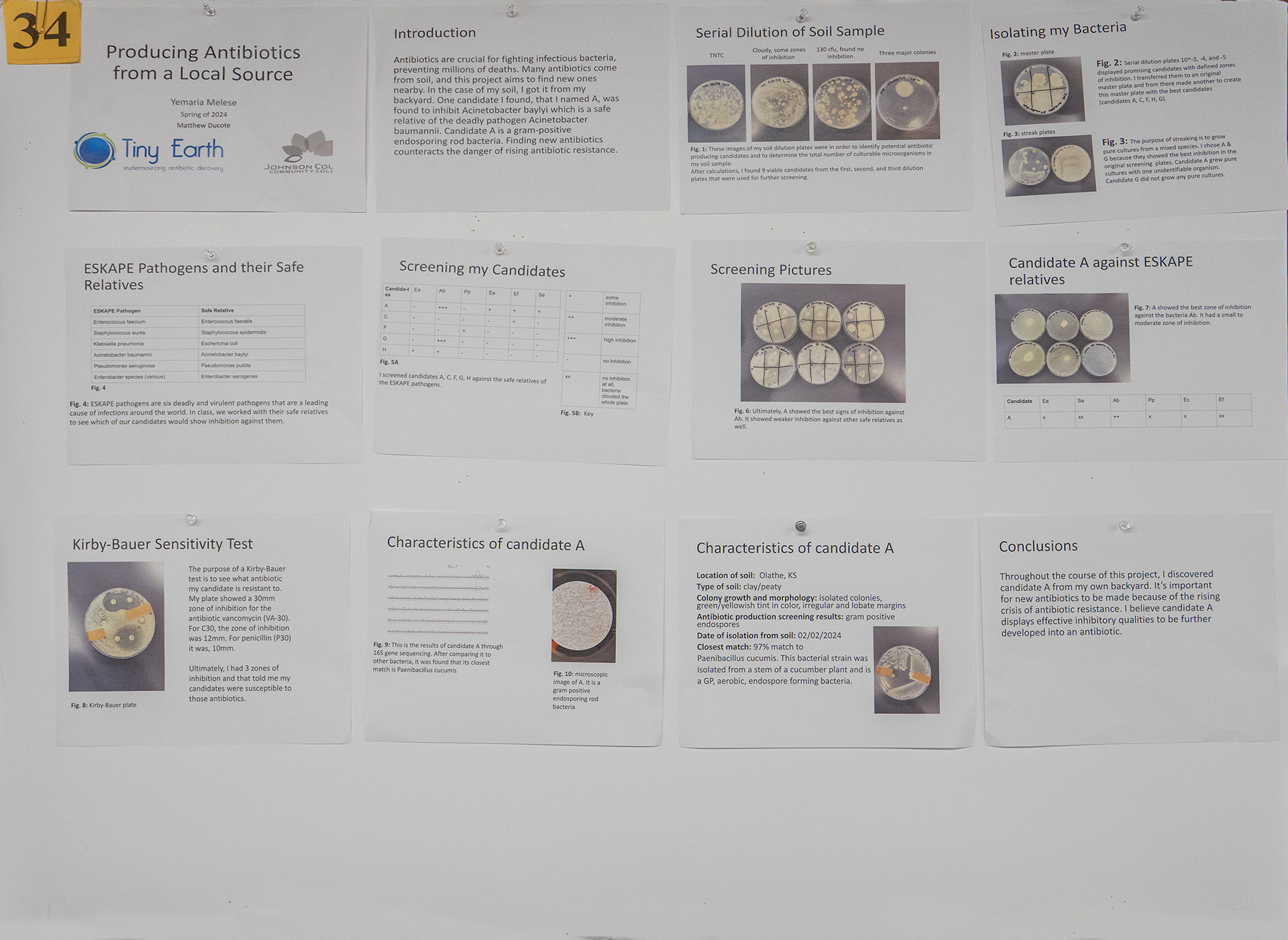
Producing Novel Antibiotics from a Local Source
CoLab, OCB 100
Antibiotics are a crucial component in fighting off infectious bacteria. As various illnesses and diseases rise and spread throughout the world, antibiotics help treat those who are most susceptible and infected. A huge majority of antibiotics are actually sourced from soil, and the focus of this project is finding a potentially effective antibiotic from our nearby environment. The process began by obtaining a sample of dirt then diluting and culturing it to make the antibiotic. After a series of screenings and tests, I found a potentially viable anti-microbial candidate. This candidate, that I named A, was whiteish with a yellow tint. I proceeded to test it against the safe relatives of the ESKAPE pathogen to see if it was successful in inhibiting the pathogens. I found that A created moderate inhibition against the bacteria Acinetobacter baylyi, which is the safe relative of Acinetobacter baumannii. Further screenings revealed that A is a gram positive endosporing rod bacteria. These findings are important because antibiotic resistance is on the rise so discovering new antibiotics is one way to lessen the severity of this issue.
Comments
The faculty mentor for this project was Matthew Ducote, Biology.