

Location
CoLab, OCB 100
Start Date
25-4-2024 1:30 PM
Document Type
Poster
Description
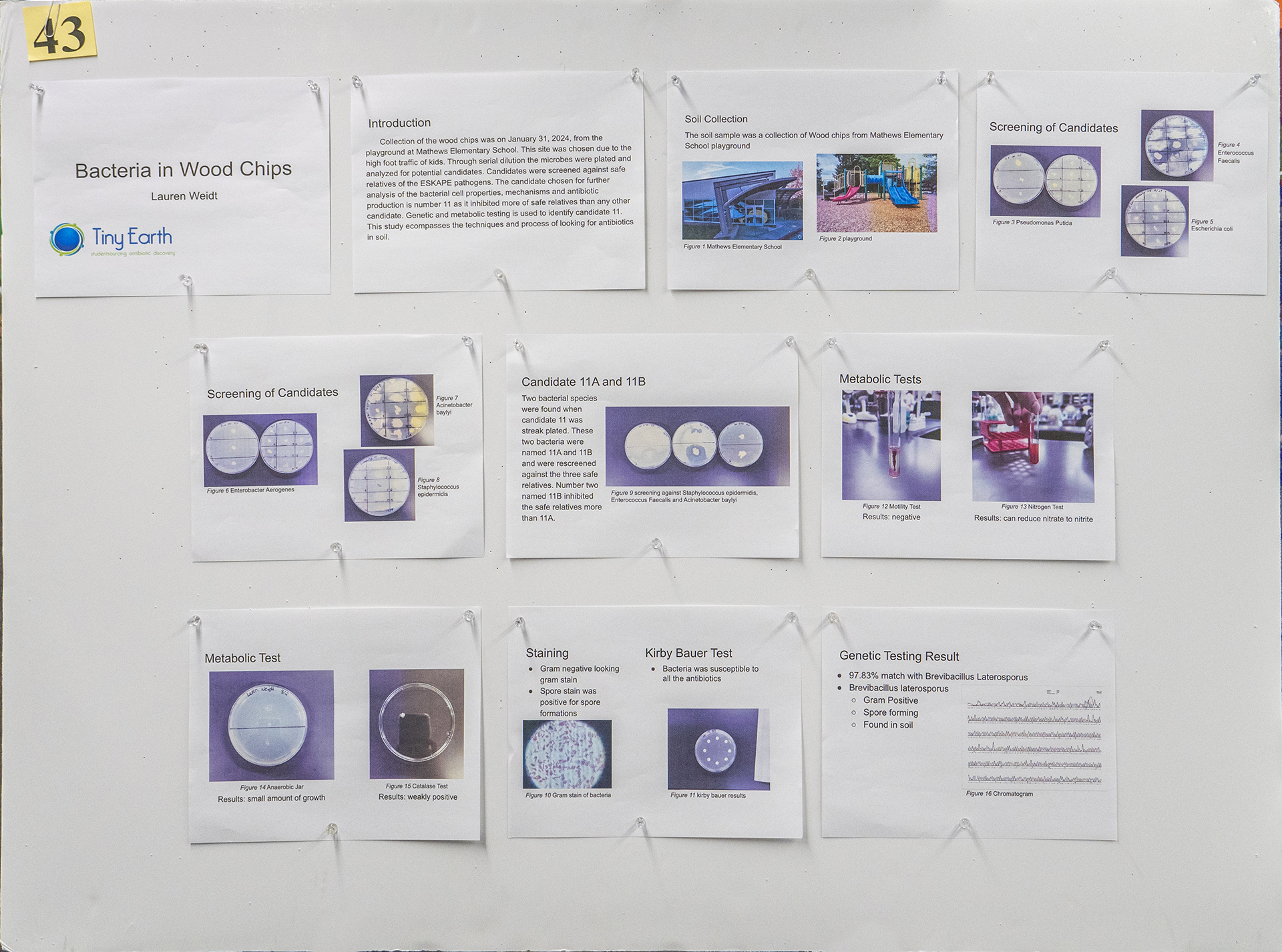
The origins of antibiotic resistance are due to the evolutionary dynamics of microorganisms. Antibiotic resistance has been an emerging global health concern, posing significant challenges to modern medicine. Over time, the use of antibiotics in healthcare has exerted immense selective pressure on bacteria, facilitating the development of resistant strains. Bacteria employ strategies such as enzymatic degradation, alteration of target sites, and efflux pumps to evade the action of antibiotics, rendering once-effective treatments ineffective. Mold is where the first antibiotic was discovered by Alexander Flemming. WWll was beginning at the of the discovery creating a desperate need for antibiotic treatment. This formed a momentum and desire among researchers to find more antibiotics. Researchers turned to collecting soil samples from all over the world to find these new antibiotics. Instead of soil, wood chips were analyzed to look for potential candidates for antibiotic production. The collection of the wood chips was on January 31, 2024, from the playground at Mathews Elementary School. This site was chosen due to the high foot traffic of kids. Through serial dilution, the microbes were plated and analyzed for potential candidates. Candidates were screened against safe relatives of the ESKAPE pathogens. The candidate chosen for further analysis of the bacterial cell properties, mechanisms, and antibiotic production is number 11 as it inhibited more safe relatives than any other candidate. Genetic and metabolic testing is used to identify candidate 11. This study encompasses the techniques and process of looking for antibiotics in soil.
Image
The Potential of Antibiotics from Wood Chips
CoLab, OCB 100
The origins of antibiotic resistance are due to the evolutionary dynamics of microorganisms. Antibiotic resistance has been an emerging global health concern, posing significant challenges to modern medicine. Over time, the use of antibiotics in healthcare has exerted immense selective pressure on bacteria, facilitating the development of resistant strains. Bacteria employ strategies such as enzymatic degradation, alteration of target sites, and efflux pumps to evade the action of antibiotics, rendering once-effective treatments ineffective. Mold is where the first antibiotic was discovered by Alexander Flemming. WWll was beginning at the of the discovery creating a desperate need for antibiotic treatment. This formed a momentum and desire among researchers to find more antibiotics. Researchers turned to collecting soil samples from all over the world to find these new antibiotics. Instead of soil, wood chips were analyzed to look for potential candidates for antibiotic production. The collection of the wood chips was on January 31, 2024, from the playground at Mathews Elementary School. This site was chosen due to the high foot traffic of kids. Through serial dilution, the microbes were plated and analyzed for potential candidates. Candidates were screened against safe relatives of the ESKAPE pathogens. The candidate chosen for further analysis of the bacterial cell properties, mechanisms, and antibiotic production is number 11 as it inhibited more safe relatives than any other candidate. Genetic and metabolic testing is used to identify candidate 11. This study encompasses the techniques and process of looking for antibiotics in soil.
Comments
The faculty mentor for this project was Heather Seitz, Biology.