

Location
CoLab, OCB 100
Start Date
25-4-2024 1:30 PM
Document Type
Poster
Description
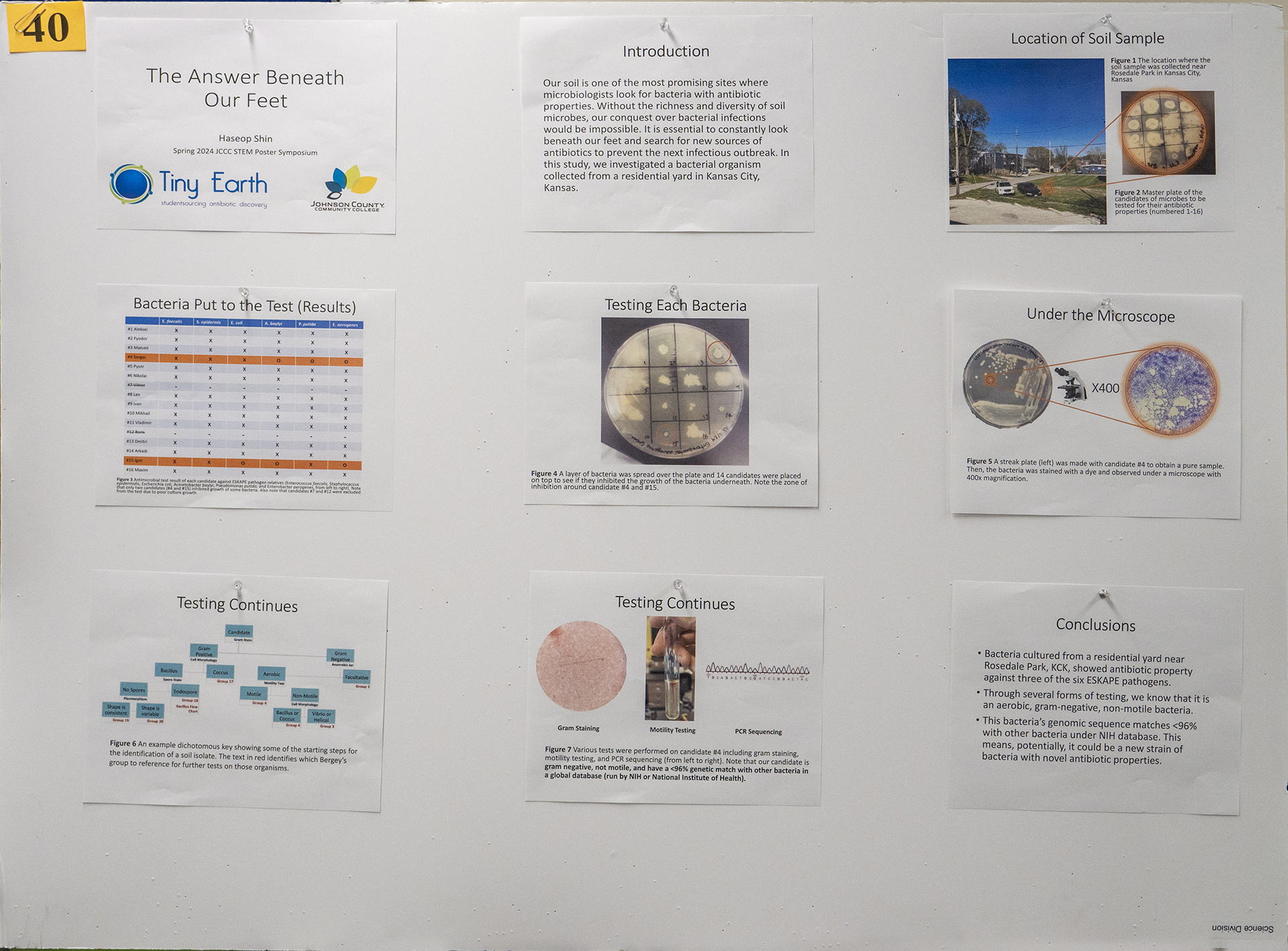
The prevention of the next pandemic might be right beneath our feet. Our soil is one of the most promising sites where microbiologists look for bacteria with antibiotic properties. Without the richness and diversity of soil microbes, the conquest of bacterial infections as we know it would not be possible. However, bacteria can multiply very quickly and gain immunity to drugs, called antibiotic resistance. It is essential, then, to constantly look beneath our feet and search for a new source of antibiotics to prevent the next infectious outbreak. In this study, we investigated a bacteria, named “Sergei,” collected from a residential yard in Kansas City, Kansas. It showed antibiotic resistance to three of six pathogen relatives, A. baylyi, P. putida, and E. aerogenes. It was tested further using Polymerase Chain Reaction (PCR) and other staining methods to identify how this bacteria relate to other known bacterial species.
Image
Sergei Underground
CoLab, OCB 100
The prevention of the next pandemic might be right beneath our feet. Our soil is one of the most promising sites where microbiologists look for bacteria with antibiotic properties. Without the richness and diversity of soil microbes, the conquest of bacterial infections as we know it would not be possible. However, bacteria can multiply very quickly and gain immunity to drugs, called antibiotic resistance. It is essential, then, to constantly look beneath our feet and search for a new source of antibiotics to prevent the next infectious outbreak. In this study, we investigated a bacteria, named “Sergei,” collected from a residential yard in Kansas City, Kansas. It showed antibiotic resistance to three of six pathogen relatives, A. baylyi, P. putida, and E. aerogenes. It was tested further using Polymerase Chain Reaction (PCR) and other staining methods to identify how this bacteria relate to other known bacterial species.
Comments
The faculty mentor for this project was Heather Seitz, Biology.