

Location
CoLab, OCB 100
Start Date
25-4-2024 1:30 PM
Document Type
Poster
Description
The alarming increase in antibiotic resistance among pathogenic microorganisms has sparked global efforts to discover novel antimicrobial compounds. This research project aims to identify potential antibiotic-producing microorganisms from soil samples, with a particular focus on a candidate strain, referred to as "Burk," that has demonstrated the ability to combat ESKAPE pathogens, a group of six highly drug-resistant bacterial species. Burk, isolated from a microbiology student, has been identified as closely related to Burkholderia ambifaria, a Gram-negative Pseudomonas species. To investigate the antibiotic potential of Burk, a multi-faceted approach is being employed. This includes the extraction of secondary metabolites, followed by testing the extracts against various bacterial strains to evaluate their antimicrobial activity. Additionally, chromatographic techniques are being utilized to analyze and purify the bioactive compounds present in the extracts. By employing these methods, the research aims to comprehensively characterize the antibiotic-producing capabilities of Burk and potentially identify novel antimicrobial compounds that could contribute to the development of effective treatments against drug-resistant pathogens.
Image
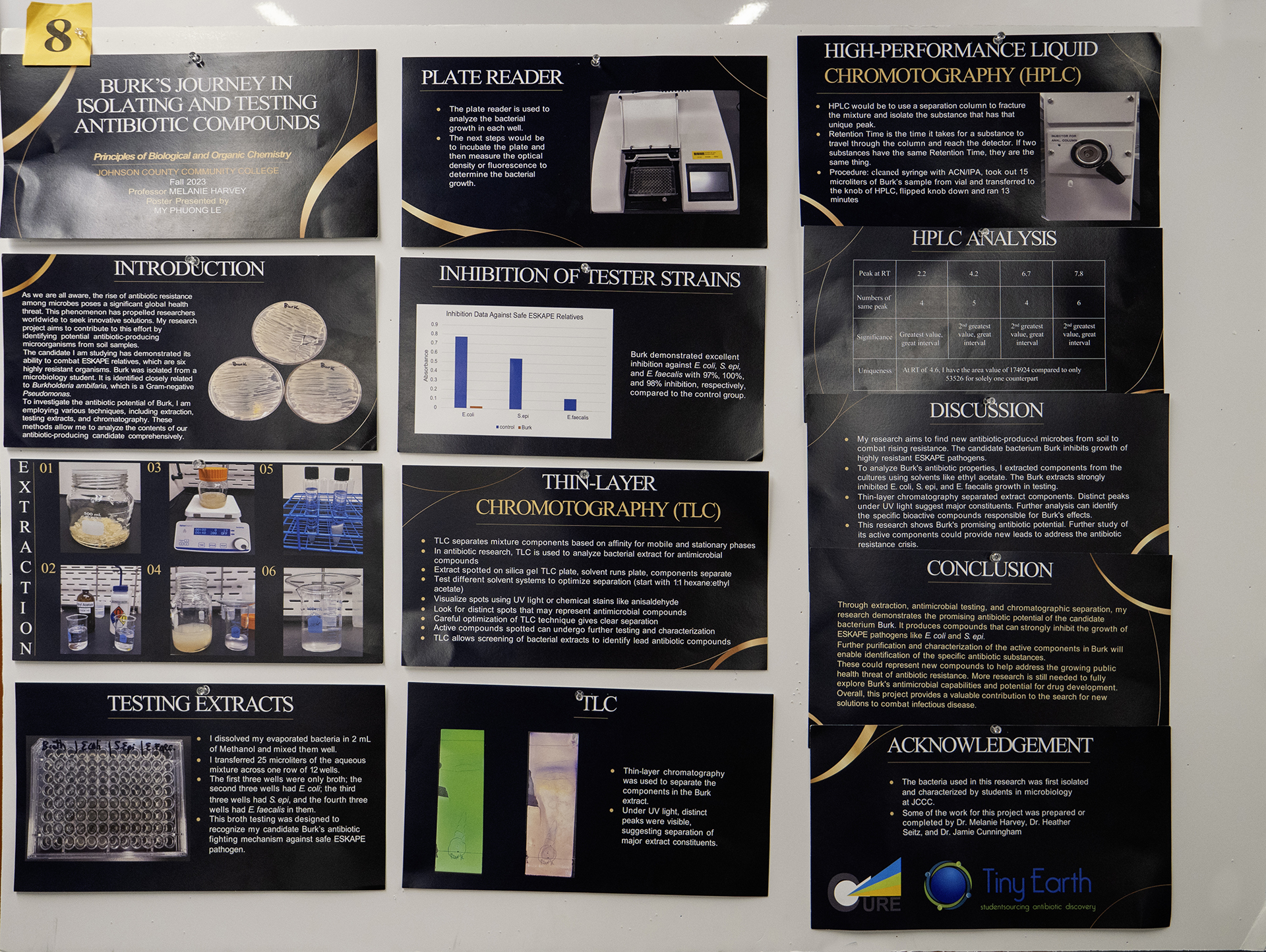
Burk's Journey in Isolating and Testing Antibiotic Compounds
CoLab, OCB 100
The alarming increase in antibiotic resistance among pathogenic microorganisms has sparked global efforts to discover novel antimicrobial compounds. This research project aims to identify potential antibiotic-producing microorganisms from soil samples, with a particular focus on a candidate strain, referred to as "Burk," that has demonstrated the ability to combat ESKAPE pathogens, a group of six highly drug-resistant bacterial species. Burk, isolated from a microbiology student, has been identified as closely related to Burkholderia ambifaria, a Gram-negative Pseudomonas species. To investigate the antibiotic potential of Burk, a multi-faceted approach is being employed. This includes the extraction of secondary metabolites, followed by testing the extracts against various bacterial strains to evaluate their antimicrobial activity. Additionally, chromatographic techniques are being utilized to analyze and purify the bioactive compounds present in the extracts. By employing these methods, the research aims to comprehensively characterize the antibiotic-producing capabilities of Burk and potentially identify novel antimicrobial compounds that could contribute to the development of effective treatments against drug-resistant pathogens.
Comments
The faculty mentor for this project was Melanie Harvey, Chemistry.