

Life in Soil
Location
CoLab, OCB 100
Start Date
25-4-2024 12:00 PM
Document Type
Poster
Description
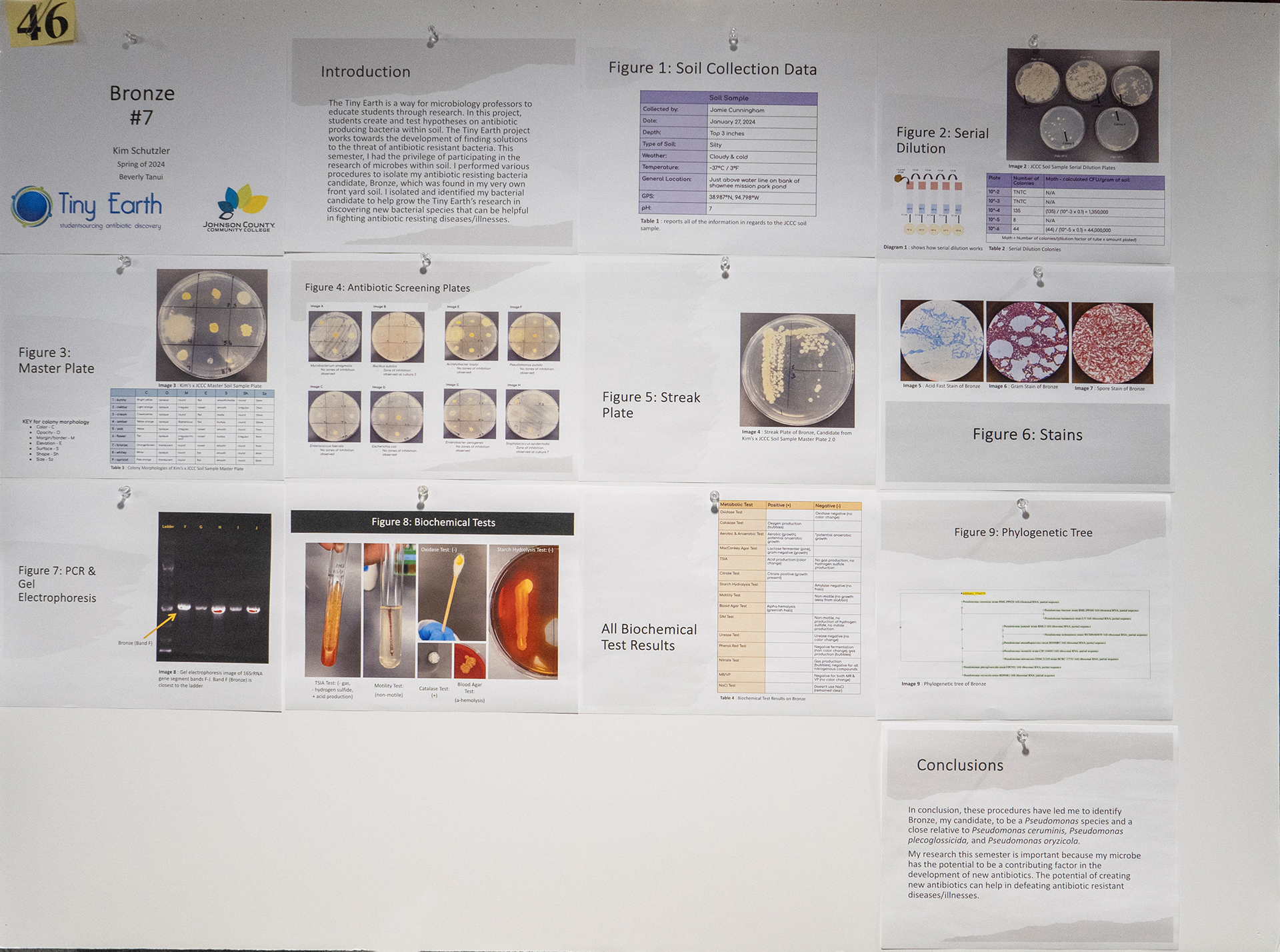
Over the course of the semester I have been testing bacterial candidates for antibiotic resistance. With the goal of searching for a new antibiotic to combat antibiotic resistance. I obtained a soil sample from my front yard in Prairie Village, Kansas, then serially diluted the soil sample. The diluted samples were then plated on 50% TSA agar plates and incubated at room temperature so that the potential candidates could grow. From there, I took candidates of interest and formed a master plate with nine different bacterial colonies. Next, I tested the selected bacterial candidates against the ESKAPE pathogen safe relatives. By screening the bacterial candidates of interest against the safe relatives I was able to safely test the candidates in class without the risk of dealing with the more harmful true ESKAPE pathogens. This research process is very important as diseases continue to evolve and antibiotic resistance will always be present and it is better to be prepared. In my research, I have found that my candidate, Bronze, showed inhibition against Staphylococcus epidermidis.
Image
Life in Soil
CoLab, OCB 100
Over the course of the semester I have been testing bacterial candidates for antibiotic resistance. With the goal of searching for a new antibiotic to combat antibiotic resistance. I obtained a soil sample from my front yard in Prairie Village, Kansas, then serially diluted the soil sample. The diluted samples were then plated on 50% TSA agar plates and incubated at room temperature so that the potential candidates could grow. From there, I took candidates of interest and formed a master plate with nine different bacterial colonies. Next, I tested the selected bacterial candidates against the ESKAPE pathogen safe relatives. By screening the bacterial candidates of interest against the safe relatives I was able to safely test the candidates in class without the risk of dealing with the more harmful true ESKAPE pathogens. This research process is very important as diseases continue to evolve and antibiotic resistance will always be present and it is better to be prepared. In my research, I have found that my candidate, Bronze, showed inhibition against Staphylococcus epidermidis.
Comments
The faculty mentor for this project was Beverly Tanui, Biology.