

Location
CoLab, OCB 100
Start Date
25-4-2024 12:00 PM
Document Type
Poster
Description
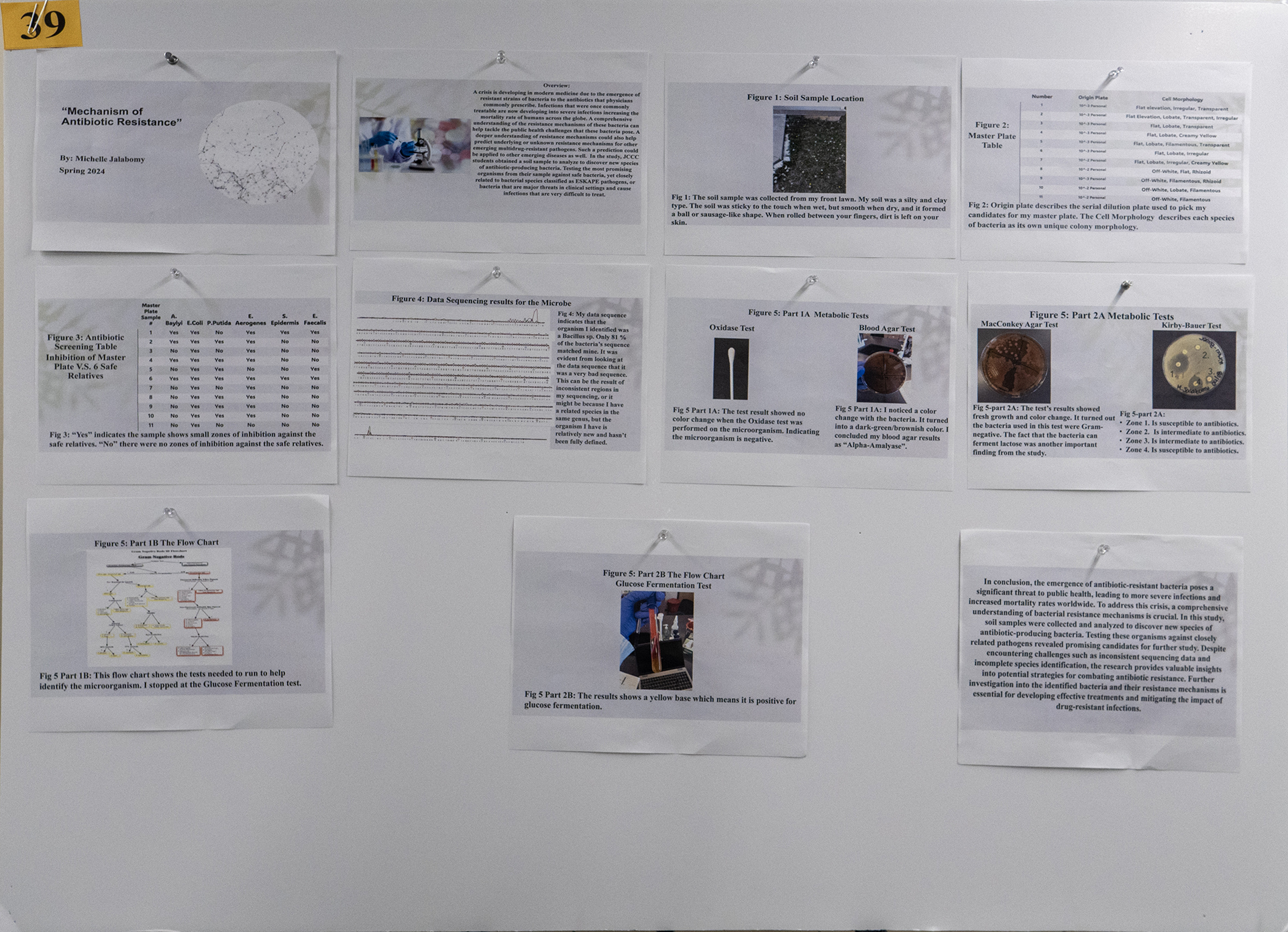
Antibiotic resistance is a phenomenon that occurs when bacteria develop the ability to survive antibiotics meant to kill them. Antibiotic resistance develops naturally over time as infections' genetics alter. Its establishment and spread are expedited by human activities, particularly the misuse and overuse of antimicrobials to treat, prevent, or control illnesses in humans, animals, and plants. A crisis is developing in modern medicine due to the emergence of resistant strains of bacteria to the antibiotics that physicians commonly prescribe. Infections that were once commonly treatable are now developing into severe infections increasing the mortality rate of humans across the globe. A comprehensive understanding of the resistance mechanisms of these bacteria can help tackle the public health challenges that these bacteria pose. A deeper understanding of resistance mechanisms could also help predict underlying or unknown resistance mechanisms for other emerging multidrug-resistant pathogens. Such a prediction could be applied to other emerging diseases as well. I obtained a soil sample to analyze to discover new species of antibiotic-producing bacteria. Soil is an abundant resource for diverse organisms that compete with each other, and many of those organisms produce chemicals that inhibit the soil sample containing many organisms with these properties. Of those, I tested the most promising organisms from my sample against safe bacteria, yet closely related to bacterial species classified as ESKAPE pathogens, or bacteria that are major threats in clinical settings and cause infections that are very difficult to treat.
Image
Mechanism of Antibiotic Resistance
CoLab, OCB 100
Antibiotic resistance is a phenomenon that occurs when bacteria develop the ability to survive antibiotics meant to kill them. Antibiotic resistance develops naturally over time as infections' genetics alter. Its establishment and spread are expedited by human activities, particularly the misuse and overuse of antimicrobials to treat, prevent, or control illnesses in humans, animals, and plants. A crisis is developing in modern medicine due to the emergence of resistant strains of bacteria to the antibiotics that physicians commonly prescribe. Infections that were once commonly treatable are now developing into severe infections increasing the mortality rate of humans across the globe. A comprehensive understanding of the resistance mechanisms of these bacteria can help tackle the public health challenges that these bacteria pose. A deeper understanding of resistance mechanisms could also help predict underlying or unknown resistance mechanisms for other emerging multidrug-resistant pathogens. Such a prediction could be applied to other emerging diseases as well. I obtained a soil sample to analyze to discover new species of antibiotic-producing bacteria. Soil is an abundant resource for diverse organisms that compete with each other, and many of those organisms produce chemicals that inhibit the soil sample containing many organisms with these properties. Of those, I tested the most promising organisms from my sample against safe bacteria, yet closely related to bacterial species classified as ESKAPE pathogens, or bacteria that are major threats in clinical settings and cause infections that are very difficult to treat.
Comments
The faculty mentor for this project was Rachael Ott, Biology.