

Wishy Washy: Do You Trust What’s in Your Water?
Location
CoLab, COM 429
Start Date
30-4-2026 6:45 PM
Document Type
Poster
Description
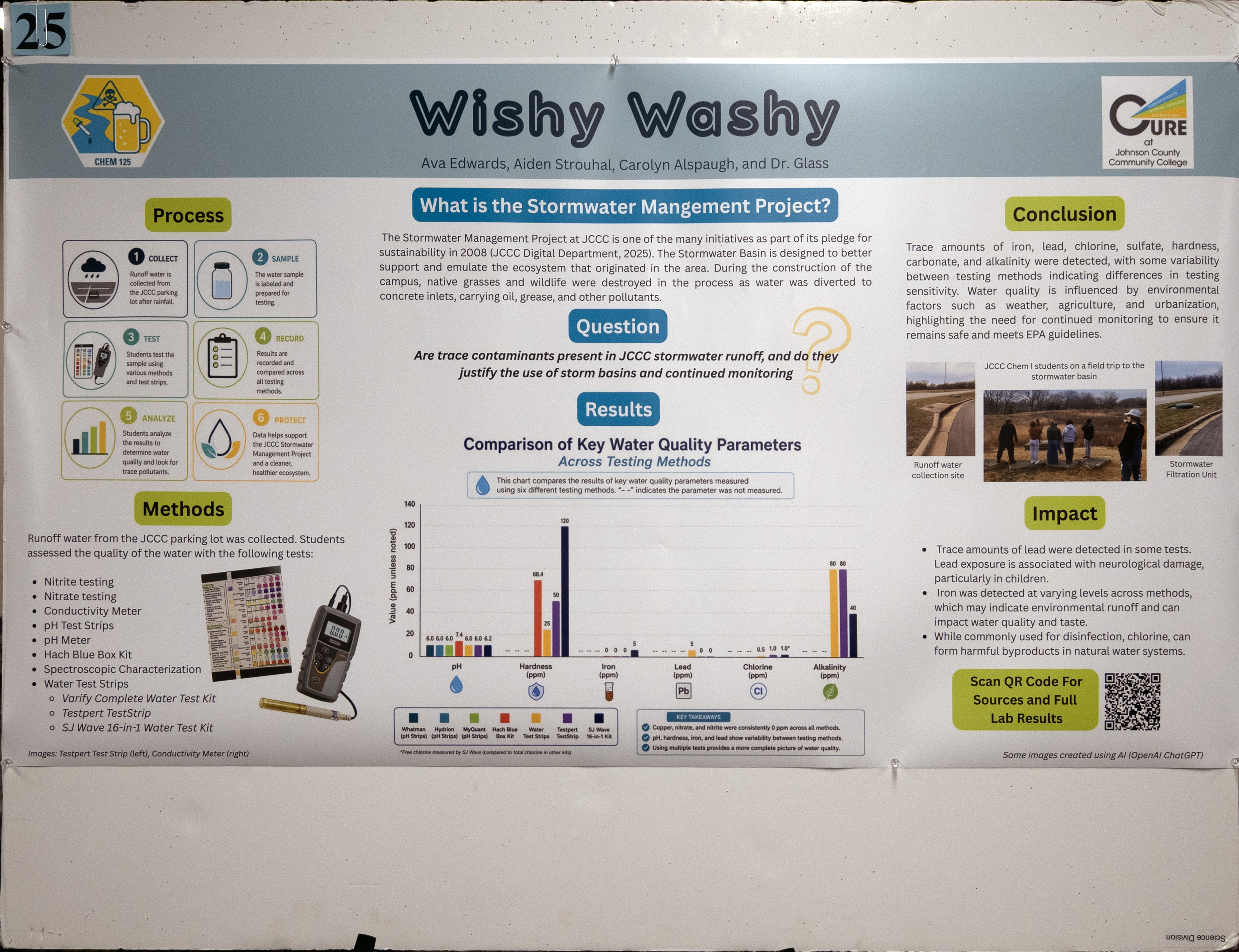
The Stormwater Management Project at JCCC is one of the many initiatives as part of its pledge for sustainability in 2008. The Stormwater Basin is designed to better support and emulate the ecosystem that originated in the area prior to the construction of the campus. Native grasses and wildlife were destroyed in the process of building the college as water was diverted to concrete inlets, carrying oil, grease, and other pollutants. Nickel is frequently used for commercial and industrial purposes. Given its widespread use and its risks to human and environmental health, the student researchers wanted to know, how effective is the Stormwater Management Project at filtering pollutants in its efforts to foster native ecosystems? The quality study looked at the chemical composition and safety of runoff water collected on January 8th, 2026. Learning about runoff water is extremely important because it can often carry pollutants into man-made basins, if there is one, potentially impacting the local ecosystem. To take a look at the quality, multiple tests were run. The analysis revealed that the water had a slightly acidic-neutral pH, and nickel recorded 10 ppm. These tests indicate that while the water shows little to no signs of pollution or contamination, the slight acidity and small trace of nickel should allow for more testing to evaluate the effectiveness of campus stormwater cleaning efforts. The findings conclude that JCCC is meeting its sustainability goals while also supporting the need and effectiveness of these types of initiatives in higher education systems.
Image
Wishy Washy: Do You Trust What’s in Your Water?
CoLab, COM 429
The Stormwater Management Project at JCCC is one of the many initiatives as part of its pledge for sustainability in 2008. The Stormwater Basin is designed to better support and emulate the ecosystem that originated in the area prior to the construction of the campus. Native grasses and wildlife were destroyed in the process of building the college as water was diverted to concrete inlets, carrying oil, grease, and other pollutants. Nickel is frequently used for commercial and industrial purposes. Given its widespread use and its risks to human and environmental health, the student researchers wanted to know, how effective is the Stormwater Management Project at filtering pollutants in its efforts to foster native ecosystems? The quality study looked at the chemical composition and safety of runoff water collected on January 8th, 2026. Learning about runoff water is extremely important because it can often carry pollutants into man-made basins, if there is one, potentially impacting the local ecosystem. To take a look at the quality, multiple tests were run. The analysis revealed that the water had a slightly acidic-neutral pH, and nickel recorded 10 ppm. These tests indicate that while the water shows little to no signs of pollution or contamination, the slight acidity and small trace of nickel should allow for more testing to evaluate the effectiveness of campus stormwater cleaning efforts. The findings conclude that JCCC is meeting its sustainability goals while also supporting the need and effectiveness of these types of initiatives in higher education systems.
Comments
The faculty mentor for this project was Amanda Glass.