

Searching for Antibiotics
Location
CoLab, COM 388
Start Date
30-4-2026 5:30 PM
Document Type
Poster
Description
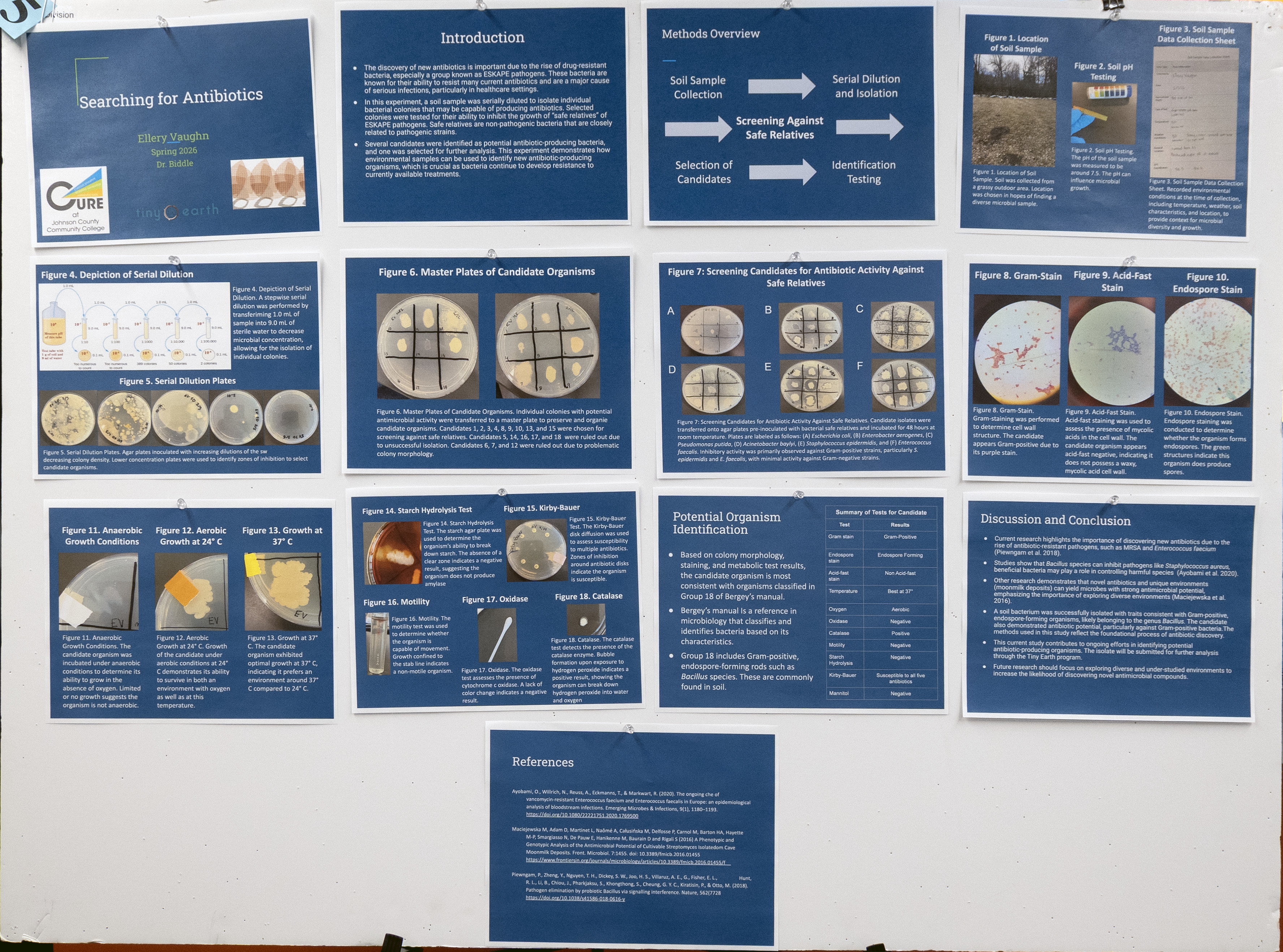
The discovery of new antibiotics is important due to the rise of drug-resistant bacteria, especially a group known as ESKAPE pathogens. These bacteria are known for their ability to resist many current antibiotics and are a major cause of serious infections, particularly in healthcare settings. In this experiment, a soil sample was serially diluted to isolate individual bacterial colonies that may be capable of producing antibiotics. Selected colonies were tested for their ability to inhibit the growth of “safe relatives” of ESKAPE pathogens. Safe relatives are non-pathogenic bacteria that are closely related to pathogenic strains. Several candidates were identified as potential antibiotic-producing bacteria, and one was selected for further analysis. This experiment demonstrates how environmental samples can be used to identify new antibiotic-producing organisms, which is crucial as bacteria continue to develop resistance to currently available treatments.
Image
Searching for Antibiotics
CoLab, COM 388
The discovery of new antibiotics is important due to the rise of drug-resistant bacteria, especially a group known as ESKAPE pathogens. These bacteria are known for their ability to resist many current antibiotics and are a major cause of serious infections, particularly in healthcare settings. In this experiment, a soil sample was serially diluted to isolate individual bacterial colonies that may be capable of producing antibiotics. Selected colonies were tested for their ability to inhibit the growth of “safe relatives” of ESKAPE pathogens. Safe relatives are non-pathogenic bacteria that are closely related to pathogenic strains. Several candidates were identified as potential antibiotic-producing bacteria, and one was selected for further analysis. This experiment demonstrates how environmental samples can be used to identify new antibiotic-producing organisms, which is crucial as bacteria continue to develop resistance to currently available treatments.
Comments
The faculty mentor for this project was Eulandria Biddle.