

Chlorella Cavaliers
Location
CoLab, COM 358
Start Date
30-4-2026 3:45 PM
Document Type
Poster
Description
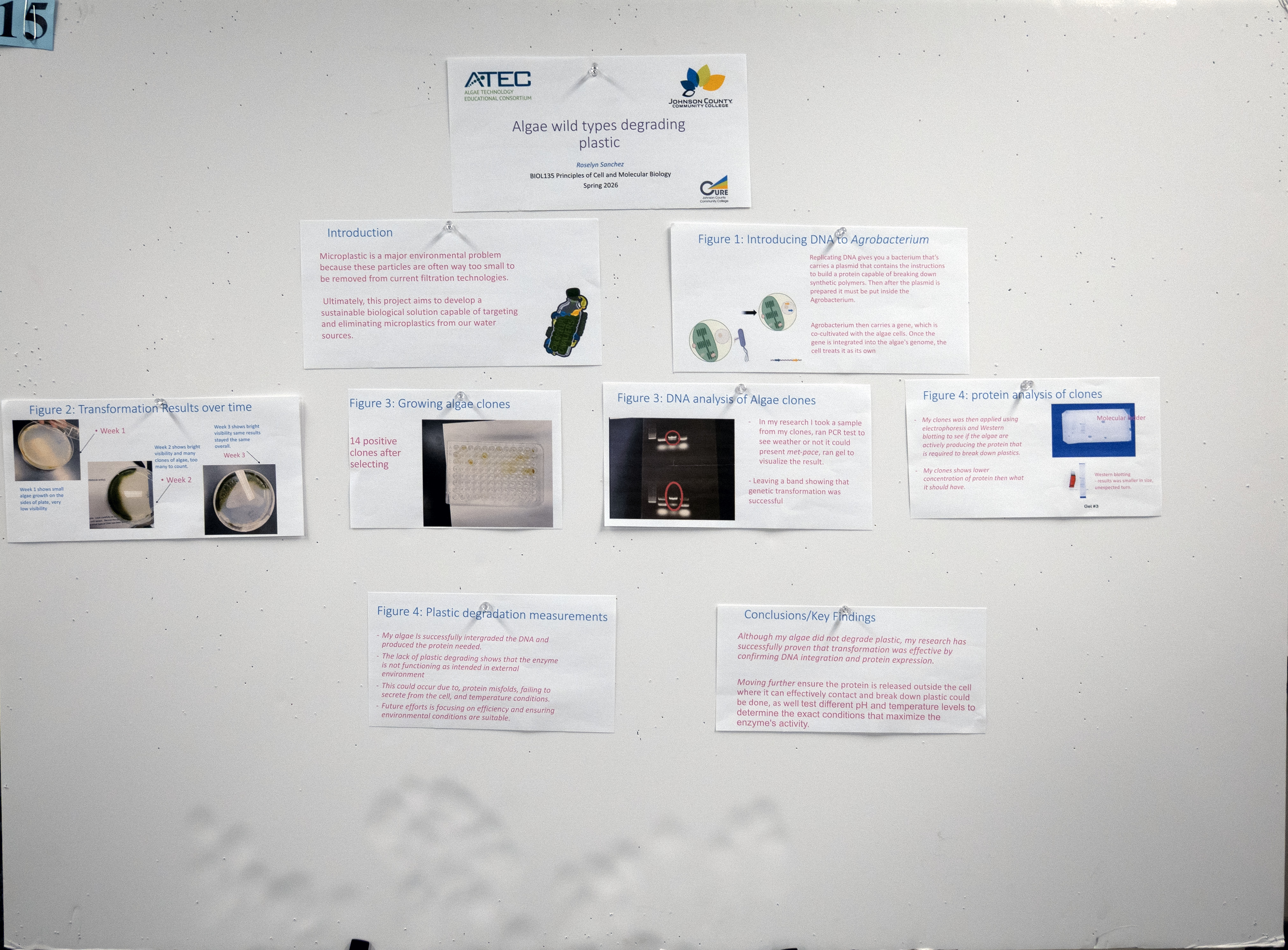
Utilizing plastic degradation algae represents a solution to our global pollution crisis. This goal would create a sustainable way to break down synthetic polymers into a non toxic component. Some research that needs to be done to solve this problem are; introducing DNA in algae cells, selecting algae clones, further selecting clones to see which clones survived and show positive results, analyzing the DNA and protein, and lastly seeing if our goal of plastic degradation algae show a positive result overall. Some results so far for Agrobatrium show eleven clones, and out of those eleven one of my clones have resulted in a positive DNA. Needing further testing to figure out whether metaspace is present and seeing the growth, protein, and DNA sequencing. The impact this research hopes to make is that these organisms can target microplastics that can be impossible to filter out of the ocean or drinking water.
Image
Chlorella Cavaliers
CoLab, COM 358
Utilizing plastic degradation algae represents a solution to our global pollution crisis. This goal would create a sustainable way to break down synthetic polymers into a non toxic component. Some research that needs to be done to solve this problem are; introducing DNA in algae cells, selecting algae clones, further selecting clones to see which clones survived and show positive results, analyzing the DNA and protein, and lastly seeing if our goal of plastic degradation algae show a positive result overall. Some results so far for Agrobatrium show eleven clones, and out of those eleven one of my clones have resulted in a positive DNA. Needing further testing to figure out whether metaspace is present and seeing the growth, protein, and DNA sequencing. The impact this research hopes to make is that these organisms can target microplastics that can be impossible to filter out of the ocean or drinking water.
Comments
The faculty mentor for this project was Heather Seitz.