

Antibiotics: Is the Solution Closer to us than We Think?
Location
CoLab, COM 328
Start Date
30-4-2026 2:30 PM
Document Type
Poster
Description
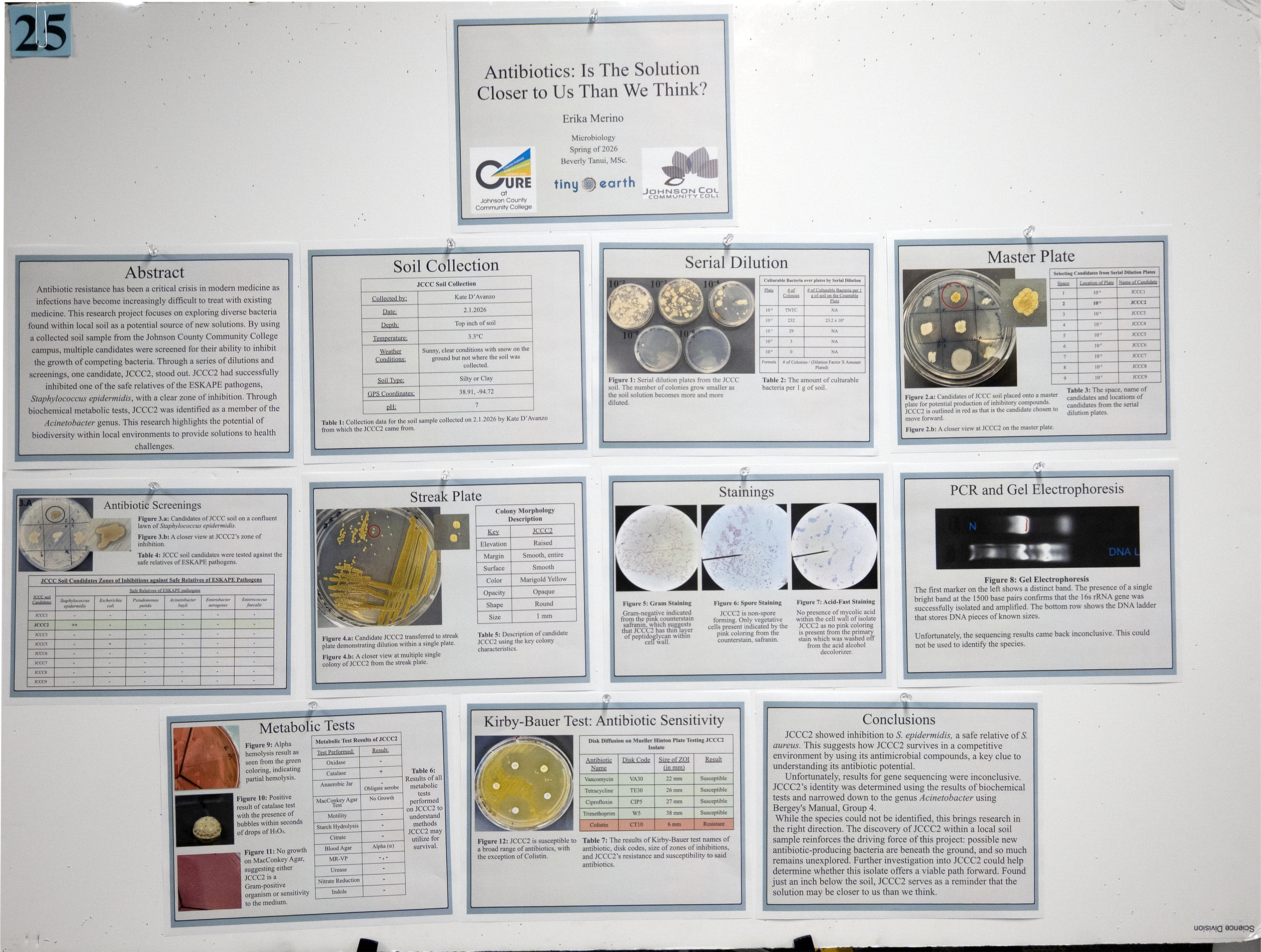
Antibiotic resistance has been a growing crisis in modern medicine as many bacteria have evolved to resist existing treatments. Now, previously simple infections are difficult to manage. For some patients, it's a race against time. This research project focuses on exploring diverse bacteria found within local soil as a potential source of new antimicrobial compounds. By using a collected soil sample from the Johnson County Community College campus, multiple candidates were screened for their ability to inhibit the growth of competing bacteria. Through a series of lab tests and dilutions, one candidate, JCCC2, stood out. JCCC2 had successfully inhibited one of the safe relatives of the ESKAPE pathogens, Enterococcus faecalis, with a clear zone of inhibition. This research highlights the potential of biodiversity within local environments to provide solutions to health challenges.
Image
Antibiotics: Is the Solution Closer to us than We Think?
CoLab, COM 328
Antibiotic resistance has been a growing crisis in modern medicine as many bacteria have evolved to resist existing treatments. Now, previously simple infections are difficult to manage. For some patients, it's a race against time. This research project focuses on exploring diverse bacteria found within local soil as a potential source of new antimicrobial compounds. By using a collected soil sample from the Johnson County Community College campus, multiple candidates were screened for their ability to inhibit the growth of competing bacteria. Through a series of lab tests and dilutions, one candidate, JCCC2, stood out. JCCC2 had successfully inhibited one of the safe relatives of the ESKAPE pathogens, Enterococcus faecalis, with a clear zone of inhibition. This research highlights the potential of biodiversity within local environments to provide solutions to health challenges.
Comments
The faculty mentor for this project was Beverly Tanui.