

Identification of Soil Bacteria that Inhibits Staphylococcus Epidermidis
Location
CoLab, COM 320
Start Date
30-4-2026 2:30 PM
Document Type
Poster
Description
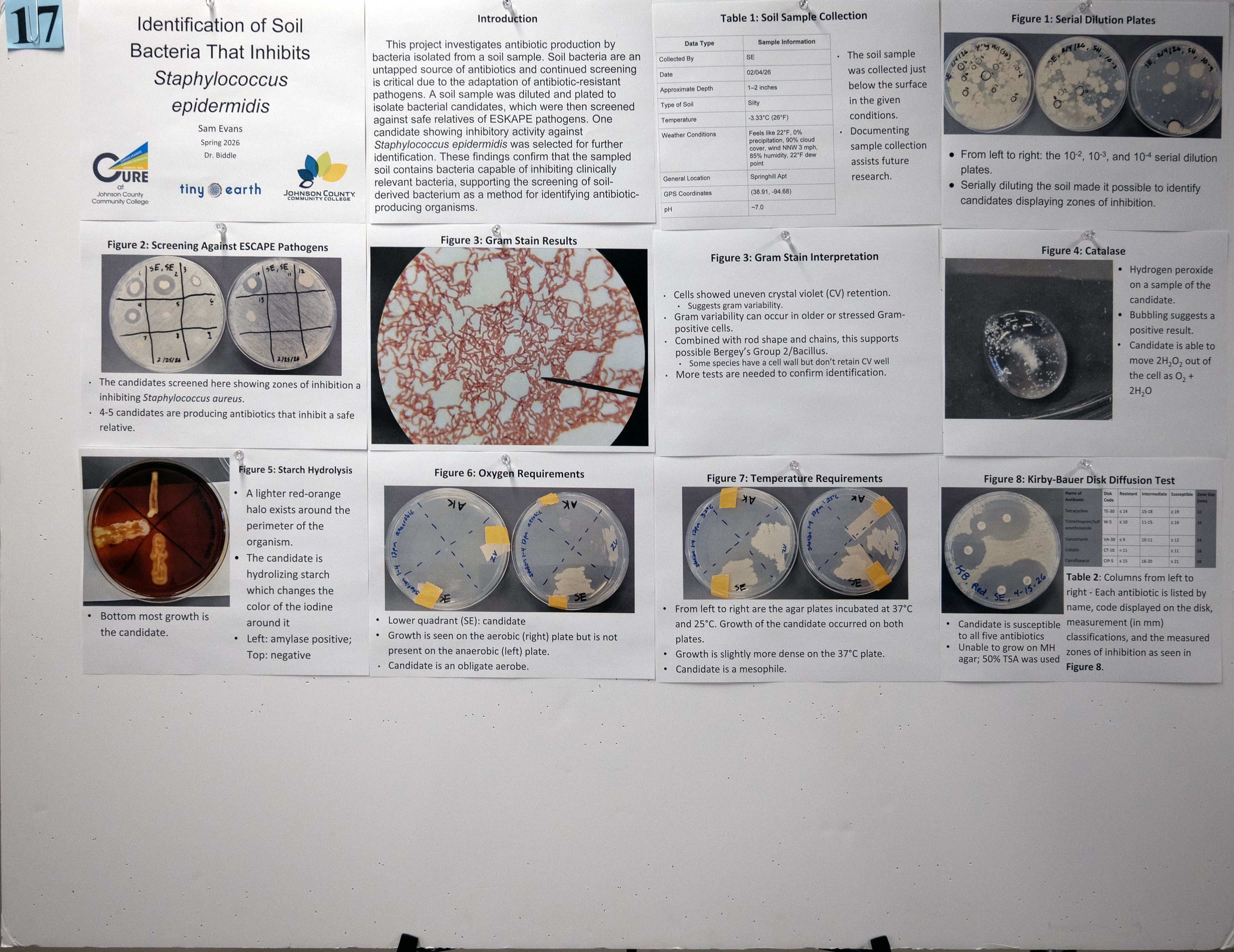
This project investigates antibiotic production by bacteria isolated from a local soil sample. Soil microbes are a major and still largely untapped source of antibiotic compounds and continued screening is critical due to the ongoing adaptation of antibiotic-resistant pathogens. A soil sample was serially diluted and plated to isolate individual bacterial candidates, which were then screened against safe relatives of clinically relevant bacteria to assess antibiotic activity. From an estimated 6.6×10⁶ CFU per gram of soil, 13 distinct bacterial candidates were isolated. Of these, four demonstrated clear zones of inhibition against Staphylococcus epidermidis. One candidate showing strong inhibitory activity was selected for further isolation and identification. This isolate exhibited bacillus morphology with chain formation, was not acid-fast, and produced inconclusive Gram stain results, with no confirmed endospore formation. These findings confirm that the sampled soil contains bacteria capable of inhibiting other microbial species, supporting the continued screening of soil-derived bacterium as a method for identifying antibiotic-producing organisms.
Image
Identification of Soil Bacteria that Inhibits Staphylococcus Epidermidis
CoLab, COM 320
This project investigates antibiotic production by bacteria isolated from a local soil sample. Soil microbes are a major and still largely untapped source of antibiotic compounds and continued screening is critical due to the ongoing adaptation of antibiotic-resistant pathogens. A soil sample was serially diluted and plated to isolate individual bacterial candidates, which were then screened against safe relatives of clinically relevant bacteria to assess antibiotic activity. From an estimated 6.6×10⁶ CFU per gram of soil, 13 distinct bacterial candidates were isolated. Of these, four demonstrated clear zones of inhibition against Staphylococcus epidermidis. One candidate showing strong inhibitory activity was selected for further isolation and identification. This isolate exhibited bacillus morphology with chain formation, was not acid-fast, and produced inconclusive Gram stain results, with no confirmed endospore formation. These findings confirm that the sampled soil contains bacteria capable of inhibiting other microbial species, supporting the continued screening of soil-derived bacterium as a method for identifying antibiotic-producing organisms.
Comments
The faculty mentor for this project was Eulandria Biddle.