

Backyard Bioresistome: Exploring the Antimicrobial Potential of Backyard Soil Microbes Against ESKAPE Relatives
Location
CoLab, COM 290
Start Date
30-4-2026 1:15 PM
Document Type
Poster
Description
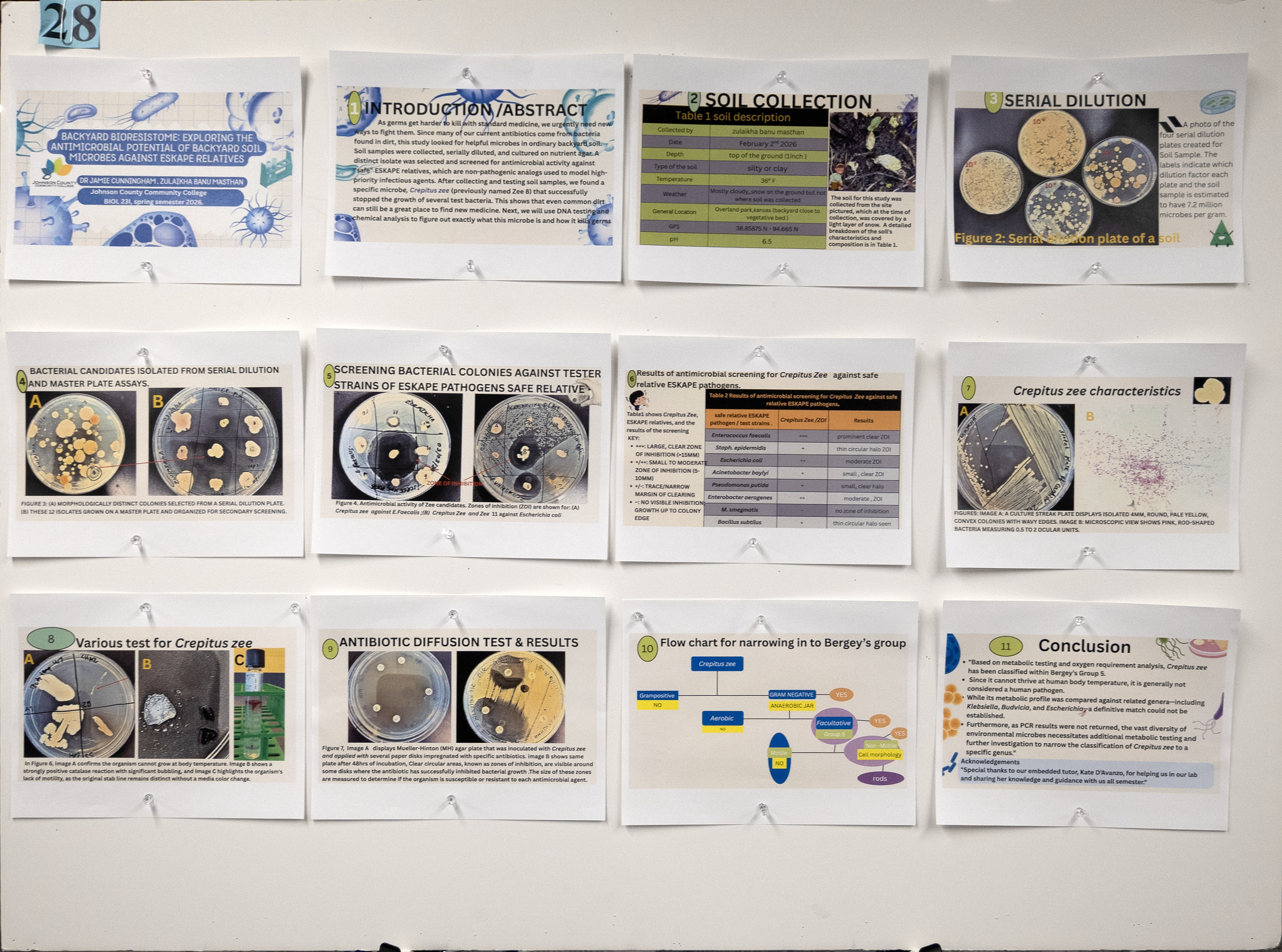
The rise of antibiotic-resistant pathogens has created a critical need for new antimicrobial compounds. As many clinical antibiotics originate from soil-dwelling bacteria, this study aimed to isolate and identify novel microbes with inhibitory properties from backyard soil. Soil samples were collected, serially diluted, and cultured on nutrient agar. A distinct isolate was selected and screened for antimicrobial activity against "safe" ESKAPE relatives, which are non-pathogenic analogs used to model high-priority infectious agents. After collecting and testing soil samples, we found a specific microbe (named Zee 8) that successfully stopped the growth of several test bacteria. This shows that even common dirt can still be a great place to find new medicine. Next, we will use DNA testing and chemical analysis to figure out exactly what this microbe is and how it kills germs
Image
Backyard Bioresistome: Exploring the Antimicrobial Potential of Backyard Soil Microbes Against ESKAPE Relatives
CoLab, COM 290
The rise of antibiotic-resistant pathogens has created a critical need for new antimicrobial compounds. As many clinical antibiotics originate from soil-dwelling bacteria, this study aimed to isolate and identify novel microbes with inhibitory properties from backyard soil. Soil samples were collected, serially diluted, and cultured on nutrient agar. A distinct isolate was selected and screened for antimicrobial activity against "safe" ESKAPE relatives, which are non-pathogenic analogs used to model high-priority infectious agents. After collecting and testing soil samples, we found a specific microbe (named Zee 8) that successfully stopped the growth of several test bacteria. This shows that even common dirt can still be a great place to find new medicine. Next, we will use DNA testing and chemical analysis to figure out exactly what this microbe is and how it kills germs
Comments
The faculty mentor for this project was Jamie Cunningham.