

Location
CoLab, COM 100
Start Date
1-5-2025 9:45 AM
Document Type
Poster
Description
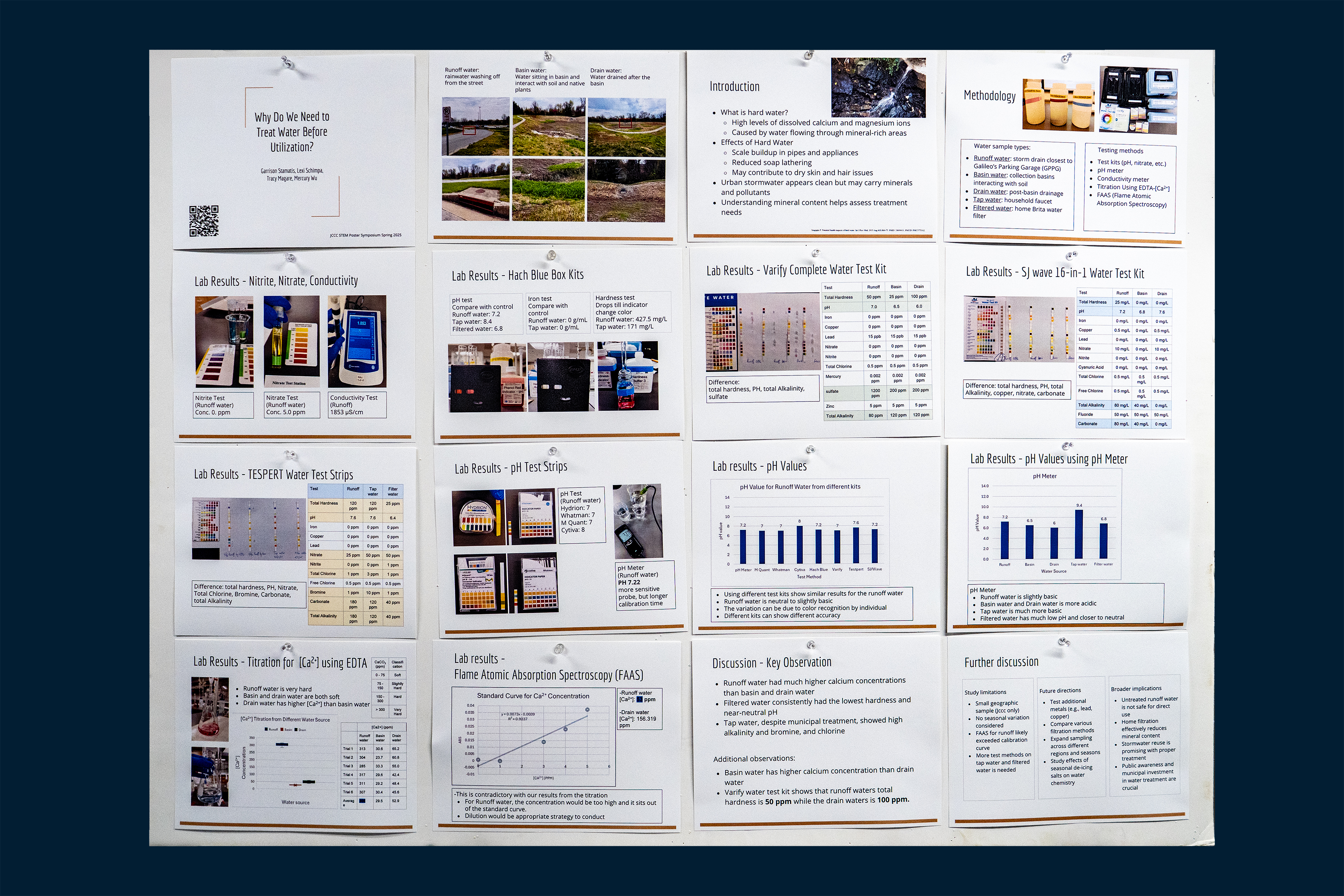
Hard water, which contains elevated levels of calcium and magnesium, is often associated with issues such as mineral buildup in appliances and reduced soap effectiveness. In urban areas, runoff water is collected from rainfall and passes through various stages, including basins and post-basin drains, before being treated for use. This raises the question: why can’t runoff water be directly treated for daily use? What is it about runoff water that makes treatment necessary? This study aims to evaluate the water hardness of runoff water collected from the storm drains at Johnson County Community College (JCCC). Specifically, we focus on calcium concentration as an indicator of water hardness. To assess the water quality, we used Hach blue box kits to measure pH, iron, and overall hardness. Additionally, we utilized commercially available test strips to analyze other chemical components present in the water. To precisely measure the calcium concentration, we performed titration using EDTA and Eriochrome Black T, followed by flame atomic absorption spectroscopy (FAAS) for further analysis. Our results indicated that runoff water contained significantly higher calcium concentrations than both basin and drain water, with concentrations exceeding 300 ppm in both titration and FAAS measurements. These findings suggest that runoff water has a high hardness level, reinforcing the importance of optimizing water treatment processes to reduce hardness before utilizing the water for daily use.
Image
Why Do We Need to Treat Water Before Utilization?
CoLab, COM 100
Hard water, which contains elevated levels of calcium and magnesium, is often associated with issues such as mineral buildup in appliances and reduced soap effectiveness. In urban areas, runoff water is collected from rainfall and passes through various stages, including basins and post-basin drains, before being treated for use. This raises the question: why can’t runoff water be directly treated for daily use? What is it about runoff water that makes treatment necessary? This study aims to evaluate the water hardness of runoff water collected from the storm drains at Johnson County Community College (JCCC). Specifically, we focus on calcium concentration as an indicator of water hardness. To assess the water quality, we used Hach blue box kits to measure pH, iron, and overall hardness. Additionally, we utilized commercially available test strips to analyze other chemical components present in the water. To precisely measure the calcium concentration, we performed titration using EDTA and Eriochrome Black T, followed by flame atomic absorption spectroscopy (FAAS) for further analysis. Our results indicated that runoff water contained significantly higher calcium concentrations than both basin and drain water, with concentrations exceeding 300 ppm in both titration and FAAS measurements. These findings suggest that runoff water has a high hardness level, reinforcing the importance of optimizing water treatment processes to reduce hardness before utilizing the water for daily use.
Comments
The faculty mentor for this project was Amanda Glass, Chemistry.