

Location
CoLab, COM 100
Start Date
1-5-2025 6:45 PM
Document Type
Poster
Description
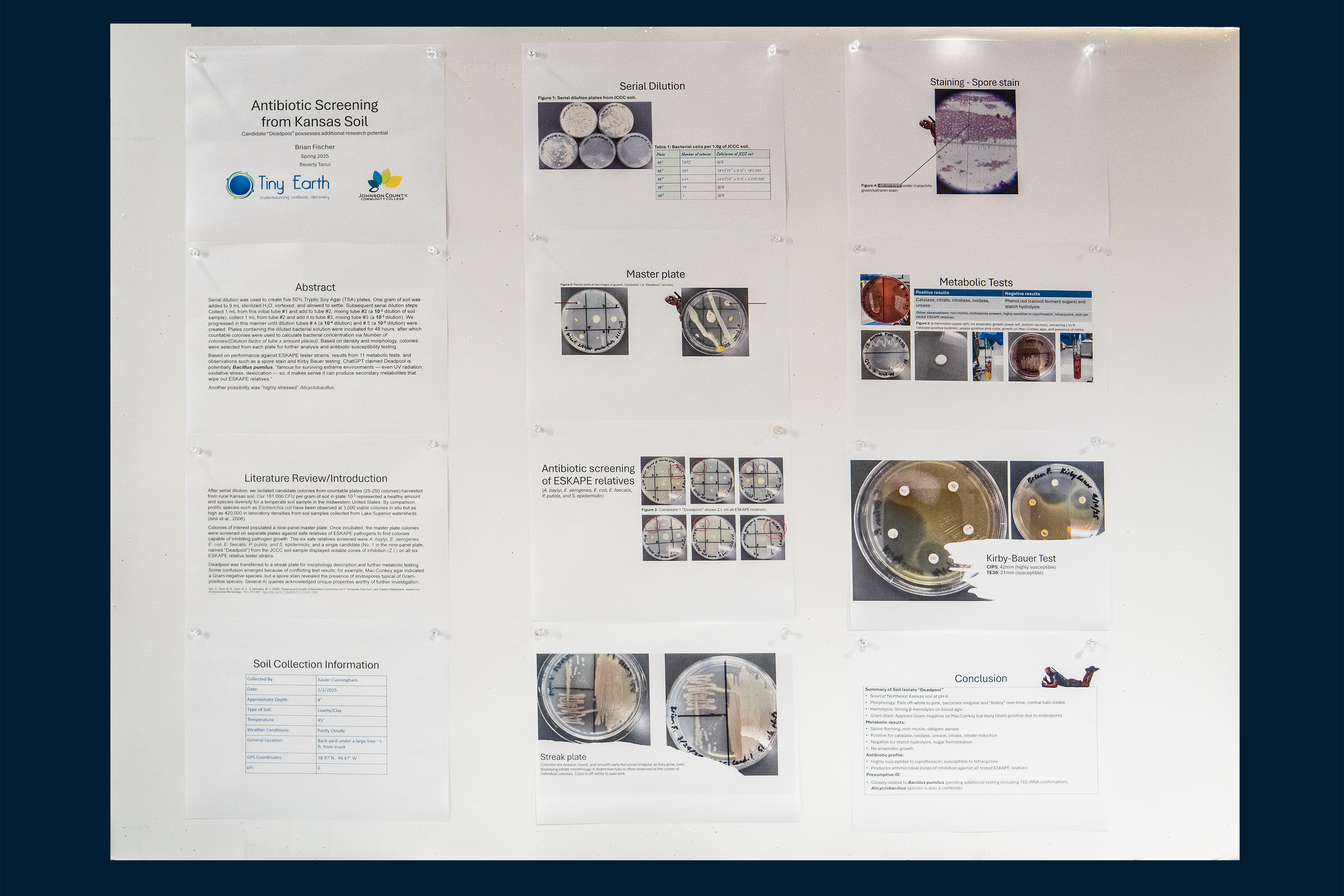
Antibiotic screening was performed using isolated bacterial candidates derived from rural northeast Kansas soil samples. The objective was identification of nine bacterial candidates per soil sample (18 total) that showed zones of inhibition against the tester strains of ESKAPE pathogen safe relatives. Standard laboratory screening methods were employed, including the use of a Bacti-cinerator, cotton swabs, inoculating loops, safe relatives of ESKAPE pathogens, 50% TSA plates, a room temperature incubator, and master plates of each soil sample’s candidates. ESKAPE safe relatives tested include Escherichia coli, Staphylococcus epidermidis, Pseudomonas putida, Enterobacter aerogenes, Enterococcus faecalis, and Acinetobacter baylyi. One sample (“Individual”) produced no noteworthy specimens, while the second sample (“JCCC”) produced one candidate – Candidate 1, or “Deadpool” – that was effective against all six ESKAPE safe relatives (tester strains).
Image
Antibiotic Screening from Kansas Soil
CoLab, COM 100
Antibiotic screening was performed using isolated bacterial candidates derived from rural northeast Kansas soil samples. The objective was identification of nine bacterial candidates per soil sample (18 total) that showed zones of inhibition against the tester strains of ESKAPE pathogen safe relatives. Standard laboratory screening methods were employed, including the use of a Bacti-cinerator, cotton swabs, inoculating loops, safe relatives of ESKAPE pathogens, 50% TSA plates, a room temperature incubator, and master plates of each soil sample’s candidates. ESKAPE safe relatives tested include Escherichia coli, Staphylococcus epidermidis, Pseudomonas putida, Enterobacter aerogenes, Enterococcus faecalis, and Acinetobacter baylyi. One sample (“Individual”) produced no noteworthy specimens, while the second sample (“JCCC”) produced one candidate – Candidate 1, or “Deadpool” – that was effective against all six ESKAPE safe relatives (tester strains).
Comments
The faculty mentor for this project was Beverly Tanui, Biology.