

Location
CoLab, COM 100
Start Date
1-5-2025 6:45 PM
Document Type
Poster
Description
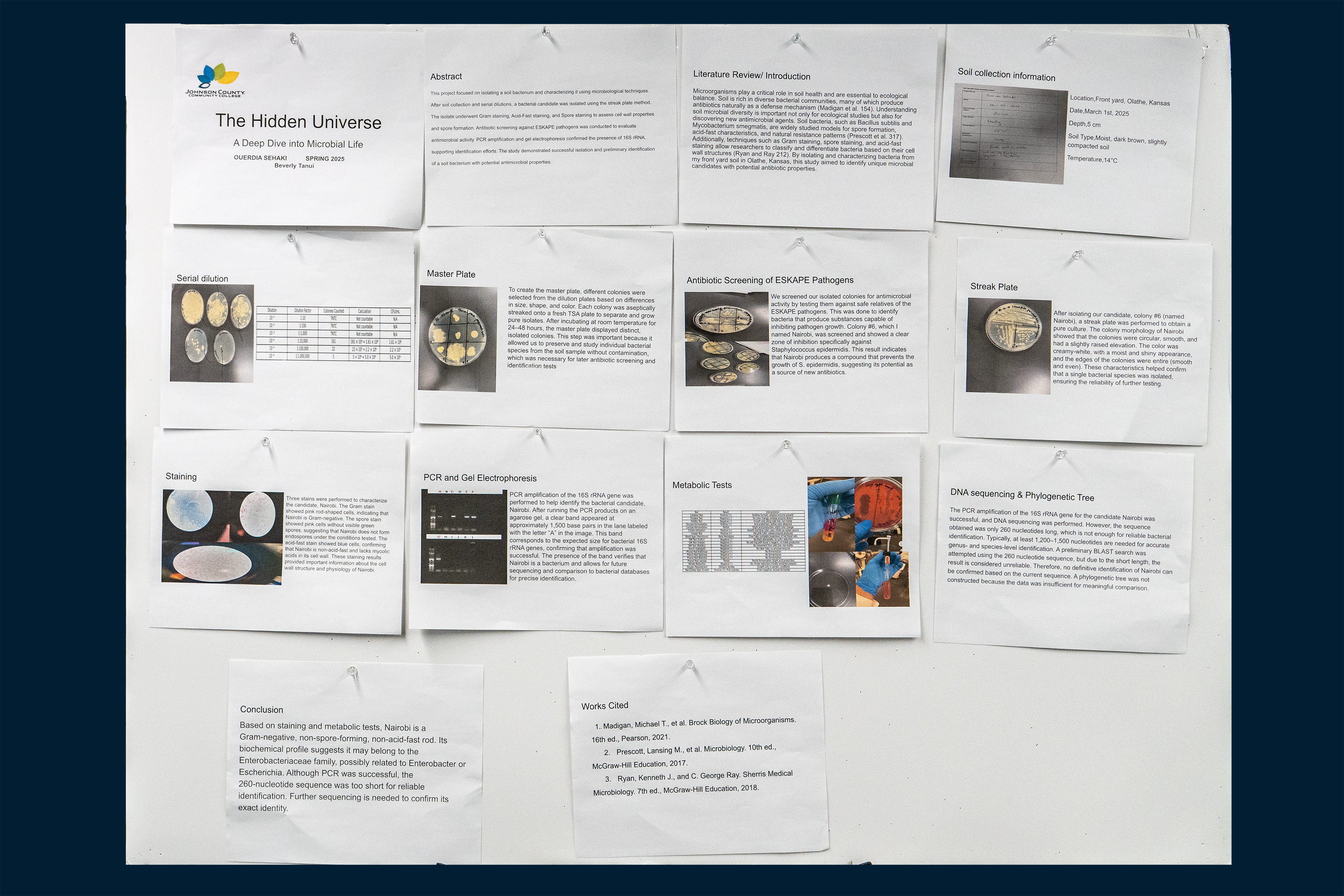
This study focused on isolating and identifying bacteria from a soil sample using microbiological and molecular techniques. Streak plating was used to obtain pure bacterial colonies, while Gram staining helped differentiate between Gram-positive and Gram-negative bacteria based on cell wall composition. Polymerase Chain Reaction (PCR) and gel electrophoresis were performed to confirm the presence of bacterial DNA. The results showed diverse bacterial colony morphologies, successful DNA amplification, and distinct Gram staining characteristics. Understanding soil bacterial diversity is crucial for applications in medicine, agriculture, and biotechnology. Future studies could focus on sequencing bacterial DNA for precise species identification and exploring their potential benefits.
Image
Isolation and Identification of Bacteria from Soil Samples
CoLab, COM 100
This study focused on isolating and identifying bacteria from a soil sample using microbiological and molecular techniques. Streak plating was used to obtain pure bacterial colonies, while Gram staining helped differentiate between Gram-positive and Gram-negative bacteria based on cell wall composition. Polymerase Chain Reaction (PCR) and gel electrophoresis were performed to confirm the presence of bacterial DNA. The results showed diverse bacterial colony morphologies, successful DNA amplification, and distinct Gram staining characteristics. Understanding soil bacterial diversity is crucial for applications in medicine, agriculture, and biotechnology. Future studies could focus on sequencing bacterial DNA for precise species identification and exploring their potential benefits.
Comments
The faculty mentor for this project was Beverly Tanui, Biology.