

Location
CoLab, COM 100
Start Date
1-5-2025 8:30 AM
Document Type
Poster
Description
Soil contains a rich and diverse source of microorganisms, some of which have the capacity to produce bioactive compounds that have strong potential for applications in both medicine and biotechnology. In this study, a bacterial strain designated 1GJ was isolated from a backyard soil sample and screened for antibacterial activity against safe relatives of the ever prevalent ESKAPE pathogens, a group of clinically significant bacteria known for their antibiotic resistance, posing a major threat to global public health due to their multidrug resistance and role in hospital-acquired infections. Preliminary testing revealed that 1GJ exhibits a strong ability to inhibit Mycobacterium smegmatis and Escherichia coli, as well as moderate inhibition of Staphylococcus epidermidis and Bacillus subtilis. Due to the notable antibacterial activity against Escherichia coli and Staphylococcus epidermidis, the bioactive compounds produced by 1GJ may have the potential to target pathogens related to the ESKAPE group, such as Klebsiella pneumoniae and Staphylococcus aureus, which are major contributors to antibiotic-resistant infections. Additionally, the strong inhibition of Mycobacterium smegmatis suggests the potential of inhibiting Mycobacterium tuberculosis, the causative agent of tuberculosis, which is another major global health threat due to its ability to cause severe respiratory infections and its increasing resistance to antibiotics. With the growth of antibiotic resistance over the last decade, identifying novel bacterial strains with antibiotic-producing potential is crucial in the fight against antibiotic resistance. Further characterization of 1GJ could provide valuable insights into its potential as a source of new antibiotics.
Image
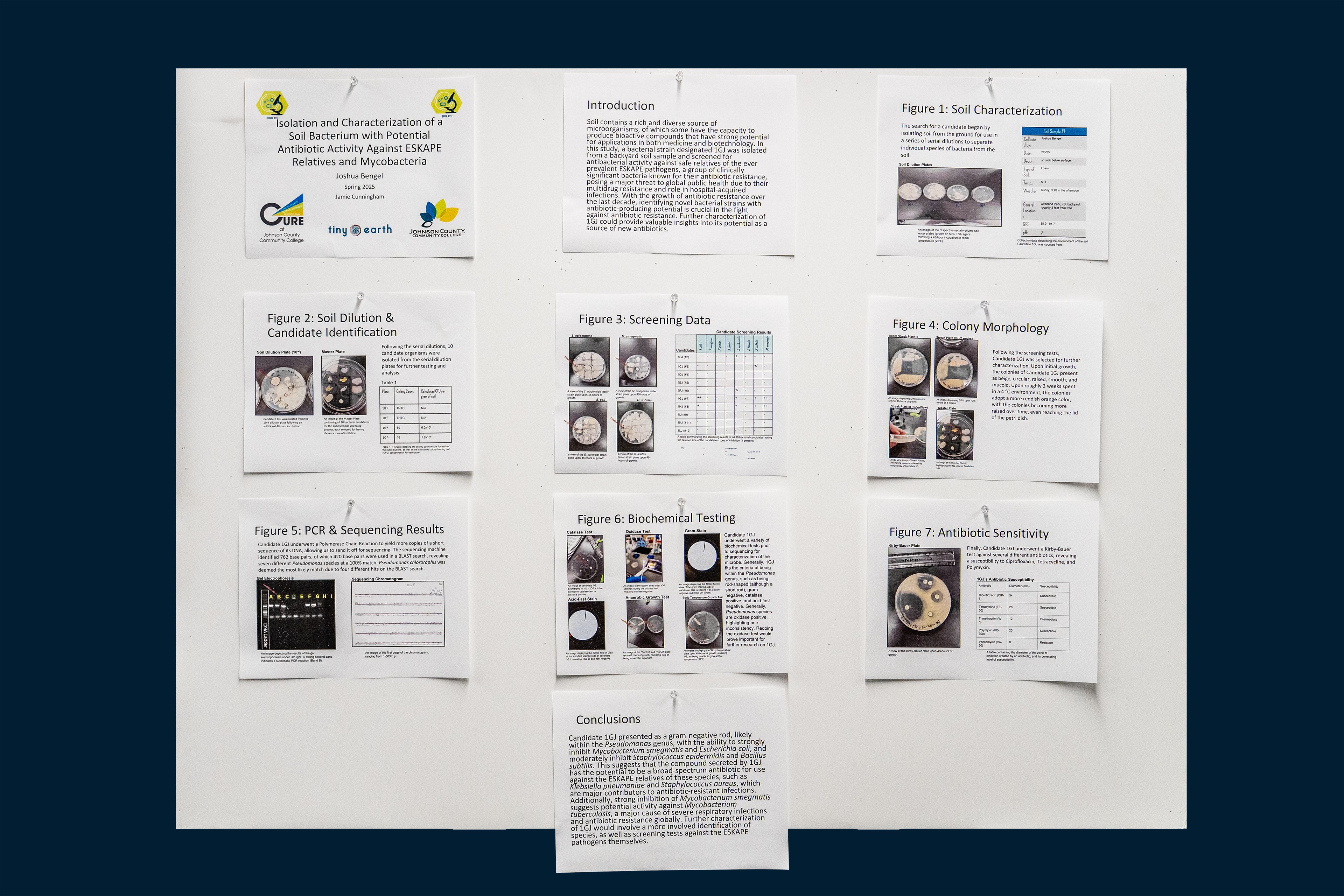
Isolation and Characterization of a Soil Bacterium with Potential Antibiotic Activity Against ESKAPE Relatives and Mycobacteria
CoLab, COM 100
Soil contains a rich and diverse source of microorganisms, some of which have the capacity to produce bioactive compounds that have strong potential for applications in both medicine and biotechnology. In this study, a bacterial strain designated 1GJ was isolated from a backyard soil sample and screened for antibacterial activity against safe relatives of the ever prevalent ESKAPE pathogens, a group of clinically significant bacteria known for their antibiotic resistance, posing a major threat to global public health due to their multidrug resistance and role in hospital-acquired infections. Preliminary testing revealed that 1GJ exhibits a strong ability to inhibit Mycobacterium smegmatis and Escherichia coli, as well as moderate inhibition of Staphylococcus epidermidis and Bacillus subtilis. Due to the notable antibacterial activity against Escherichia coli and Staphylococcus epidermidis, the bioactive compounds produced by 1GJ may have the potential to target pathogens related to the ESKAPE group, such as Klebsiella pneumoniae and Staphylococcus aureus, which are major contributors to antibiotic-resistant infections. Additionally, the strong inhibition of Mycobacterium smegmatis suggests the potential of inhibiting Mycobacterium tuberculosis, the causative agent of tuberculosis, which is another major global health threat due to its ability to cause severe respiratory infections and its increasing resistance to antibiotics. With the growth of antibiotic resistance over the last decade, identifying novel bacterial strains with antibiotic-producing potential is crucial in the fight against antibiotic resistance. Further characterization of 1GJ could provide valuable insights into its potential as a source of new antibiotics.
Comments
The faculty mentor for this project was Jamie Cunningham, Biology.