

Location
CoLab, COM 100
Start Date
1-5-2025 6:45 PM
Document Type
Poster
Description
The aim of this project was to ascertain which microbial candidates collected from the soil, if any, might produce antibiotics capable of inhibiting growth in the safe relatives of the ESKAPE pathogens. The safe relatives tested against are as follows: Escherichia coli, Staphylococcus epidermidis, Pseudomonas putida, Enterobacter aerogenes, Enterococcus faecalis, and Acinetobacter bayli. Efficacy against these nonpathogenic strains was demonstrated by the observable presence of zones of inhibition surrounding certain promising candidates when put under stress. Antibiotic screening plates were created as part of this testing, with each group of prospective antibiotic-producing microbial candidates having been transferred over to several different plate cultures specific to each individual safe relative. Ascetic technique procedures were utilized throughout the study to prevent cross-contamination wherever possible.
Image
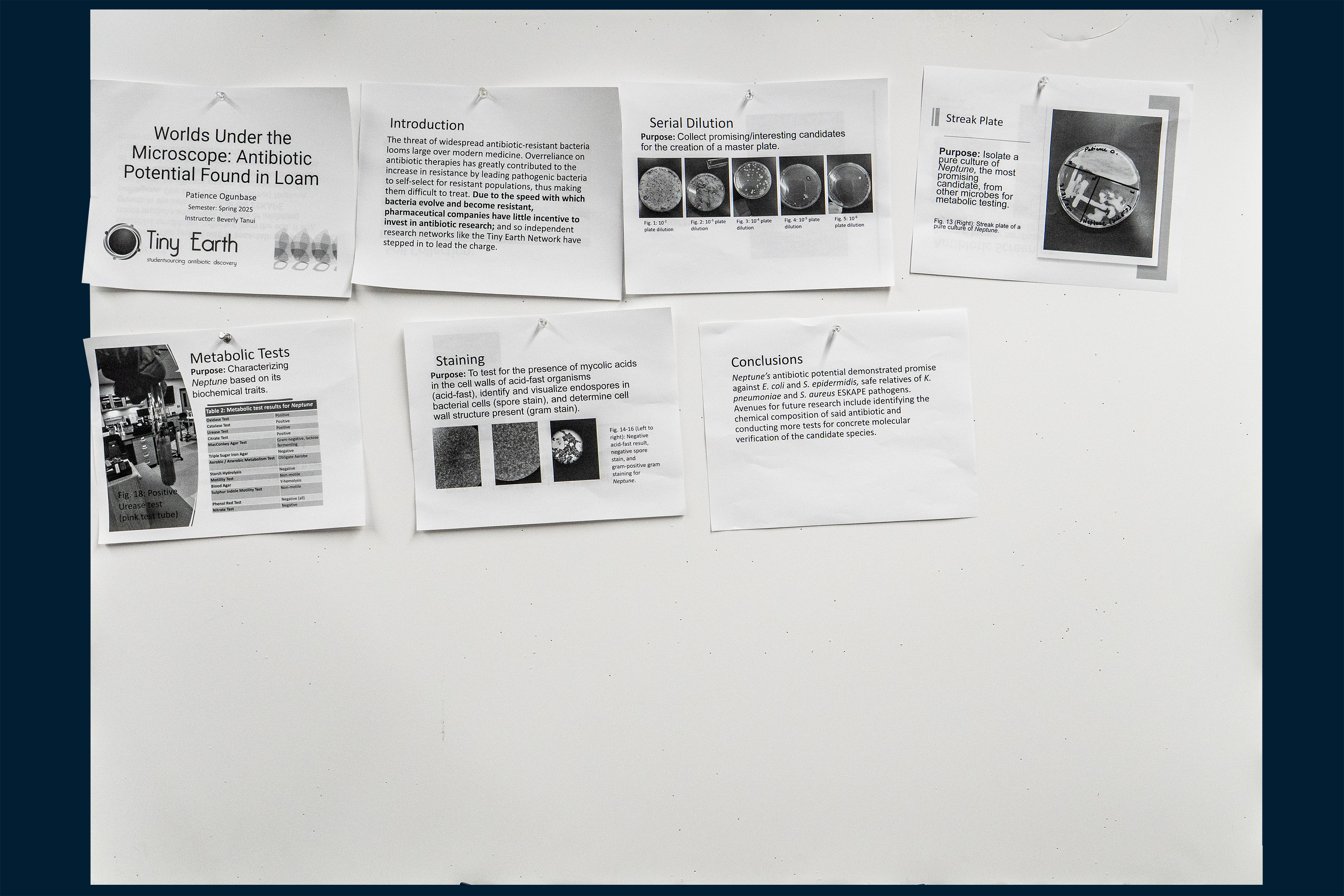
Worlds Under the Microscope: Antibiotic Potential Found in Loam
CoLab, COM 100
The aim of this project was to ascertain which microbial candidates collected from the soil, if any, might produce antibiotics capable of inhibiting growth in the safe relatives of the ESKAPE pathogens. The safe relatives tested against are as follows: Escherichia coli, Staphylococcus epidermidis, Pseudomonas putida, Enterobacter aerogenes, Enterococcus faecalis, and Acinetobacter bayli. Efficacy against these nonpathogenic strains was demonstrated by the observable presence of zones of inhibition surrounding certain promising candidates when put under stress. Antibiotic screening plates were created as part of this testing, with each group of prospective antibiotic-producing microbial candidates having been transferred over to several different plate cultures specific to each individual safe relative. Ascetic technique procedures were utilized throughout the study to prevent cross-contamination wherever possible.
Comments
The faculty mentor for this project was Beverly Tanui, Biology.