

Location
CoLab, COM 100
Start Date
1-5-2025 5:30 PM
Document Type
Poster
Description
In order to counteract the rise of antibiotic resistant bacteria, there is a massive need for new antibiotics. New strains of antibiotic producing bacteria can be found anywhere, but are commonly found in soil. A soil sample was taken from Shawnee, Kansas, with the hopes of it containing a strain of antibiotic producing bacteria. Originally, 12 potential cultures were isolated from the soil sample. Through a system of tests and screening plates, a single potential culture was isolated. This culture had inhibitory properties with several ESKAPE relatives, including Enterococcus Faecalis. After this culture had been isolated, a Gram Stain was conducted to gain insight to the structure of this bacteria. The gram stain revealed two things. First, the culture was made up of bacillus, with spores being present. Secondly, the culture is gram positive. This information will be crucial as further testing is done for potential antibiotic viability.
Image
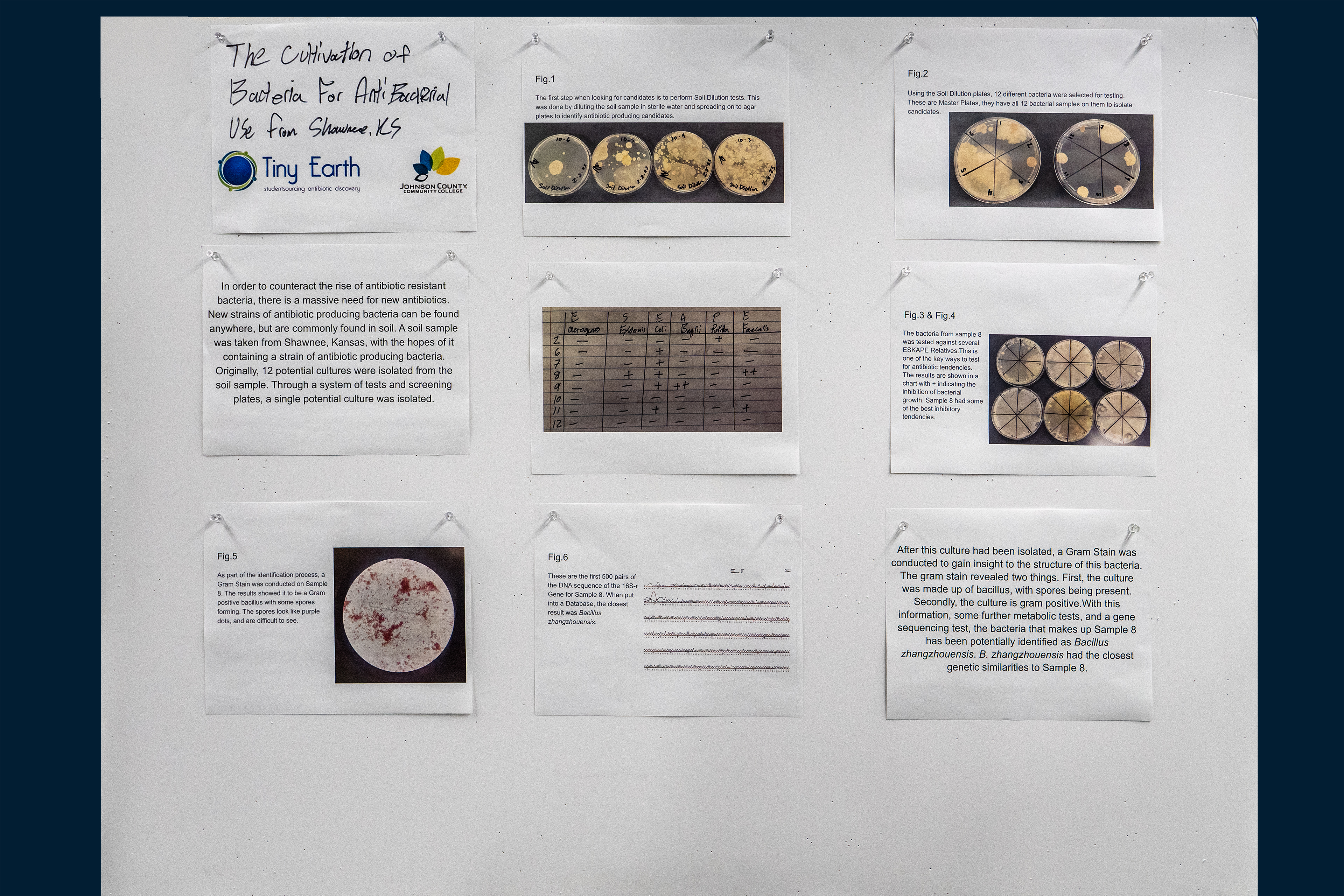
The Cultivation of Bacteria for Antibacterial use from Shawnee, KS
CoLab, COM 100
In order to counteract the rise of antibiotic resistant bacteria, there is a massive need for new antibiotics. New strains of antibiotic producing bacteria can be found anywhere, but are commonly found in soil. A soil sample was taken from Shawnee, Kansas, with the hopes of it containing a strain of antibiotic producing bacteria. Originally, 12 potential cultures were isolated from the soil sample. Through a system of tests and screening plates, a single potential culture was isolated. This culture had inhibitory properties with several ESKAPE relatives, including Enterococcus Faecalis. After this culture had been isolated, a Gram Stain was conducted to gain insight to the structure of this bacteria. The gram stain revealed two things. First, the culture was made up of bacillus, with spores being present. Secondly, the culture is gram positive. This information will be crucial as further testing is done for potential antibiotic viability.
Comments
The faculty mentor for this project was Matthew Ducote, Biology.