

Location
CoLab, COM 100
Start Date
1-5-2025 2:45 PM
Document Type
Poster
Description
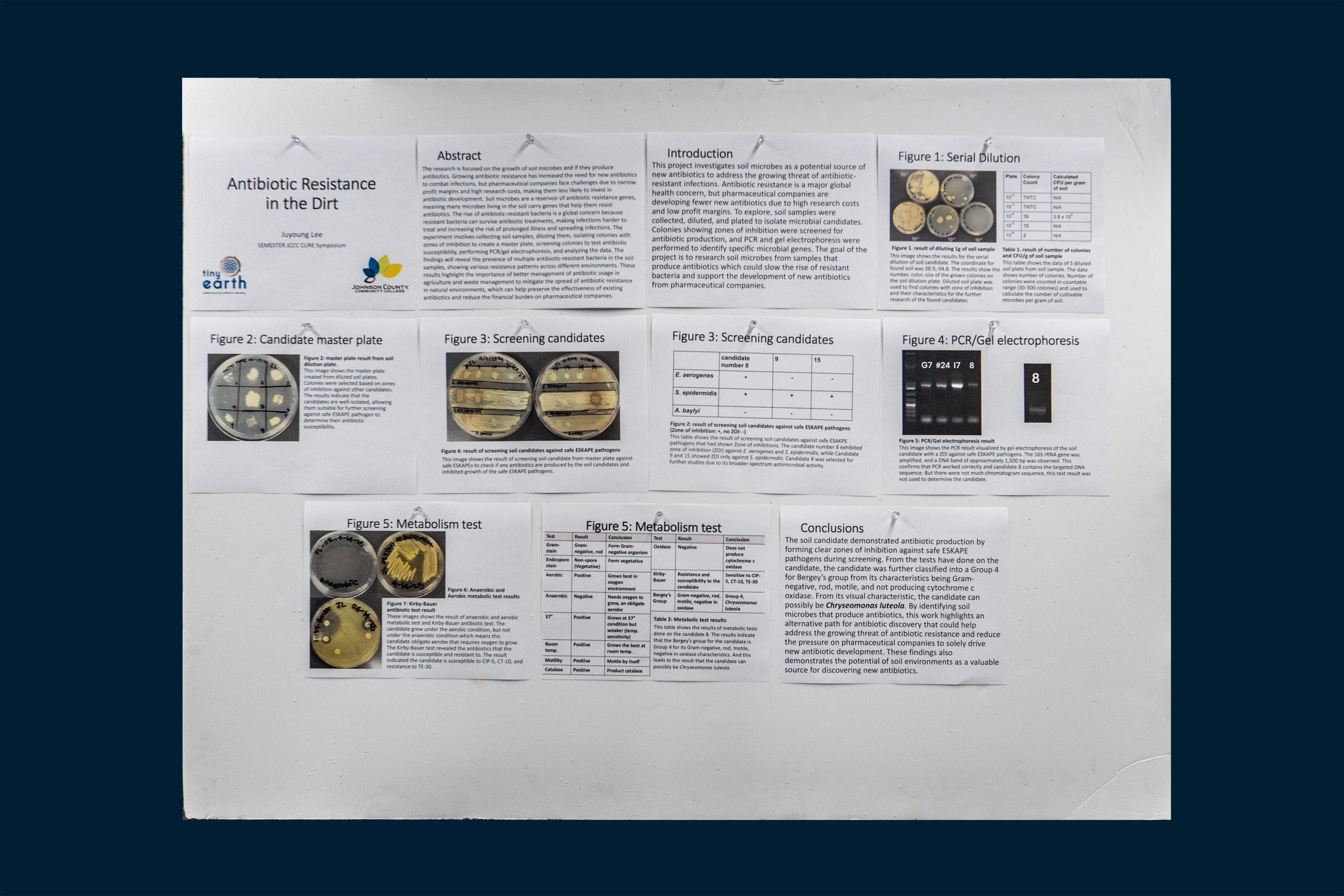
The research for the 2025 Tiny Earth poster symposium is focused on the cultivation (growth) of soil microbes and their resistance to antibiotics. Growing antibiotic resistance has increased the need for new antibiotics to combat infections, but pharmaceutical companies face challenges due to narrow profit margins and high research costs, making them less likely to invest in antibiotic development. Soil microbes are a reservoir of antibiotic resistance genes, meaning many microbes living in the soil carry genes that help them resist antibiotics. The rise of antibiotic-resistant bacteria is a global concern because resistant bacteria can survive antibiotic treatments, making infections harder to treat and increasing the risk of prolonged illness and spreading infections. The experiment involves collecting soil samples, diluting them, isolating colonies with zones of inhibition to create a master plate, screening colonies to test antibiotic susceptibility, performing PCR/gel electrophoresis, and analyzing the data. The findings will reveal the presence of multiple antibiotic-resistant bacteria in the soil samples, showing various resistance patterns across different environments. These results highlight the importance of better management of antibiotic usage in agriculture and waste management to mitigate the spread of antibiotic resistance in natural environments, which can help preserve the effectiveness of existing antibiotics and reduce the financial burden on pharmaceutical companies.
Image
Cultivation of Soil Microbes and Their Resistance to Antibiotics
CoLab, COM 100
The research for the 2025 Tiny Earth poster symposium is focused on the cultivation (growth) of soil microbes and their resistance to antibiotics. Growing antibiotic resistance has increased the need for new antibiotics to combat infections, but pharmaceutical companies face challenges due to narrow profit margins and high research costs, making them less likely to invest in antibiotic development. Soil microbes are a reservoir of antibiotic resistance genes, meaning many microbes living in the soil carry genes that help them resist antibiotics. The rise of antibiotic-resistant bacteria is a global concern because resistant bacteria can survive antibiotic treatments, making infections harder to treat and increasing the risk of prolonged illness and spreading infections. The experiment involves collecting soil samples, diluting them, isolating colonies with zones of inhibition to create a master plate, screening colonies to test antibiotic susceptibility, performing PCR/gel electrophoresis, and analyzing the data. The findings will reveal the presence of multiple antibiotic-resistant bacteria in the soil samples, showing various resistance patterns across different environments. These results highlight the importance of better management of antibiotic usage in agriculture and waste management to mitigate the spread of antibiotic resistance in natural environments, which can help preserve the effectiveness of existing antibiotics and reduce the financial burden on pharmaceutical companies.
Comments
The faculty mentor for this project was Eulandria Biddle, Biology.