

Location
CoLab, COM 100
Start Date
1-5-2025 1:30 PM
Document Type
Poster
Description
Adaptable microorganisms instigate problems in clinical settings when they are pathogenic in nature. To neutralize these organisms, antibiotics are used; however, pathogenic microbes have developed resistance to them. The most effective way to negate antibiotic resistance is to produce new antibiotics; yet, the discovery of new antibiotics has been dwindling. To combat this issue, the Tiny Earth Network has partnered with researchers, educators, and students to provide a learning opportunity. Students screen microbes from soil samples to determine if any have antimicrobial properties. If a microorganism shows promise, it is further studied to assess its potential as a new antibiotic. This is how the Gram-negative bacillus-shaped microbe currently named Rosaceous Contrabate was discovered.
Image
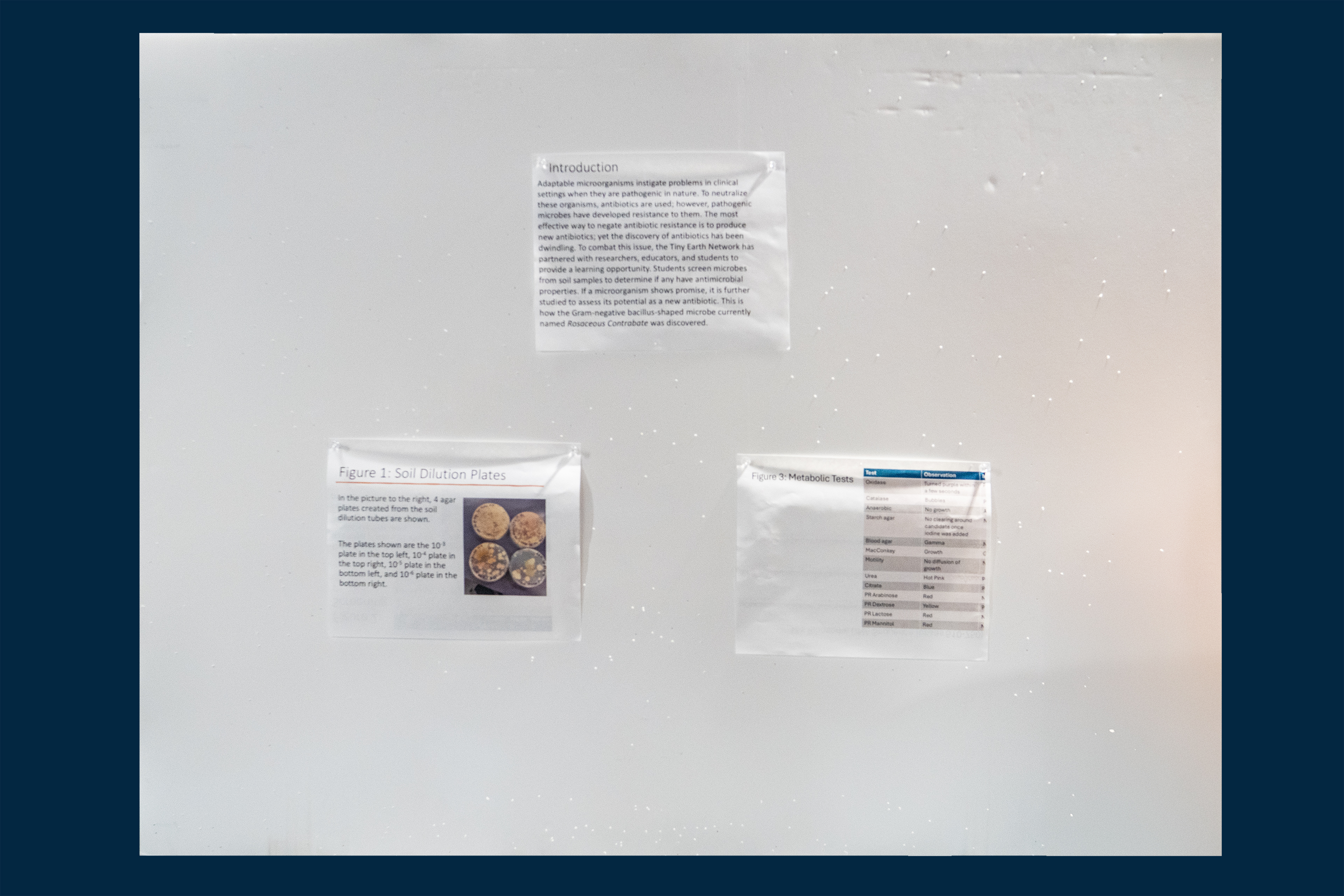
Discovery of Rosaceous Contrabate
CoLab, COM 100
Adaptable microorganisms instigate problems in clinical settings when they are pathogenic in nature. To neutralize these organisms, antibiotics are used; however, pathogenic microbes have developed resistance to them. The most effective way to negate antibiotic resistance is to produce new antibiotics; yet, the discovery of new antibiotics has been dwindling. To combat this issue, the Tiny Earth Network has partnered with researchers, educators, and students to provide a learning opportunity. Students screen microbes from soil samples to determine if any have antimicrobial properties. If a microorganism shows promise, it is further studied to assess its potential as a new antibiotic. This is how the Gram-negative bacillus-shaped microbe currently named Rosaceous Contrabate was discovered.
Comments
The faculty mentor for this project was Matthew Ducote, Biology.