

Location
CoLab, COM 100
Start Date
1-5-2025 1:30 PM
Document Type
Poster
Description
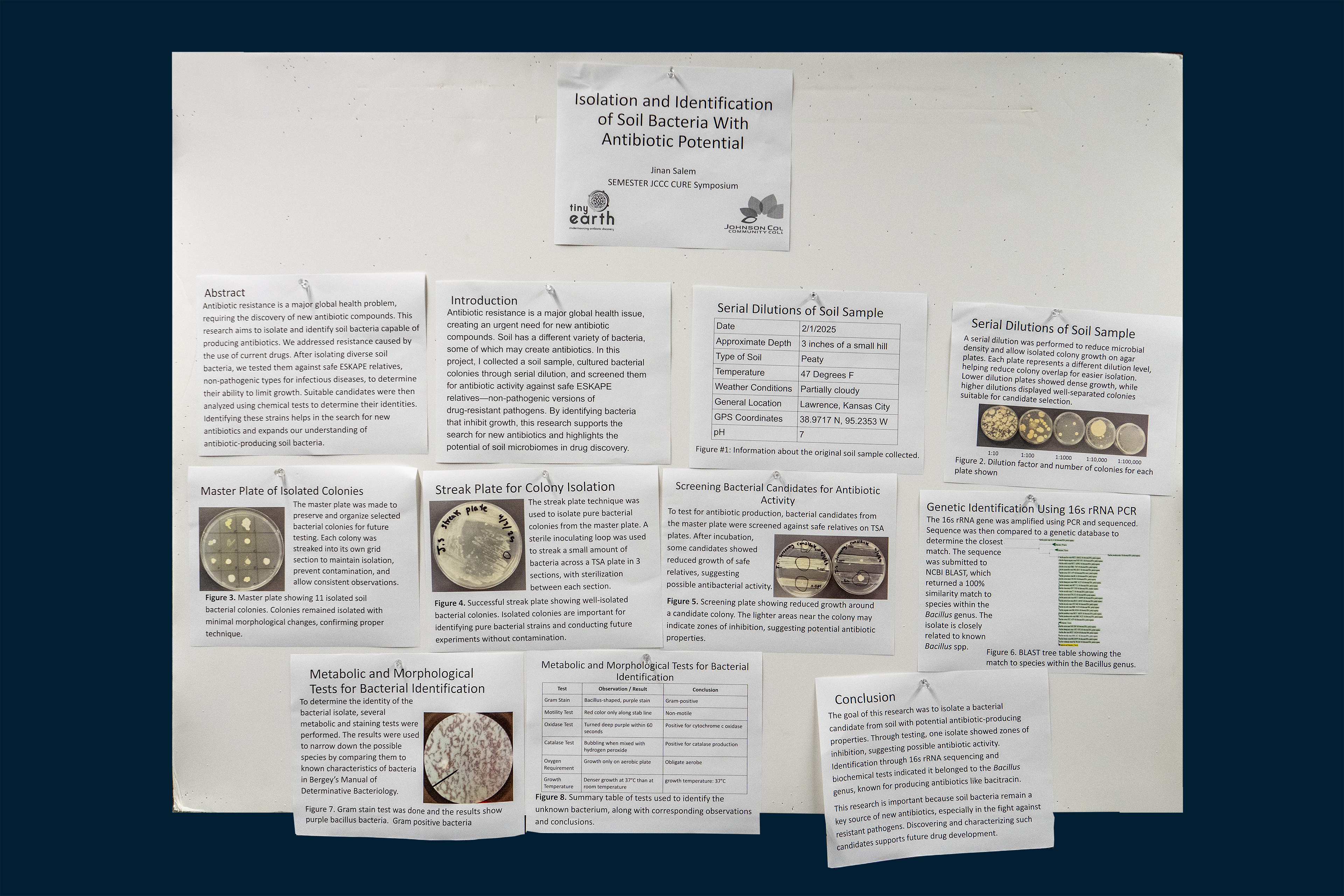
The increase of antibiotic resistance creates a major global health problem, requiring the discovery of new antibiotic compounds. This research aims to isolate and identify soil bacteria that are capable of producing antibiotics. The problem addressed is the urgent need for innovative antibiotics for fighting resistant bacteria, which is being caused by the excessive use of existing drugs. To discover possible solutions, we collected soil samples, serially diluted them, and plated them on agar to culture different bacterial colonies. These isolates were tested against safe ESKAPE relatives, which are non-pathogenic types for infectious diseases, to determine their ability to limit bacterial growth. Suitable candidates were then analyzed using chemical experiments and DNA sequencing to determine their identities. Experimental discoveries show that multiple types of bacteria prevent ESKAPE relatives, suggesting the possibility of antibiotic synthesis. Identifying these strains helps in the search for new antibiotics while also providing information about antibiotic-producing bacteria in the environment. This study highlights the importance of soil microbiomes in developing drugs and addresses the worldwide antibiotic resistance problem.
Image
Tiny Earth Research
CoLab, COM 100
The increase of antibiotic resistance creates a major global health problem, requiring the discovery of new antibiotic compounds. This research aims to isolate and identify soil bacteria that are capable of producing antibiotics. The problem addressed is the urgent need for innovative antibiotics for fighting resistant bacteria, which is being caused by the excessive use of existing drugs. To discover possible solutions, we collected soil samples, serially diluted them, and plated them on agar to culture different bacterial colonies. These isolates were tested against safe ESKAPE relatives, which are non-pathogenic types for infectious diseases, to determine their ability to limit bacterial growth. Suitable candidates were then analyzed using chemical experiments and DNA sequencing to determine their identities. Experimental discoveries show that multiple types of bacteria prevent ESKAPE relatives, suggesting the possibility of antibiotic synthesis. Identifying these strains helps in the search for new antibiotics while also providing information about antibiotic-producing bacteria in the environment. This study highlights the importance of soil microbiomes in developing drugs and addresses the worldwide antibiotic resistance problem.
Comments
The faculty mentor for this project was Eulandria Biddle, Biology.